

Overview
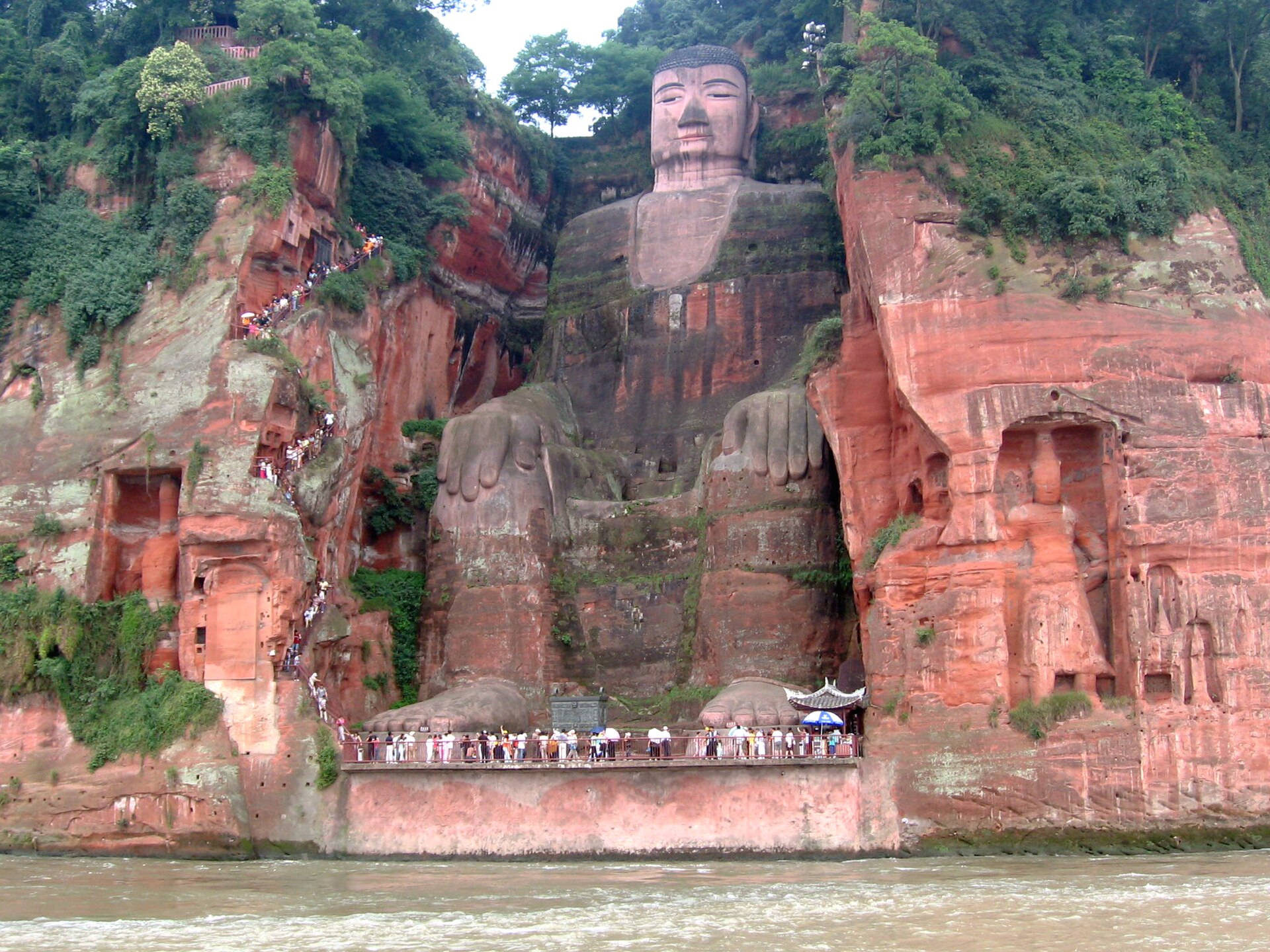
The Leshan Giant Buddha is the largest stone Buddha statue ever carved, rising 71 meters from toe to topknot against a red sandstone cliff where the Min, Dadu, and Qingyi rivers merge in Sichuan Province. Construction began in 713 CE under the direction of a Chinese monk named Haitong, who believed a massive Buddha overlooking the turbulent waters would calm the dangerous currents that had claimed countless boatmen's lives. The project took 90 years and three generations of craftsmen to complete. The statue's proportions are staggering: each ear stretches 7 meters long, each eye measures 3.3 meters across, and the shoulders span 28 meters wide. An ingenious hidden drainage system channels rainwater through the head, arms, and robes to prevent erosion, a feat of eighth-century engineering that has kept the Buddha largely intact for thirteen centuries. Designated a UNESCO World Heritage Site in 1996, the statue can be viewed from the water on a river cruise or explored up close via steep staircases carved into the cliff face. The Leshan Giant Buddha is typically visited as a day trip from Chengdu, pairing well with a morning at the Panda Research Base or an evening wandering Jinli Ancient Street. For official information, see UNESCO World Heritage listing.
Spiritual Significance
Nine-Turn Staircase descent: A dizzying narrow path carved into the cliff beside the Buddha's body, giving you a sense of the statue's immense scale as you descend from head to feet. River cruise perspective: From the water, the full figure emerges from the cliff face in a way that photographs simply cannot convey. Standing at the feet: The Buddha's feet alone are 8.5 meters wide - standing beside one toe makes any visitor feel wonderfully insignificant. Lingyun Temple: A Tang-dynasty monastery perched on the cliff above the Buddha's head, with incense-filled halls and sweeping river views. Three-river confluence: The merging currents below the Buddha create visible swirling patterns that the statue has watched over for thirteen centuries. Hidden drainage system: Look for the cleverly concealed channels in the hair curls, collar, and chest that engineers designed to protect the stone from water damage
When to Visit
Open: Daily 7:30 AM - 6:30 PM (summer) / 8:00 AM - 5:30 PM (winter). River boat tours: Typically 8:00 AM - 5:00 PM, departing every 20-30 minutes. Best: Early morning on weekdays when the narrow cliff-side staircase is least crowded. Avoid: Weekend afternoons and any national holiday period - the stairway queue can exceed 3 hours
Admission and Costs
Park admission: ¥80. River boat cruise: ¥70 (views the statue from the water, does not include park entry). High-speed train from Chengdu: ¥55-65 each way (approximately 1 hour). Local bus from Leshan station to site: ¥2
Tips for Visitors
Do both boat and staircase: The river cruise gives you the full-body view while the cliff staircase provides the up-close detail - they complement each other perfectly. Arrive before 9 AM: The Nine-Turn Staircase is single-file and becomes a slow shuffle by mid-morning - early birds descend freely. Wear grip shoes: The cliff stairs are steep, narrow, and can be slippery in damp conditions
- sandals or heels are genuinely dangerous. Book a guided day trip: Managing the Chengdu-to-Leshan logistics, boats, entrance tickets, and stairway timing is much easier with a knowledgeable guide. Budget a full day: Between the 2-hour round-trip train ride, the park grounds, the staircase queue, and the optional boat, Leshan consumes an entire day