

Overview
The Magritte Museum houses the world's most comprehensive collection of Rene Magritte's work — over 200 paintings, sculptures, photographs, and advertising posters spanning the surrealist's entire career from 1920s experiments to his final works in 1967. This is not a collection of scattered masterpieces but a systematic survey that reveals how Magritte developed his visual philosophy methodically: the challenge to representation ("Ceci n'est pas une pipe"), the impossible made mundane (men in bowler hats floating through rooms), and the ordinary made uncanny (a locomotive emerging from a fireplace). Opened in 2009 within the Royal Museums of Fine Arts complex, the museum occupies the renovated former Hotel Altenloh near Place Royale in Brussels, spreading across five floors arranged reverse-chronologically from top to bottom. Magritte lived most of his life in Brussels, working as an advertising illustrator while painting surrealist canvases that gallery owners initially struggled to sell. His breakthrough came in the 1940s-50s when American collectors recognized his unique approach to surrealism — less about Freudian psychoanalysis or automatic writing than about philosophical inquiry into perception and reality. Walking through the museum reveals patterns: apples, clouds, pipes, bowler-hatted men, and the word "ceci" (this) recur across decades as Magritte refined his vocabulary. A guide trained in art history contextualizes Magritte within surrealism, explains his difficult "vache" period (1948 Fauvist experiments that shocked collectors), and decodes the philosophical questions embedded in images that casual viewers might dismiss as mere visual tricks.
Collections Highlights
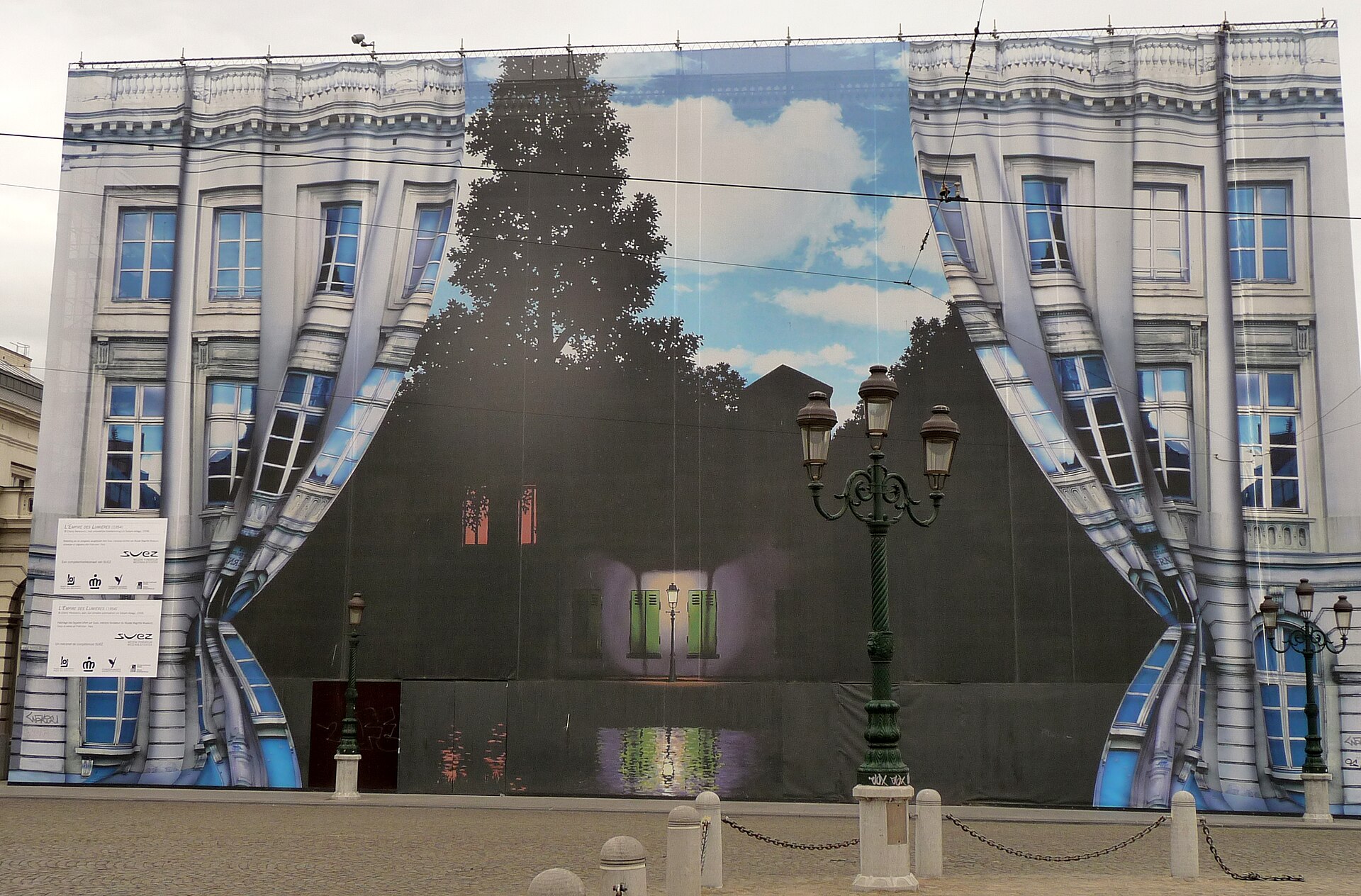
"La Duree poignardee" (Time Transfixed): A locomotive emerging from a fireplace in a bourgeois dining room — Magritte's juxtaposition of industrial modernity with domestic banality at its most surreal. "Le Fils de l'homme" (The Son of Man): The green apple obscuring the bowler-hatted man's face became one of art history's most parodied images. See how Magritte refined this motif across multiple versions. "L'Empire des lumieres" (The Empire of Light): A street scene where daytime sky coexists with nighttime street lamps — Magritte painted 27 versions between 1949-1964, exploring this impossible simultaneity obsessively. Early works (1920s): The top floor shows Magritte's evolution from Futurist and Cubist experiments toward his mature surrealist style — essential context often skipped by visitors rushing to famous paintings. Photographs and advertisements: Magritte's commercial work and surrealist photographs reveal how he explored visual ideas across media. "La Trahison des images" (The Treachery of Images): The famous "Ceci n'est pas une pipe" painting — Magritte's meditation on representation and language that influenced generations of conceptual artists.
Guided Tours
Art historian guides at the Magritte Museum decode the philosophical foundations underlying Magritte's visual paradoxes — connecting his painted pipes and floating apples to Wittgenstein's language philosophy and phenomenological questions about perception versus reality. Specialists explain the 1948 "vache" period when Magritte deliberately produced crude Fauvist paintings to provoke collectors, and trace his influence on conceptual art, advertising design, and contemporary visual culture. Combining the Magritte Museum with the Royal Museums of Fine Arts creates a six-century survey of Belgian art from Flemish Primitives through Bruegel and Rubens to 20th-century surrealism. Walk to Grand Place afterward (10 minutes downhill) for Brussels' architectural masterpiece.
When to Visit
Tuesday-Friday: 10 AM - 5 PM. Saturday-Sunday: 11 AM - 6 PM. Closed: Mondays and public holidays. Best: Tuesday-Thursday afternoons (2-4 PM) when tour groups are thinnest. Avoid: First Wednesday of the month (free afternoon attracts massive crowds). Duration: 90 minutes minimum; 2-3 hours for thorough exploration.
Admission and Costs
Magritte Museum only: €10 adults, €8 seniors, free under 18. Combined Royal Museums ticket: €15 includes all six museums in the complex (better value if visiting multiple museums). First Wednesday: Free entry 1-5 PM (extremely crowded — €10 for a calmer experience is worthwhile). Audio guide: €4 — excellent narration explaining Magritte's philosophy and techniques. Guided tour: €60-90 for private 90-minute specialist tour.
Tips for Visitors
Start at the top: The museum arranges chronologically from top floor (1920s) to bottom (1960s). Starting at the top helps you understand Magritte's development rather than seeing his iconic works first out of context. Audio guide value: The €4 audio guide is excellent — provides philosophical context that transforms the experience from "weird paintings" to coherent visual philosophy. Free Wednesday caution: The first Wednesday free afternoon is mobbed. Pay €10 another day for a civilized experience. Magritte fatigue: 200+ Magrittes across five floors can overwhelm. Take breaks — the museum has benches on each floor. Combine with Royal Museums of Fine Arts: The €15 combined ticket includes Oldmasters (Bruegel, Rubens) and Modern museums. Plan 4-5 hours total if visiting multiple museums in the complex. Photography: Allowed without flash in permanent collection. Museum shop: One of Brussels' best art bookshops with exhibition catalogues, Magritte monographs, and quality reproductions. Nearby lunch: The Sablon district (5-minute walk) has superior cafe options compared to the museum cafe.