

Overview
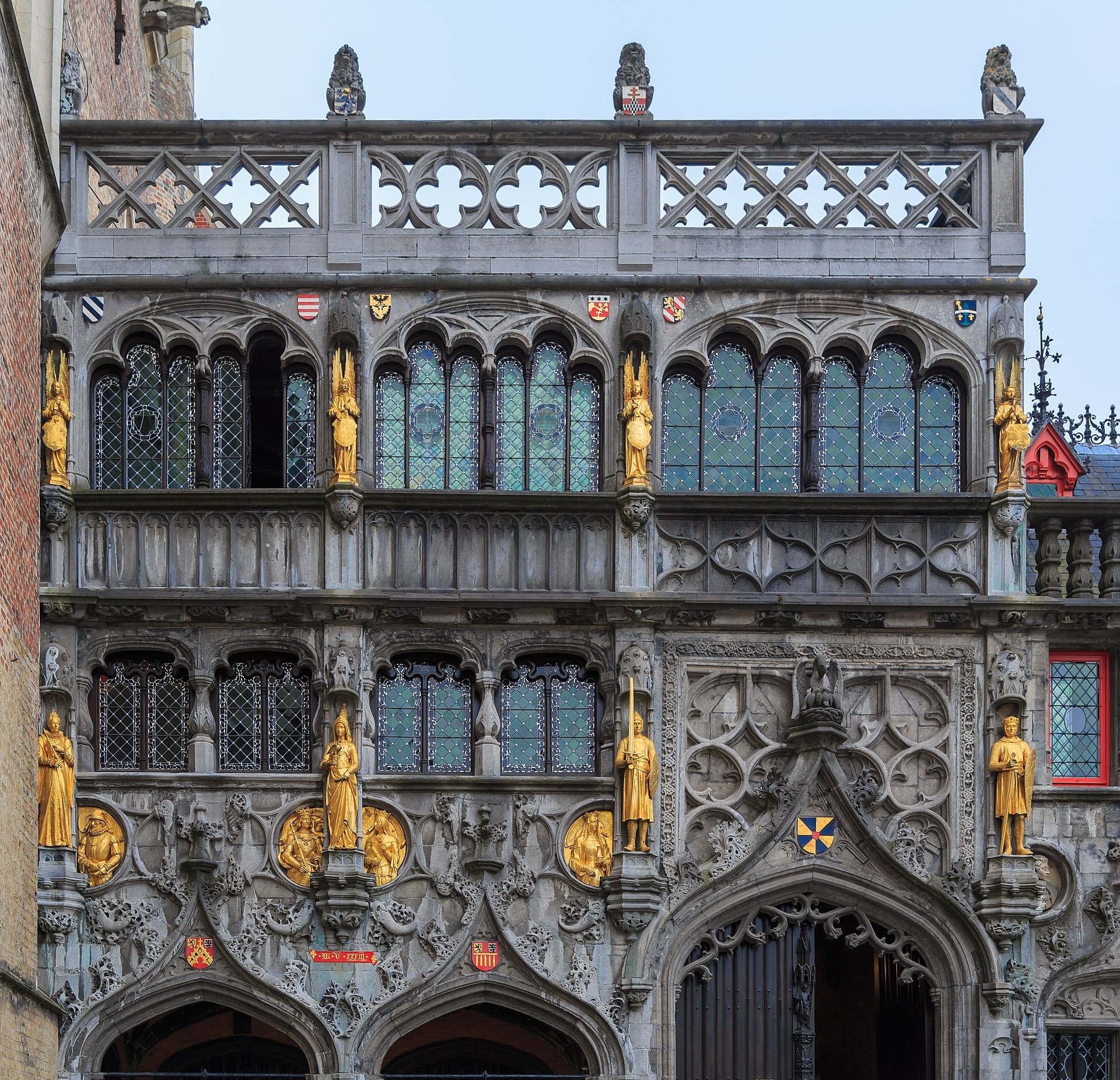
The Basilica of the Holy Blood occupies the Burg square corner in Bruges, tucked beside the City Hall with an entrance so unassuming that tourists walk past without realizing a major pilgrimage site sits five meters away. The basilica actually comprises two separate chapels stacked vertically — the lower Romanesque St. Basil's Chapel dates to 1134-1149 and remains largely unaltered, one of the best-preserved 12th-century religious spaces in Belgium. The upper Gothic chapel was rebuilt in the 16th century after fire damage and houses the relic that gives the basilica its name: a vial containing cloth reportedly stained with Christ's blood, brought from Jerusalem by Thierry of Alsace, Count of Flanders, after the Second Crusade in 1150. Whether the relic is authentic matters less than the documented fact that believers have venerated it continuously for 875 years, making this one of medieval Christendom's most durable pilgrimage destinations. Entering the lower chapel transports you to the 12th century with startling completeness. The Romanesque interior preserves its original proportions: thick stone walls punctured by small semicircular windows, barrel vaulting without Gothic pointed arches, massive columns supporting heavy stone roofs in an architecture of compression and mass. The space stays dark, cool, and silent — designed for monastic contemplation rather than congregational worship. A statue of the Virgin Mary sits in a niche, illuminated by candles that parishioners still light despite the medieval gloom. The chapel served as the private worship space for the Counts of Flanders when they resided in the adjacent residence (demolished in the 18th century), which explains its modest scale. Unlike the Gothic grandeur upstairs, St. Basil's Chapel communicates through austerity: plain stone, minimal decoration, silence thick enough to feel material. Few tourists descend here because the relic resides upstairs, making this space a refuge from the crowds shuffling overhead. A narrow staircase connects the lower and upper chapels — climbing it crosses four centuries of architectural evolution in twenty seconds. The upper chapel underwent complete Gothic reconstruction in 1480-1534 after fire gutted the earlier structure, then suffered neo-Gothic "restoration" in the 1850s that added stained glass, frescoes, and gilding that 19th-century Catholics believed enhanced medieval piety but actually obscures authentic Gothic proportions. The result resembles a jewelry box: walls painted in ultramarine and gold, windows filled with colored glass depicting crusader knights, the ceiling covered in decorative vaulting that draws eyes upward. The relic itself sits in a silver tabernacle on the altar — a rock crystal vial encased in gold filigree, visible only during public veneration hours when the priest removes it from the locked shrine. On Fridays at 2 PM, pilgrims queue to approach the relic individually, many kissing the crystal cylinder in continuation of a practice documented since the 13th century. The relic's provenance follows a narrative common to medieval holy objects: Count Thierry participated in the Second Crusade (1147-1149), received the vial from Baldwin III of Jerusalem (his wife's cousin) as reward for military service, and transported it to Bruges where it performed miracles that validated its authenticity. Skeptics note that Jerusalem had already traded away dozens of "true" relics by 1150, making Thierry's gift potentially one among many circulating fragments of dubious origin. Scientific analysis has never been permitted (the Church prohibits destructive testing), leaving authentication impossible by modern standards. Yet from a historical perspective, authenticity is beside the point — the documented veneration, the continuous pilgrimage tradition, the annual Procession of the Holy Blood through Bruges streets every Ascension Day since 1291, and the devotional practices surrounding this object constitute the genuine historical phenomena worth understanding, regardless of whether the cloth inside the vial actually touched Christ's wounds. The museum attached to the basilica (€3 admission, separate from free chapel access) displays the relic's ornamental containers and vestments used during the Procession of the Holy Blood. The star object is the 1617 silver reliquary designed to transport the vial through city streets — an elaborate two-story tabernacle decorated with scenes from Christ's Passion, carried on poles by designated burghers while the city's guilds processed behind in hierarchical order. Seeing the empty reliquary in the museum and then the actual vial in the chapel upstairs connects you to the performative aspects of medieval piety: religion wasn't private contemplation but public spectacle involving costume, music, procession routes, and social hierarchy made visible. The museum also houses paintings documenting the Procession as it appeared in 1640, 1830, and 1930 — revealing how the ceremony adapted to changing political contexts (Spanish rule, French occupation, Belgian independence) while maintaining core elements across 730 years. The Ascension Day procession continues today, now listed as UNESCO Intangible Cultural Heritage since 2009. If visiting Bruges in late May (the date shifts based on Easter calculation), witnessing the procession provides access to living medieval tradition adapted for modern audiences. Thousands of Bruges residents costume themselves as biblical figures, crusader knights, medieval guilds, and Burgundian nobility, processing from the basilica through the city center in a spectacle lasting several hours. Tourists photograph it as quaint folklore, but for participating families, the procession represents genuine continuity with civic identity — children inherit roles their grandparents performed, guilds maintain costumes across generations, and the community annually reaffirms Bruges' historical importance through choreographed remembrance. The relic itself, carried under a canopy by the bishop, remains the procession's centerpiece, connecting contemporary performance to the crusader count who supposedly brought it home 875 years ago. Visiting the basilica requires navigating several logistical quirks. The chapel is free but maintains irregular hours with a midday closure (12:00-2:00 PM) that catches tourists off-guard. The museum charges €3 but offers minimal English explanation, frustrating non-Dutch speakers. The relic veneration (Friday afternoons) attracts queues of pilgrims that can extend 30-45 minutes during tourist season, and photographing the veneration is prohibited out of respect for religious observance. The space itself is tiny — the upper chapel seats perhaps 100 people, making group tours impractical. These constraints mean the basilica works best as a brief, focused visit rather than a major time commitment. Enter the lower chapel for Romanesque atmosphere, climb to the upper chapel to see the relic (if timing allows), glance through the museum if curious about procession history, then continue to adjacent sites on the Burg square. A guide who knows Bruges' religious history contextualizes what you're seeing within broader patterns of medieval piety, crusader culture, and Flemish devotional practices.
Visitor Etiquette
The Basilica of the Holy Blood remains an active pilgrimage site where genuine devotion coexists with tourism. Dress modestly (covered shoulders and knees), silence mobile phones, and speak in whispers throughout both chapels. During Friday relic veneration (2:00-3:00 PM), photography is strictly prohibited — guards enforce this to protect the reverent atmosphere for pilgrims who have traveled specifically for this devotional practice. If you join the veneration queue, follow the pilgrims' lead: approach the relic slowly, bow or pause briefly, then move on without lingering. The lower Romanesque chapel maintains near-total silence — treat it as a contemplative space, not a photography studio. During Ascension Day procession, respect the participants: they are not performers but community members continuing a 730-year tradition of civic religious identity.
Spiritual Significance
The relic's provenance traces to the Second Crusade (1147-1149): Count Thierry of Alsace received the vial from Baldwin III of Jerusalem as reward for military service, transporting it to Bruges where it has been venerated continuously for 875 years. The Heilig-Bloedprocessie (Procession of the Holy Blood) has processed through Bruges' streets every Ascension Day since 1291 — UNESCO recognized it as Intangible Cultural Heritage in 2009, acknowledging both its religious significance and its role in sustaining civic identity across seven centuries of political change. The Romanesque lower chapel dedicated to St. Basil preserves the oldest surviving religious architecture in Bruges, its austere stone walls embodying 12th-century monastic piety before Gothic verticality transformed European church design. The 1617 silver reliquary in the museum — an elaborate two-story tabernacle decorated with Passion scenes — demonstrates how medieval Catholicism staged public devotion as civic spectacle, with guilds processing in hierarchical order behind the carried relic.
When to Visit
Chapel hours: Monday-Sunday 9:30 AM - 12:00 PM, 2:00 PM - 5:00 PM (closed midday). Museum hours: Same as chapel — 9:30-12:00, 14:00-17:00 daily. Relic veneration: Friday afternoons 2:00-3:00 PM — public viewing when the relic is removed from shrine. Best: Weekday mornings (9:30-11:00 AM) for quietest access to both chapels. Procession: Ascension Day (40 days after Easter, typically late May) — full-day event with morning mass and afternoon procession. Avoid: Saturday afternoons when locals attend mass alongside tourists, and Friday afternoons unless you specifically want to observe veneration.
Admission and Costs
Chapel admission: Free — both upper and lower chapels are open to visitors at no charge. Museum admission: €3 for adults, €2 students/seniors — includes ornamental reliquaries and vestments. Walking tour including basilica: €20-30 for 2-3 hour group tour covering Burg square and religious sites. Private guide: €180-250 for 2-hour tour focusing on Bruges' religious history and architecture. Procession viewing: Free — stands along the procession route on Ascension Day, arrive early for good positions.
Tips for Visitors
Visit both chapels: Most tourists rush to the upper chapel for the relic and miss the Romanesque lower chapel — the 12th-century space is the architectural highlight. Midday closure: The basilica closes 12:00–2:00 PM daily. Plan around this or you'll find locked doors when you arrive for lunch-hour sightseeing. Photography rules: Photos permitted in empty chapels but prohibited during masses and relic veneration. Be respectful of worshippers. Museum value: The €3 museum is skippable unless you're deeply interested in processional culture or want to see ornamental reliquaries. Chapel admission alone suffices for most visitors. Combine with Markt Square: The Burg square sits 200 meters from the Markt via Breidelstraat — see both squares and their monuments in one walking circuit. Procession planning: Ascension Day transforms Bruges into medieval spectacle. Hotels book months ahead, crowds are massive, but witnessing the procession is extraordinary if you're visiting in late May. Context matters: The basilica makes more sense with a guide who explains crusader culture, medieval relic veneration, and Bruges' role in Flemish religious history. Without context, it's just two small chapels and a vial. Friday veneration: If attending the 2:00 PM relic viewing, arrive by 1:45 PM to secure a place in queue. The ceremony lasts about 30 minutes and attracts genuine pilgrims, not just tourists.