
_Museum_aan_de_Stroom_(MAS)_facade.jpg)
Overview
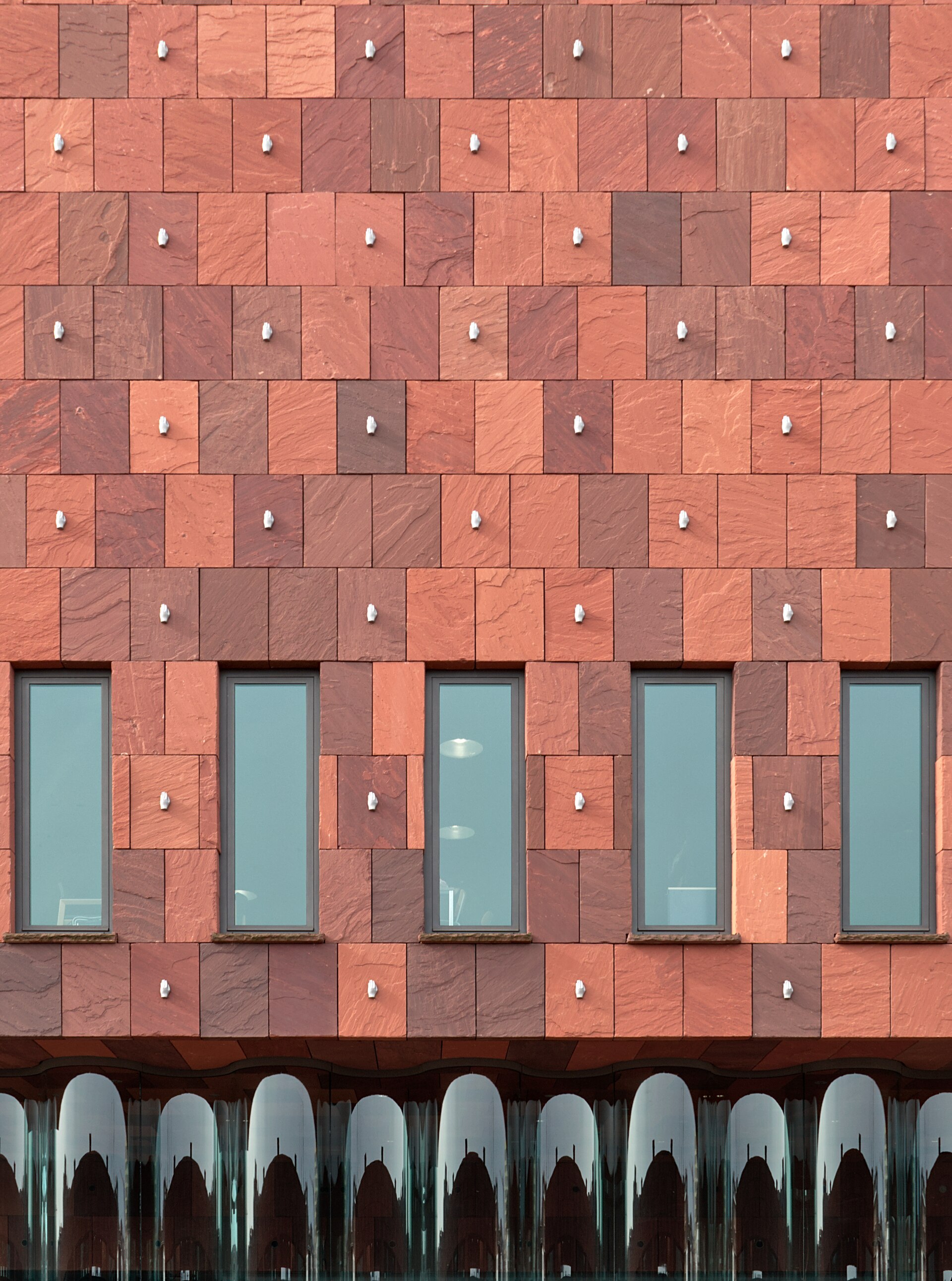
The Museum aan de Stroom opened in 2011 as the architectural centerpiece of Antwerp's revitalized port district, occupying a site where warehouses stored colonial imports from Congo and overseas trade goods for five centuries. The building rises 60 meters through ten stacked rectangular volumes that rotate slightly floor by floor, creating a spiraling tower clad in red Indian sandstone and curved glass panels. Neutelings Riedijk Architects designed it to evoke stacked shipping containers while referencing traditional Flemish step-gabled architecture, a deliberate visual metaphor connecting Antwerp's mercantile past to its contemporary port operations. The structure cost €50 million and immediately became controversial — critics called it bombastic and out of scale with surrounding neighborhoods, supporters praised its boldness and the way reflective glass panels capture sky and water movements throughout the day. The museum's permanent collection explores Antwerp's identity as a port city through 470,000 objects spanning maritime history, ethnography, folklore, and fine arts. Exhibitions occupy floors 2-7, organized thematically rather than chronologically around five narrative threads: "Port," "City," "World Port," "World City," and "Power." The port section displays ship models, navigation equipment, and documentation of cargo handling evolution from sail-powered vessels to containerization. World port galleries examine Antwerp's role in global trade networks — ivory from Congo, spices from Indonesia, diamonds arriving for cutting and resale, all material evidence of Belgium's colonial entanglements and mercantile ambitions. The presentations avoid triumphalist narratives, including uncomfortable truths about slave trade connections and exploitation of colonial resources, though some critics argue the museum still doesn't adequately confront Belgium's brutal Congo legacy. The building's circulation system doubles as exhibition space — escalators enclosed in glass tubes carry visitors upward through the stacked volumes, pausing at each floor where you exit to explore galleries before continuing upward. This choreographed ascent creates narrative progression from port history (lower floors) to contemporary global connections (upper floors), culminating in the free-access rooftop terrace at 60 meters elevation. The escalator enclosures offer constantly changing views through curved glass walls, fragmenting cityscape into kaleidoscopic compositions. Architect Willem Jan Neutelings described this vertical promenade as "a people lift" — prioritizing visitor movement and view-finding over static gallery contemplation. Some museum professionals criticize this approach for distracting from collection objects, but it undeniably creates a distinctive spatial experience unlike conventional museum layouts. The ethnographic collections reflect Antwerp's global trade connections through objects acquired via colonial networks, missionary activity, and merchant exchange. Indonesian puppets, Congolese masks, pre-Columbian textiles, and Pacific Island weapons fill display cases with varying levels of contextual explanation. Contemporary museology demands that institutions address provenance questions — were these objects purchased, gifted, or seized? Do source communities want them returned? The MAS has begun provenance research and established dialogue with communities of origin, but this process moves slowly and labels sometimes still use outdated terminology or provide minimal cultural context. Visitors interested in ethnographic material should approach these collections critically, recognizing them as evidence of colonial-era power dynamics as much as artistic achievement. The maritime collections offer more straightforward historical narratives. Scale models show evolution of ship design from 16th-century carracks to modern container vessels, displayed alongside navigation instruments, sailors' personal possessions, and documentation of port labor organization. Particularly compelling are photographs and objects related to Antwerp's 19th and early 20th-century role as embarkation point for emigrants — millions of Europeans passed through these docks en route to North America, their belongings loaded in hold compartments, their departure recorded in shipping manifests now preserved in museum archives. These emigration galleries connect Belgian history to global diaspora patterns, personalizing statistical data through individual stories and family photographs donated by descendants. The rooftop terrace, accessible free of charge via elevator or escalators, provides 360-degree views across Antwerp's skyline, port installations, and surrounding Flanders countryside. On clear days visibility extends 15-20 kilometers, allowing you to identify the Cathedral spire to the south, the Scheldt River curving westward, and massive port cranes handling container ships to the north. Information panels identify visible landmarks and explain port operations — the vast scale of contemporary shipping becomes apparent when you watch container vessels maneuvering through channels, each ship carrying 10,000+ standardized boxes. The rooftop opens daily during museum hours (10:00 AM - 5:00 PM Tuesday-Sunday) and remains free even when temporary exhibitions occupy ground floor galleries, making it Antwerp's best free viewpoint for visitors on budget-conscious itineraries. Temporary exhibitions occupy ground floor and top floor galleries, rotating every 3-6 months with themes connecting to the permanent collection's focus on global exchange, migration, and cultural contact. Past exhibitions have examined fashion design, diamond trade, African contemporary art, and refugee experiences — typically ambitious in scope and mixed in execution. The museum's temporary programming tends toward accessibility and visual spectacle rather than academic depth, which attracts broad audiences but sometimes frustrates specialists seeking rigorous scholarship. Admission covers both permanent and temporary exhibitions, though the temporary shows drive most repeat visits from locals while first-time tourists typically focus on permanent collection galleries and rooftop access.
Collections Highlights
Free rooftop terrace: 60-meter elevation providing 360-degree views across Antwerp skyline, port operations, and Scheldt River — accessible without gallery admission. Stacked tower architecture: Ten rotating rectangular volumes clad in red sandstone and curved glass — controversial contemporary design evoking shipping containers and Flemish step-gables. Maritime collection: Ship models spanning five centuries, navigation instruments, and port labor history — documenting evolution from sail power to containerization. Ethnographic galleries: 470,000 objects from global trade networks — Indonesian, Congolese, Pacific Island, and pre-Columbian material reflecting colonial connections. Emigration exhibits: Photographs and personal possessions of millions who departed through Antwerp docks for North America — connecting Belgian history to global diaspora. Rotating temporary exhibitions: Ground floor and top floor galleries featuring contemporary art, design, and cultural themes — typically ambitious in scale and accessible in presentation.
Guided Tours
Guides at MAS contextualize Antwerp's maritime past within Belgium's broader colonial history, explaining how Congolese ivory, Indonesian spices, and diamond rough funneled through these docks to fuel European wealth. Art history specialists decode the ethnographic collections' provenance complexities, while architecture-focused tours analyze Neutelings Riedijk's design philosophy — how the rotating volumes reference both shipping containers and traditional Flemish trapgevels. Maritime historians trace the evolution from 16th-century carracks to modern container vessels using the museum's ship models. Combine a guided MAS visit with the Rubens House to connect Antwerp's mercantile wealth with its artistic golden age.
When to Visit
Museum hours: Tuesday-Sunday 10:00 AM - 5:00 PM, closed Mondays. Rooftop access: Same hours as museum, free admission even without gallery ticket. Last admission: 4:30 PM for galleries, rooftop remains accessible until closing. Closed: January 1, May 1, December 25. Best: Weekday mornings (10:00-11:30 AM) for uncrowded galleries and optimal morning light on exhibitions. Rooftop optimal: Late afternoon (3:30-5:00 PM) for dramatic lighting on port installations and city skyline, particularly atmospheric in autumn and winter when low sun creates long shadows. Avoid: Sunday afternoons when local families visit, creating congestion on escalators and in popular gallery sections.
Admission and Costs
General admission: €10 adults, €6 students/seniors (65+), free for visitors under 26. Rooftop access: Free for all visitors — elevator and escalator access without gallery ticket. Audio guide: €3 (available in Dutch, English, French, German — covers permanent collection highlights). Guided tours: €35-45 per person for 90-minute tour focusing on maritime history and colonial connections. Private specialist guide: €250-320 for 2-hour tour addressing port history, ethnographic collections, and contemporary architecture. Family ticket: €20 for 2 adults + children under 18 — good value for families spending 2-3 hours exploring all floors
Tips for Visitors
Free rooftop strategy: If budget-conscious or time-limited, skip gallery admission and visit only the free rooftop terrace (10:00 AM - 5:00 PM Tuesday-Sunday). Elevator access from ground floor requires no ticket, providing Antwerp's best free viewpoint. Morning vs. afternoon light: Gallery interiors benefit from morning natural light (10:00-12:00 PM), while rooftop views are most dramatic in late afternoon (3:30-5:00 PM) when sun angles create shadows on port cranes and cathedral spire. Escalator experience: The spiraling escalator ascent through glass-enclosed tubes is architecturally interesting but physically demanding for visitors with mobility concerns. Regular elevators provide alternative access to all floors including rooftop. Collection depth: The 470,000-object collection includes many items in storage — visible galleries show perhaps 5% of holdings. Serious researchers can arrange access to study collections with advance notice. Colonial context: The museum has made efforts to address colonial provenance but labels sometimes still lack adequate critical context. Visitors interested in decolonization issues should read collection materials critically. Combine with Diamond District: The 1.2-kilometer walk (15 minutes) connects port redevelopment to historic trading quarter, allowing you to understand how diamond trade connected to broader maritime commerce. Photography: Photos permitted without flash. The curved glass escalator enclosures create interesting reflections and fragmented cityscape views — experiment with angles to minimize glare and emphasize geometric compositions. Temporary exhibitions: Check current temporary shows before visiting — they occupy substantial gallery space and significantly affect visit duration. Some shows merit 90+ minutes while others can be viewed in 20 minutes.