

Overview
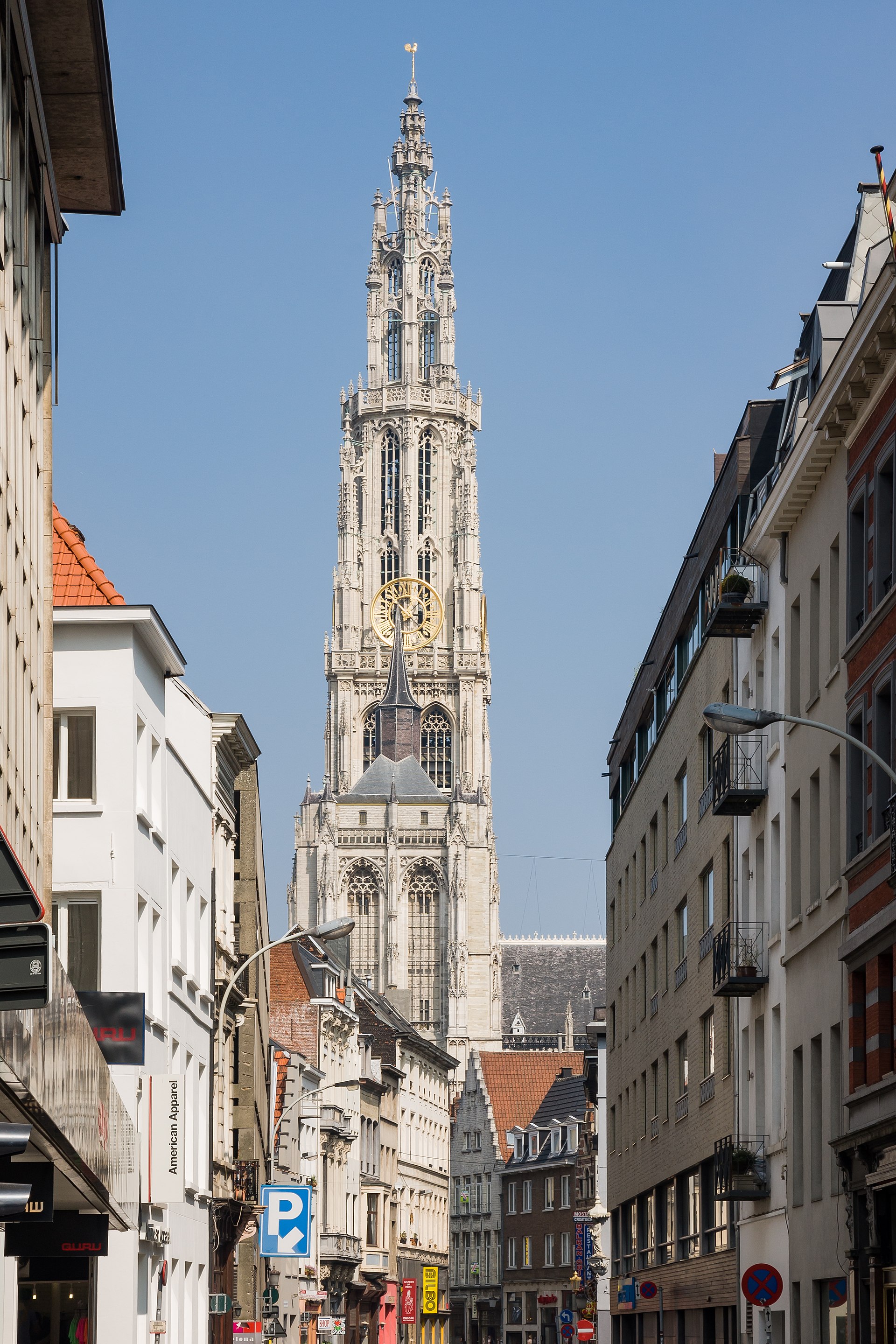
The Cathedral of Our Lady (Onze-Lieve-Vrouwekathedraal) dominates central Antwerp with a 123-meter spire that ruled the city's skyline from 1521 until modern port cranes appeared in the 1960s. Construction began in 1352 on foundations of a smaller Romanesque church, continuing across 170 years as successive generations of builders added chapels, side aisles, and the northern tower while the planned second southern tower never progressed beyond foundation level due to funding exhaustion and shifting architectural tastes. The result appears asymmetrical yet somehow complete — the single soaring spire draws eyes upward while the incomplete southern side creates negative space that frames the building's mass. UNESCO recognized it as World Heritage in 1999 not for symmetry but for representing the evolution of Brabantine Gothic style across nearly two centuries of uninterrupted construction, a timeline that captures the economic rise and partial decline of Antwerp as Europe's commercial hub. Walking around the cathedral's exterior reveals construction phases like tree rings. The oldest sections near the choir show early Gothic proportions — heavier stonework, smaller windows, decoration that remains geometric rather than flowing. Moving toward the western facade, the stonework becomes progressively more delicate, windows expand, and the decorative vocabulary shifts from early Gothic severity toward late Gothic exuberance with elaborate tracery and sculpture niches. The northern tower itself took 59 years to complete (1422-1481), rising in stages marked by changes in stone color and carving style. Climbing the 500 steps to the bell chamber (€8, irregular opening schedule) provides close examination of construction techniques alongside panoramic city views, though the climb is physically demanding and not recommended for visitors with mobility limitations or cardiovascular concerns. The cathedral's interior stretches 118 meters through seven aisles separated by 125 columns, creating a stone forest that manipulates scale perception — standing at the western entrance, the high altar appears impossibly distant, yet walking toward it reveals the space as less vast than initial impression suggested. The nave reaches 40 meters at its highest point, supported by flying buttresses visible from exterior vantage points but architecturally concealed inside through clever design. Natural light enters through clerestory windows and enormous stained glass installations, though much original medieval glass was destroyed during iconoclastic riots in 1566 when Calvinist reformers systematically smashed religious imagery they considered idolatrous. The current windows mostly date from 19th and 20th-century restorations, lacking the luminous quality of surviving medieval glass but maintaining Gothic proportions and color schemes. The cathedral's artistic reputation rests primarily on four monumental paintings by Peter Paul Rubens, installed here because the artist maintained his home and studio in Antwerp and received the commission for altarpieces while at the height of his career. "The Elevation of the Cross" (1610) occupies the left transept — a triptych showing muscular figures straining to raise Christ's cross while followers react with theatrical anguish, all rendered in Rubens' characteristic dynamic composition and dramatic lighting. Across the nave in the right transept hangs "The Descent from the Cross" (1612-1614), considered by many art historians as Rubens' masterpiece. The central panel shows Christ's body being lowered from the cross in a carefully choreographed diagonal composition that creates movement within stillness, the corpse's weight visually palpable through how surrounding figures brace themselves. Side panels show the Virgin Mary and Saint John, their poses mirroring the central action while maintaining compositional independence. Two additional Rubens works occupy less prominent locations but reward careful attention. "The Resurrection" (1612) hangs above the high altar, though viewing it requires standing at specific angles due to lighting and distance. "The Assumption of the Virgin" (1626) decorates the Lady Chapel with swirling compositions showing Mary ascending through clouds surrounded by cherubs, painted in Rubens' late style when he favored looser brushwork and more complex spatial arrangements. The cathedral preserves these paintings in situ rather than transferring them to climate-controlled museums, meaning you see them in their intended architectural context — designed for specific lighting conditions, viewing distances, and liturgical functions. Beyond Rubens, the cathedral houses an exceptional collection of Baroque and medieval art distributed across side chapels and walls. The pulpit (1713) by Hendrik Frans Verbrugghe shows trees carved from oak with naturalistic precision — birds nest in branches, vegetation grows from the base, and allegorical figures represent four continents. Several medieval triptychs survive from pre-iconoclasm periods, their gold-leaf backgrounds and tempera pigments contrasting sharply with Rubens' oil technique. The Chapel of the Venerable contains Antwerp's oldest surviving religious paintings (14th century), though they're displayed behind protective glass in dim lighting that hampers photography. A small treasury accessible via separate entrance (included in €8 admission) displays liturgical objects, reliquaries, and vestments spanning five centuries. The cathedral functions as an active parish church rather than purely tourist monument, meaning mass schedules affect visiting hours and movement restrictions apply during services. Sunday worship at 10:00 AM and 11:30 AM fills the nave with parishioners, creating atmosphere you won't experience when wandering empty aisles during weekday afternoons. Audio guides (€3, available in eight languages) provide competent commentary on architecture and major artworks, though they follow predictable routes and miss interesting details in lesser-visited side chapels where a knowledgeable guide would pause to point out hidden treasures.
Visitor Etiquette
The Cathedral of Our Lady remains an active parish church: dress modestly (covered shoulders and knees), silence mobile phones, and refrain from conversation during services. Photography is permitted outside service times but flash and tripods are always prohibited to protect the 400-year-old Rubens canvases. During Sunday masses (10:00 AM and 11:30 AM), tourist access is restricted to the rear of the nave — sit respectfully if you choose to attend, and do not leave mid-service. The side chapels may be roped off during confession hours (typically Saturday mornings). If you encounter pilgrims praying at the Chapel of the Venerable, observe quietly rather than photographing. Remove hats upon entering, speak in whispers, and do not touch artworks, columns, or carved surfaces. Large bags and backpacks may need to be left at the entrance during peak visitor periods.
Spiritual Significance
The Onze-Lieve-Vrouwekathedraal has served as Antwerp's principal place of Catholic worship since the 14th century, surviving the Beeldenstorm iconoclastic riots of 1566 when Calvinist mobs destroyed much of its medieval religious art, the French Revolutionary confiscations of the 1790s that stripped the building of liturgical treasures, and two World Wars that damaged but never destroyed the structure. Rubens' four altarpieces were commissioned as acts of Counter-Reformation faith — visual arguments for Catholic doctrine deployed in a city where Protestant and Catholic factions competed for souls throughout the 16th and 17th centuries. The cathedral also houses the devotion to the Onze-Lieve-Vrouw (Our Lady) that gave the building its name, with Marian imagery appearing in stained glass, sculpture, and side chapel paintings spanning 600 years of continuous veneration. The 47-bell carillon in the northern tower has regulated civic and religious life since the medieval period, its chimes marking canonical hours and calling the faithful to worship.
When to Visit
Cathedral hours: Monday-Friday 10:00 AM - 5:00 PM, Saturday 10:00 AM - 3:00 PM, Sunday 1:00 PM - 5:00 PM. Closed: During private events and select religious holidays — check website before visiting. Tower climbs: Seasonal availability (typically April-October), advance booking required, €8 additional fee. Best: Weekday mornings (10:00-11:30 AM) for optimal natural lighting on Rubens paintings and smallest crowds. Atmospheric: Late afternoon (3:30-4:30 PM) when low-angle sunlight creates dramatic shadows through columns. Avoid: Saturday afternoons and Sunday late morning when wedding ceremonies and masses create access restrictions.
Admission and Costs
General admission: €8 adults, €6 students/seniors (65+), free for children under 12. Audio guide: €3 (available in English, Dutch, French, German, Spanish, Italian, Chinese, Japanese). Tower climb: €8 additional (includes general admission) — seasonal availability, advance booking recommended. Guided group tours: €25-35 per person for 90-minute architectural and art history tour. Private guide: €200-280 for 2-hour specialized tour focusing on Rubens works and Gothic construction techniques.
Tips for Visitors
Lighting matters: Rubens paintings receive best natural illumination 10:00 AM-12:00 PM when morning sun enters through clerestory windows. Bring binoculars for examining details in paintings mounted high above floor level. Audio guide value: The €3 audio guide covers major works competently but follows crowded routes and misses lesser-known treasures. Consider hiring a specialized art historian guide if Rubens or Gothic architecture particularly interests you. Tower climbs: The 500-step ascent is strenuous without rest platforms — only attempt if you're physically fit. Views are spectacular but similar perspectives exist from the nearby MAS Museum rooftop (free, elevator accessible). Photography: Flash and tripods prohibited. Rubens paintings behind protective glass create reflections — shoot at angles to minimize glare. Best photo opportunities exist in side chapels with less ambient light interference. Mass attendance: Attending Sunday 10:00 AM service (free, all welcome) provides acoustic experience and reveals the space's liturgical function. Treasury access: Included in general admission but easy to miss — entrance located near gift shop. Combine with Rubens House: Walking circuit connects the cathedral to Rubens' home/studio (850 meters, 12-minute walk) — seeing both sites in succession contextualizes the artist's life and work environment. Allocate at least 90 minutes to explore side chapels, examine architectural details, and sit quietly experiencing the space's atmosphere.