
.JPG)
Overview
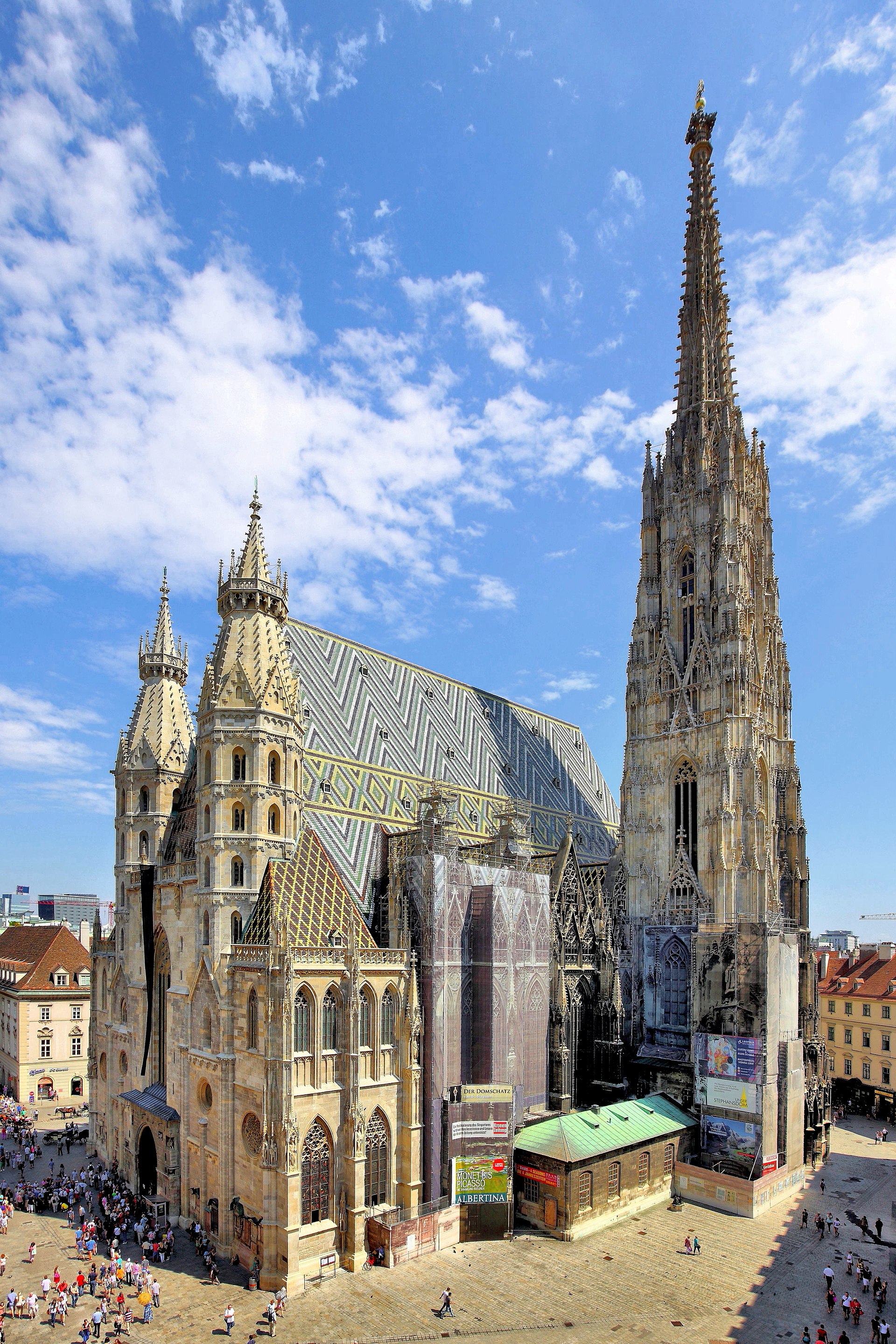
Stephansdom, as the Viennese call it, has anchored the center of Vienna since its Romanesque foundations were laid in 1147. The cathedral's South Tower — 136.4 meters of Gothic stonework — took 65 years to complete and remained the tallest structure in the city for centuries. Its multi-colored chevron-patterned roof, assembled from 230,000 glazed tiles depicting the Habsburg double eagle and the coat of arms of Vienna, is one of the most recognizable silhouettes in Austria. Mozart married here, Haydn sang in the boys' choir, and the Pummerin bell, cast from Turkish cannon captured during the 1683 siege, still rings each New Year's Eve. A guide transforms the cathedral from a photo stop into a journey through nearly nine centuries of Viennese faith, politics, and artistry. The cathedral is a natural starting point for a walk to Hofburg Palace via the Graben pedestrian boulevard.
Visitor Etiquette
Dress respectfully: Shoulders and knees should be covered as this is an active place of worship. South Tower fitness level: 343 narrow spiral steps with no elevator — manageable for most but demanding in summer heat. Catacomb tours run frequently: No reservation needed, but they fill quickly on rainy days when tower climbing is unappealing. Photography restrictions: Allowed in the nave but prohibited during services; flash never permitted. Silence during services: Mass is celebrated multiple times daily — check the schedule to avoid arriving during worship if you want to explore freely, or attend for a profound spiritual experience.
Spiritual Significance
Stephansdom has served as the spiritual heart of Vienna and the seat of the Archbishop since the 14th century. The cathedral witnessed the city's darkest hours — the Ottoman sieges of 1529 and 1683, when citizens prayed within its walls as cannon fire shook the foundations — and its greatest celebrations, including Mozart's wedding in 1782 and his funeral service in 1791. The Pummerin bell, Austria's largest at 20 tons, was cast from captured Turkish cannon and rings each New Year's Eve, broadcast across the nation. Below the nave, the catacombs hold the intestines of Habsburg emperors in copper urns (their hearts went to the Augustinerkirche, their bodies to the Kapuzinergruft) — a macabre tradition that reflects the dynasty's dispersal of power even in death. The Wiener Neustädter Altar, a magnificent painted and gilded Gothic winged altarpiece from 1447, and Pilgram's Pulpit with the master builder's self-portrait peering from a stone window, rank among the finest medieval artworks in Central Europe.
When to Visit
Cathedral open: Monday-Saturday 6 AM-10 PM, Sunday 7 AM-10 PM (sightseeing from 9 AM). South Tower climb: Daily 9 AM-5:30 PM (343 steps, no elevator). North Tower elevator: Daily 9 AM-5:30 PM (to see the Pummerin bell). Catacomb tours: Guided tours every 15-30 minutes, 10 AM-4:30 PM (Monday-Saturday), 1-4:30 PM (Sunday). Best time: Early morning (9-10 AM) for the quietest experience and best light through the stained glass.
Admission and Costs
Cathedral entry: Free (nave and side aisles). All-inclusive ticket: €7 adults (South Tower, North Tower elevator, catacombs, audio guide). South Tower only: €6 adults. Catacomb tour: €6.50 adults (guided, approximately 30 minutes). Evening roof tour: Seasonal special events with rooftop access — check schedule. Guided cathedral tours: €7 adults (approximately 30 minutes, several times daily).
Tips for Visitors
Hidden symbolism: Guides decode the medieval mason marks, Gothic capitals, and the theological program of the stained glass. WWII damage story: The 1945 fire that destroyed the roof and how the city rebuilt it tile by tile. Acoustic wonders: A guide positions you at the spot where the cathedral's Gothic acoustics are most dramatic. Free organ concerts: Sunday High Mass at 10:15 AM features the cathedral organ — arrive early for seats. Combine with Graben: The pedestrian boulevard runs from the cathedral to the Hofburg — a natural walking route through the heart of Vienna.