
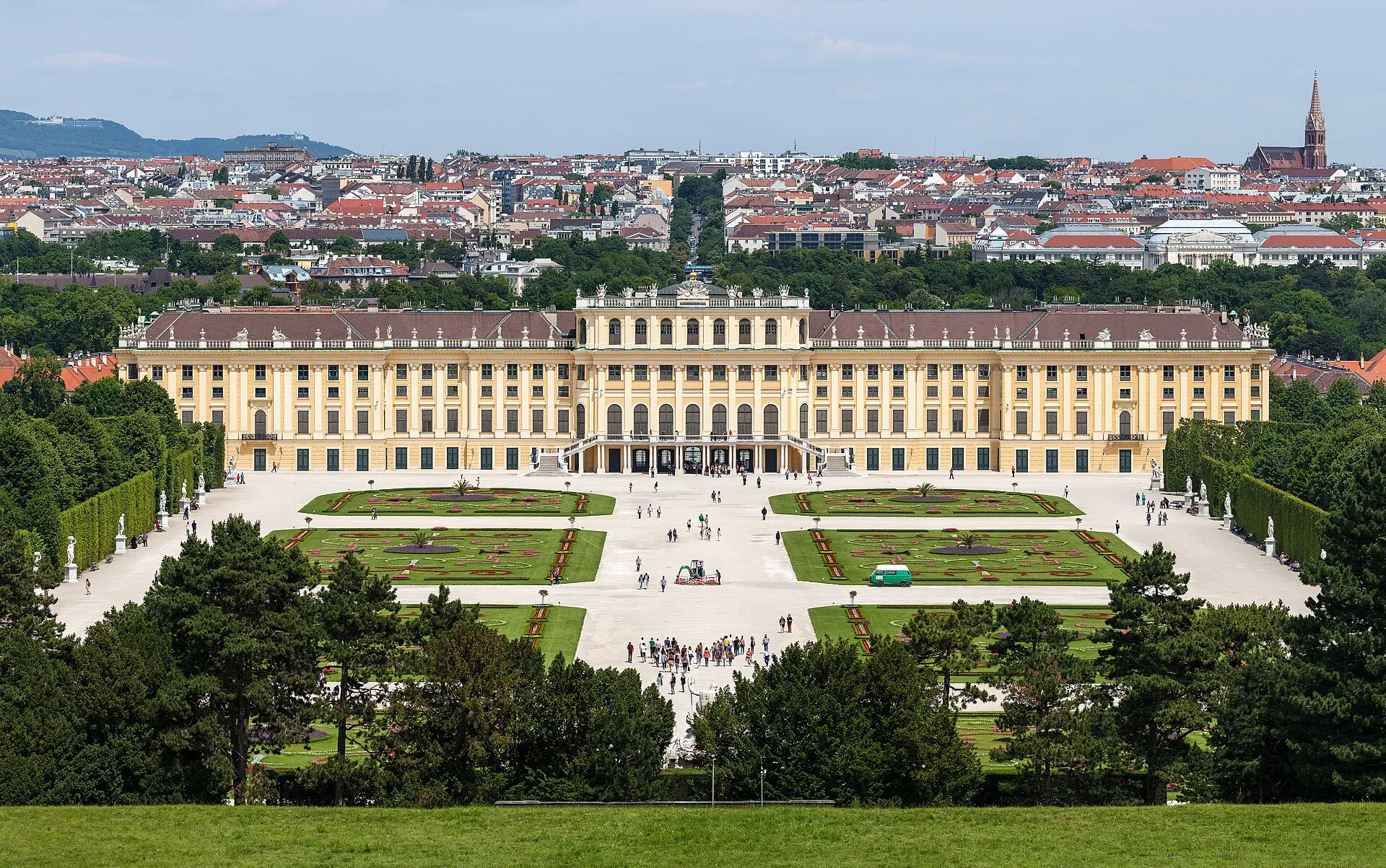
Architecture
Große Galerie (Great Gallery): 40-meter-long hall of mirrors and frescoes where state banquets were held — Vienna's answer to Versailles' Hall of Mirrors. Spiegelzimmer (Mirror Room): Where the six-year-old Mozart performed for Empress Maria Theresa in 1762. Millionenzimmer (Millions Room): Indo-Persian rosewood miniatures inlaid under glass — priceless and unique in European palace design. Gloriette: Neoclassical hilltop colonnade with sweeping views over the palace, gardens, and Vienna's skyline. Kronprinzengarten (Privy Garden): Symmetrical rose garden flanking the palace — quieter than the main parterre. Tiergarten: The world's oldest zoo, continuously operating since 1752. Palmenhaus: One of the largest glass structures in Europe, housing tropical and desert ecosystems.
Historical Significance
Habsburg dynasty decoded: Guides untangle the family tree from Maria Theresa through Franz Joseph and Empress Sisi. Room-by-room stories: Discover why the Millionenzimmer is paneled with Indo-Persian miniatures and how Napoleon slept here twice — in 1805 and 1809 — using the palace as his headquarters during the occupation of Vienna. The Große Galerie hosted the Congress of Vienna in 1814-1815, where Europe's borders were redrawn after Napoleon's defeat. Emperor Franz Joseph was born here in 1830, ruled from here for 68 years, and died in these rooms in 1916, just two years before the empire's dissolution. Garden secrets: The Neptune Fountain, Roman Ruins folly, and privy garden areas that most visitors walk past all carry layers of Habsburg symbolism a guide reveals.
When to Visit
Palace open: Daily 8:30 AM-5:30 PM (extended to 6:30 PM in summer). Gardens: Open 6:30 AM until dusk, free entry. Best time: Arrive at 8:30 AM opening — tour buses begin around 10 AM. Evening option: Summer evening concerts in the Orangerie offer a different Schönbrunn experience. Duration: Imperial Tour (22 rooms) takes 30-40 minutes; Grand Tour (40 rooms) takes 50-60 minutes.
Admission and Costs
Imperial Tour (22 rooms): €22 adults, €17 ages 6-18. Grand Tour (40 rooms): €29 adults, €21 ages 6-18. Sisi Ticket (Schönbrunn + Hofburg + Imperial Furniture): €44. Gardens and Gloriette terrace: Free (Gloriette interior €4.50). Zoo entry: €26 adults, €13 children. Private guide: €200-350 for a 2-3 hour palace and grounds tour.
The Case for a Guide
A guided tour of Schönbrunn transforms the palace from a procession of gilded rooms into a living chronicle of Habsburg power, family tragedy, and imperial ambition — details the audio guide simply cannot convey.
- Napoleon's personal quarters: A guide pinpoints the exact bedchamber where Napoleon slept in 1805 and 1809, then explains how using Schönbrunn as his headquarters was a deliberate act of psychological warfare against the Habsburgs.
- Maria Theresa's 16 children: Rather than listing names, a guide explains how each child was strategically married across Europe — Marie Antoinette to France, Maria Carolina to Naples — turning the palace nurseries into a diplomatic engine.
- The tragic Millionenzimmer: Guides reveal the Indo-Persian rosewood miniatures were acquired through 18th-century trade routes at staggering cost, and explain why this room's extravagance scandalized even Maria Theresa's own court.
- Gloriette summit access strategy: A guide advises the optimal time to climb to the Gloriette for unobstructed panoramic views before tour buses arrive, and explains the hilltop colonnade's role as a victory monument after the 1757 Battle of Kolín.
- The maze garden center viewpoint: The palace maze near the children's museum has a central raised platform visible only if you know to look — guides lead you there directly rather than letting you wander the hedgerows alone.
Tips for Visitors
Book timed entry online: Summer queues can reach 60-90 minutes without a reservation. Audio guide included: Palace admission comes with an audio guide, but a live guide adds far richer context. No photography inside: Interior photography is prohibited in all state rooms. U4 Schönbrunn station: Direct metro access from central Vienna in 12 minutes. Half-day minimum: Palace tour plus gardens, Gloriette, and zoo easily fills 4-5 hours. Café Residenz: On-site restaurant serves Sachertorte and apple Strudel in the former riding school. Christmas and Easter markets: Seasonal markets in the courtyard draw huge but festive crowds.
Frequently Asked Questions
What months offer the best Schönbrunn Palace experience?
May through September is peak season, when the 1.2 kilometers of formal gardens are ablaze with color, the Gloriette terrace offers warm-weather panoramas, and the Tiergarten zoo is liveliest. Summer queues can reach 60-90 minutes without advance booking, so September and October deliver a sweet spot of manageable crowds and golden autumn light over the baroque parterre. The Christmas and Easter markets in the palace courtyard make December and April festive alternatives.
When can visitors tour Schönbrunn Palace?
Palace open daily 8:30 AM-5:30 PM, extended to 6:30 PM in summer. Gardens open 6:30 AM until dusk, free entry. Arrive at 8:30 AM opening as tour buses begin around 10 AM. Imperial Tour takes 30-40 minutes; Grand Tour takes 50-60 minutes.
How much is the entrance fee for Schönbrunn Palace?
Imperial Tour (22 rooms): €22 adults, €17 ages 6-18. Grand Tour (40 rooms): €29 adults, €21 ages 6-18. Sisi Ticket (Schönbrunn + Hofburg + Imperial Furniture): €44. Gardens and Gloriette terrace: Free (Gloriette interior €4.50).
What do guided tours of Schönbrunn Palace include?
Habsburg dynasty decoded: Guides untangle the family tree from Maria Theresa through Franz Joseph and Empress Sisi. Room-by-room stories reveal why the Millionenzimmer is paneled with Indo-Persian miniatures, how Napoleon used the palace as his headquarters in 1805 and 1809, and the symbolism behind the Neptune Fountain and garden follies most visitors walk past.