
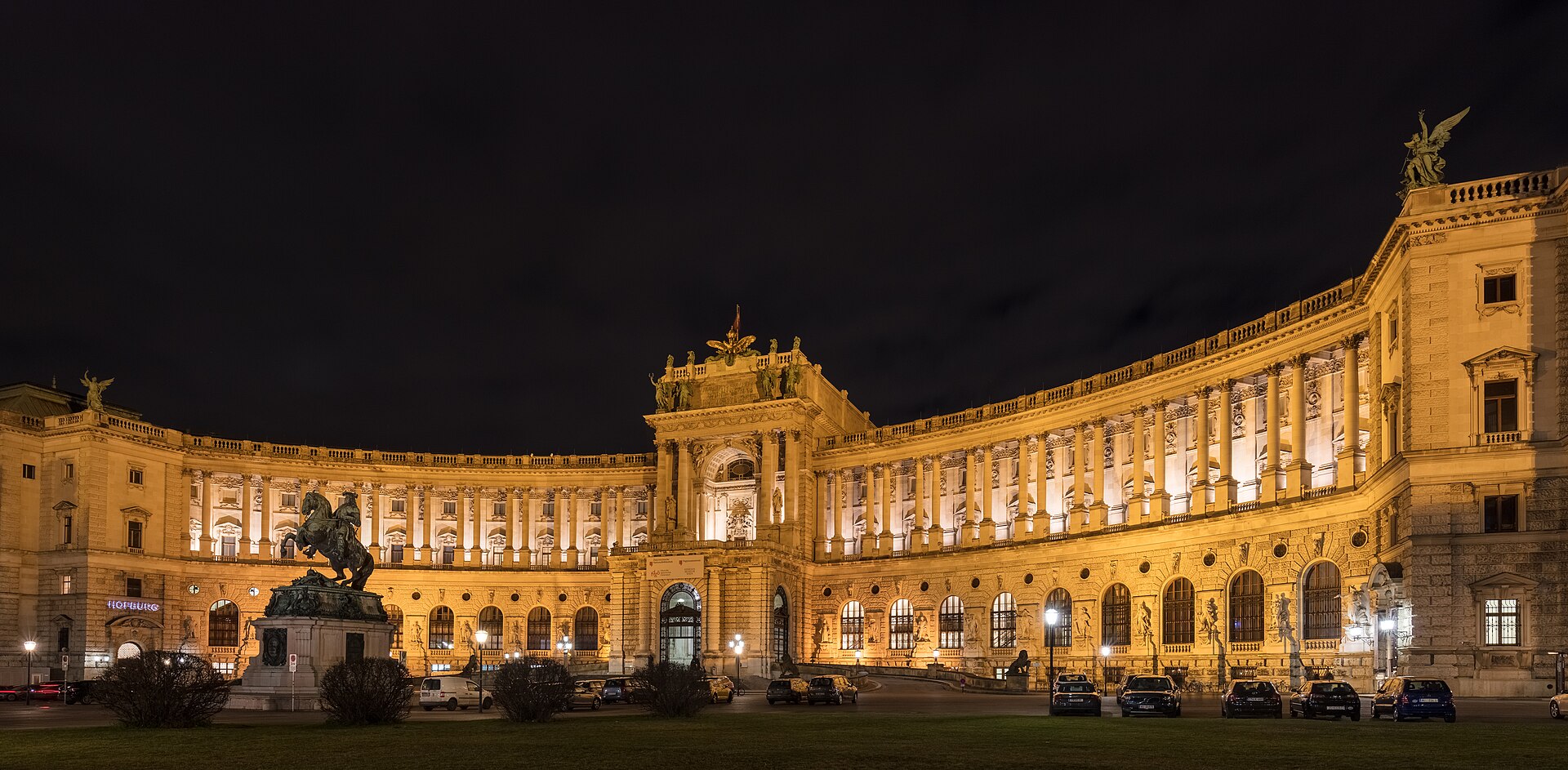

Overview
The Hofburg served as the Habsburg dynasty's winter residence and center of imperial government for over 600 years, from the 13th century until the empire dissolved in 1918. Today it serves as the official workplace of the Austrian president while simultaneously housing some of Vienna's most important museums and cultural institutions. The sprawling complex of 18 wings, 19 courtyards, and 2,600 rooms encompasses the Sisi Museum (devoted to Empress Elisabeth), the Imperial Apartments, the Silver Collection, the Austrian National Library's baroque Prunksaal, the Spanish Riding School, and the Schatzkammer treasury holding the Holy Roman Empire's crown jewels. A guide is essential for navigating this labyrinth efficiently, connecting the architectural layers from the medieval Schweizerhof to the Neue Burg wing completed in 1913.
Architecture
Schatzkammer: The Imperial Crown (circa 962 AD), Holy Lance, and Burgundian treasure — Europe's richest secular treasury. Sisi Museum: Personal artifacts, gowns, and exercise equipment of the enigmatic Empress Elisabeth. Spanish Riding School: Lipizzaner stallions performing classical dressage in a baroque hall unchanged since 1735. Prunksaal: The National Library's baroque state hall with 200,000 historic volumes, globes, and ceiling frescoes. Silver Collection: 7,000 pieces of imperial tableware including the 30-meter Milan centerpiece. Schweizerhof: The oldest part of the Hofburg, a 13th-century fortified courtyard named for the Swiss Guard. Burggarten: The palace garden with the Mozart memorial statue and the Palmenhaus café.
Historical Significance
The Hofburg is a physical chronicle of Habsburg power spanning seven centuries. The medieval Schweizerhof core dates to the 1200s, when the dynasty first consolidated control over Vienna. Each subsequent century added wings and courtyards reflecting the empire's expanding ambitions — the Renaissance Amalienburg, the baroque Reichskanzleitrakt, and the monumental Neue Burg completed just five years before the empire's collapse. It was from the Hofburg balcony that Emperor Franz Joseph governed an empire of 50 million people, and it was here that his troubled wife Elisabeth (Sisi) struggled against the suffocating protocols of court life. The Schatzkammer holds relics of the Holy Roman Empire itself — the imperial crown, orb, and scepter that symbolized secular authority across Central Europe for a millennium. Schönbrunn Palace served as the summer counterpart, and Belvedere Palace as Prince Eugene's personal estate nearby.
When to Visit
Imperial Apartments & Sisi Museum: Daily 9 AM-5:30 PM. Spanish Riding School: Performances and morning exercises on select dates; check schedule in advance. National Library Prunksaal: Tuesday-Sunday 10 AM-6 PM (Thursday until 9 PM). Schatzkammer (Treasury): Wednesday-Monday 9 AM-5:30 PM (closed Tuesdays). Best time: Arrive at 9 AM opening; the Sisi Museum fills rapidly by late morning. Duration: Prioritize ruthlessly — choose 2-3 venues based on your interests.
Admission and Costs
Sisi Ticket (Apartments + Sisi Museum + Silver Collection): €18 adults. Sisi Ticket combo (+ Schönbrunn + Imperial Furniture): €44 adults. Spanish Riding School performance: €27-190 depending on seat. Morning exercise viewing: €16 adults (standing, 2 hours). Schatzkammer: €14 adults. National Library Prunksaal: €10 adults.
Tips for Visitors
Navigating the labyrinth: The Hofburg's 18 wings confuse even locals — guides chart an efficient route through the sprawl. Sisi beyond the myth: Guides separate the real Empress Elisabeth from the romanticized movie version, explaining her restless travels and political role. Lipizzaner tickets sell out: Performance tickets must be booked weeks in advance; morning exercises are easier to get. Audio guide included: The Sisi Ticket includes an audio guide, but a live guide adds depth to the 20+ rooms. U3 Herrengasse: Closest metro stop, placing you at the Michaelerplatz entrance. Café in the Palmenhaus: Beautiful Art Nouveau greenhouse café in the Burggarten for a mid-visit break.