
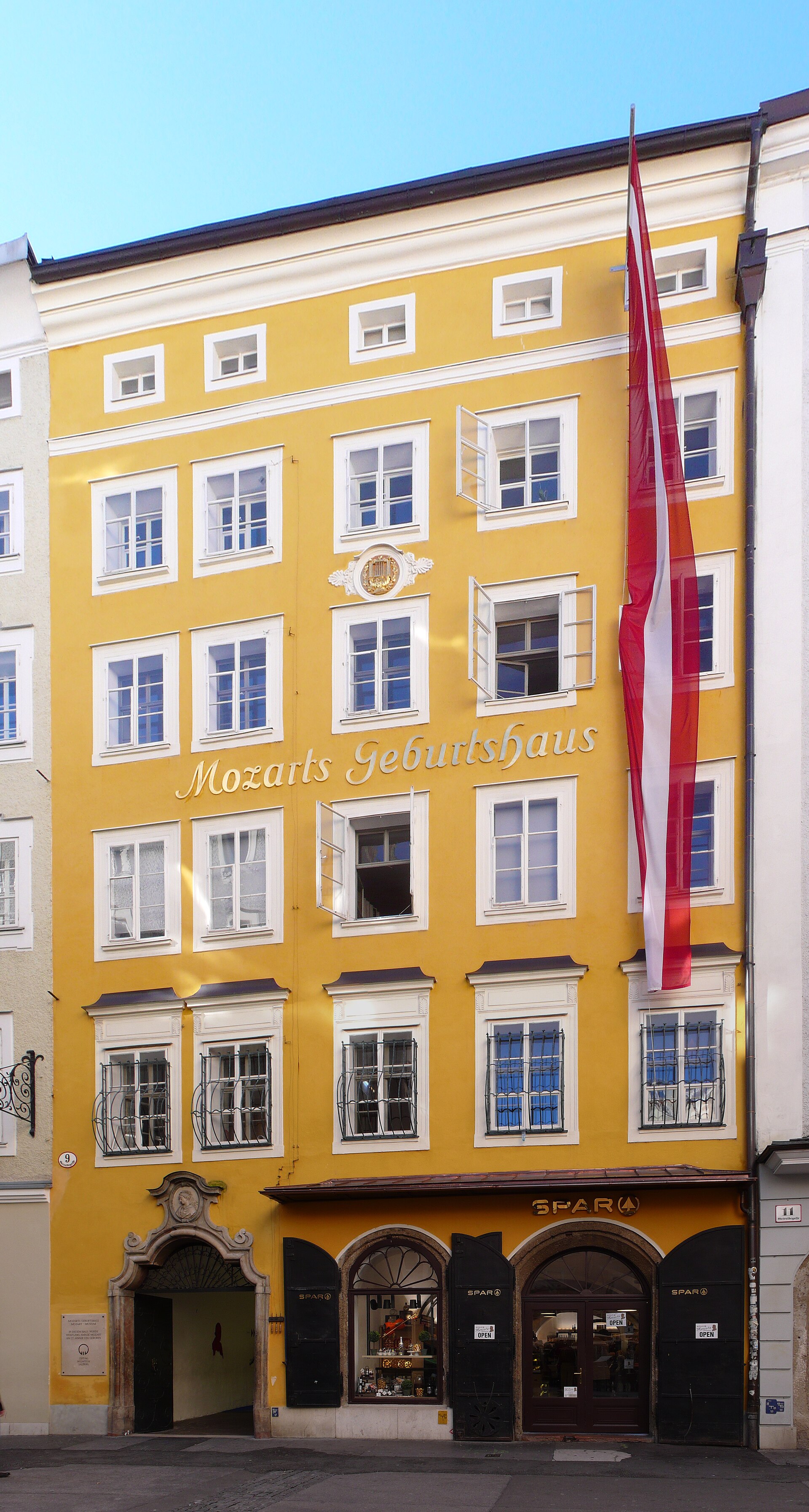

Overview
Wolfgang Amadeus Mozart was born on the third floor of Getreidegasse 9 on January 27, 1756, and spent the first seventeen years of his life in this bright yellow townhouse on Salzburg's most famous shopping street. The apartment-turned-museum displays original instruments including the child prodigy's violin, family portraits painted by his brother-in-law Joseph Lange, letters exchanged with his father Leopold, and period furnishings that recreate the domestic environment of an 18th-century Salzburg musician's household. The Mozart family lived here until 1773, when they moved across the river to the larger Tanzmeisterhaus (now the Mozart Residence museum). The building sits on Getreidegasse, steps from the funicular to Hohensalzburg Fortress and a short walk from Mirabell Palace.
Guided Tours
Musical context: Guides explain the significance of each instrument and manuscript on display, connecting them to specific compositions. Leopold Mozart's role: Understanding the ambitious father who shaped (and sometimes constrained) his son's career adds emotional depth to the family letters on display. 18th-century Salzburg: The political, religious, and social world that formed Mozart's artistic sensibility — a prince-archbishop's court where music was both art and political tool. Beyond the museum: Guides connect the birthplace to other Mozart sites — the Residenz where he performed, the Cathedral where he was baptized, and the university hall where operas premiered. Debunking myths: Separating historical fact from two centuries of Mozart mythology and romantic embellishment.
Collections Highlights
Child's violin: The small violin Mozart played as a boy, displayed in the third-floor apartment — one of the museum's most treasured artifacts. Clavichord: A keyboard instrument from the period, of the type young Wolfgang first composed on. Family portraits: Including the unfinished painting by Joseph Lange considered the most accurate likeness of adult Mozart. Family letters: Correspondence between Wolfgang and Leopold revealing their complex, sometimes fraught relationship. Period kitchen: Recreated 18th-century kitchen showing domestic life behind the musical genius. Opera stage models: Miniature sets from Mozart's major operas performed during his lifetime. Getreidegasse itself: The medieval shopping lane with ornate wrought-iron signs — Salzburg's most photographed street.
When to Visit
Open: Daily 9 AM-5:30 PM (last admission 5 PM). Extended summer hours: Until 6 PM in July and August. Duration: Three floors of exhibits; allow 45-60 minutes for a thorough visit. Best time: Arrive at 9 AM opening or after 3 PM when tour groups thin out. Audio guide: Included in admission, available in multiple languages.
Admission and Costs
Adults: €14. Children (6-14): €5. Combo ticket (Birthplace + Mozart Residence): €20 adults. Under 6: Free. Salzburg Card: Includes free entry to both Mozart museums. Private music history guide: €160-260 for a half-day covering Mozart sites across the city.
Tips for Visitors
Small and crowded: The apartment rooms are narrow — visiting early or late avoids jostling with tour groups. No photography inside: Photography is prohibited in the museum rooms to protect the artifacts. Getreidegasse is the real show: Browse the street's guild signs and shops before or after the museum. Mozart Residence pairs naturally: The second museum at Makartplatz 8 covers Mozart's later Salzburg years and contains more instruments. Salzburg Card covers both: Both Mozart museums plus the fortress and all other major attractions. Mozartkugeln factory: The original Fürst chocolate shop is at Alter Markt, a 3-minute walk from the birthplace — the only hand-made version.