
Hohensalzburg Fortress timeline
-
Archbishop Gebhard breaks ground
Building began during the Investiture Controversy, when Archbishop Gebhard sided with the pope against Emperor Henry IV and needed a refuge that could outlast a long siege.
-
Leonhard von Keutschach's great expansion
The archbishop roughly doubled the castle, added the gilded Goldene Stube, and built the Reisszug goods hoist — still counted among the oldest operating railways in the world.
-
The one siege it withstood
During the German Peasants' War, rebel miners and townsfolk trapped Archbishop Matthäus Lang inside for months; the fortress held, and no attacking army ever breached its walls.
-
A prince-archbishop imprisoned
Deposed Wolf Dietrich von Raitenau — the archbishop who built Mirabell Palace — was jailed in his own fortress until his death in 1617.
-
Napoleon's troops walk in
In the War of the Second Coalition the garrison surrendered to French forces without a fight, ending the fortress's military career rather than testing its defences.
-
The Festungsbahn opens
A water-powered funicular replaced the long climb from Festungsgasse, making the stronghold one of the first Alpine castles reachable by public rail.
-
From barracks to museum
After service as barracks and a military prison through both World Wars, the fortress passed fully into civilian hands and opened to visitors.
- Today
Salzburg's most-visited monument
Now among Austria's most-visited historic sites, the fortress anchors the UNESCO-listed old town and hosts year-round chamber concerts in its medieval halls.
Fortification History
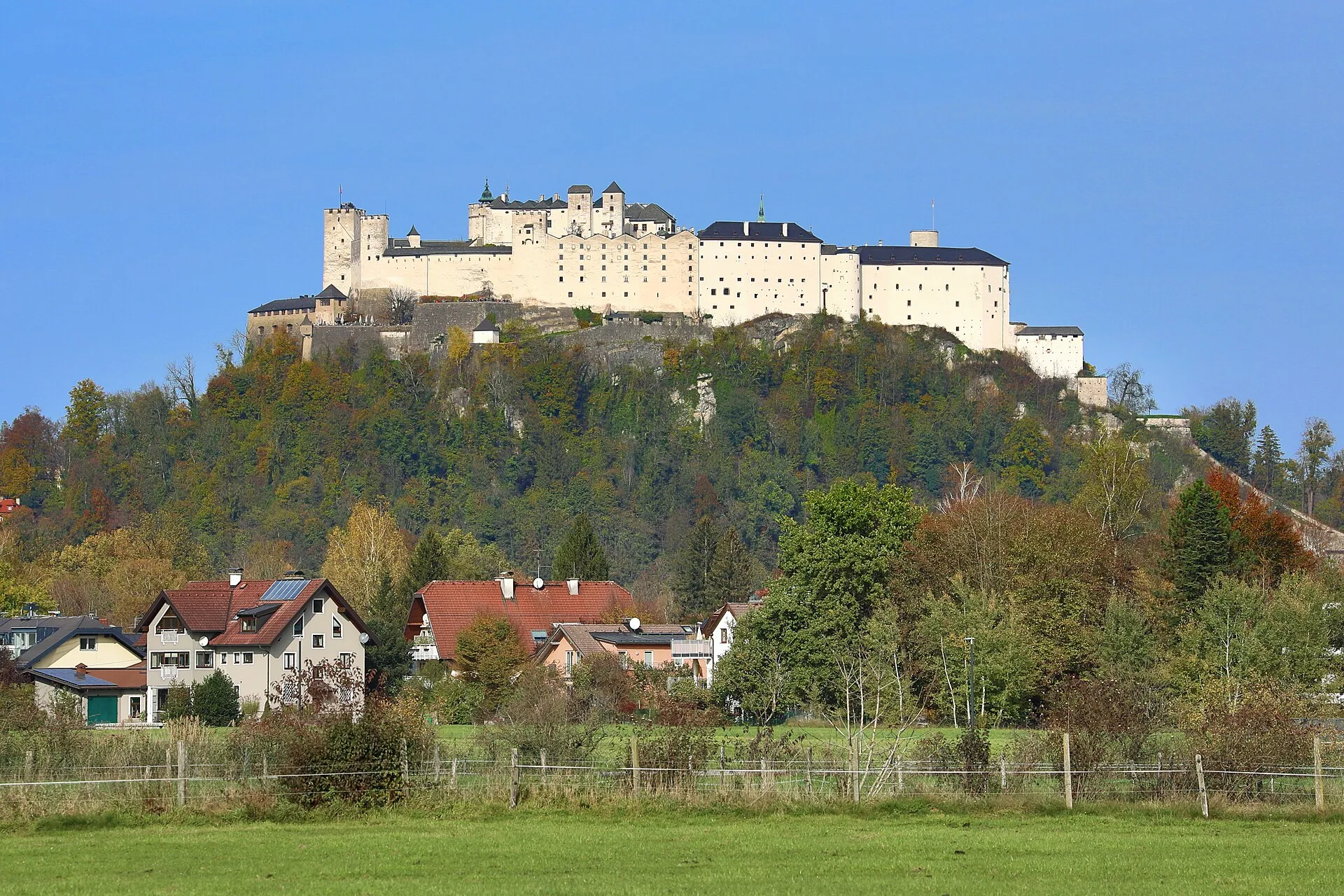
Hohensalzburg began in 1077 as a single fortified tower and grew, over roughly five centuries, into the impregnable seat of the prince-archbishops — churchmen who held both spiritual authority and the secular power of a sovereign prince. They fortified the Festungsberg against three threats at once: the Holy Roman Emperor, rival nobles, and, repeatedly, their own subjects.
Never conquered by force, Hohensalzburg is the largest fully preserved castle in Central Europe.
The one time its defences were truly tested came during the German Peasants' War of 1525, when rebellious miners and townspeople besieged Archbishop Matthäus Lang inside the walls for months. The fortress held — and no hostile army ever breached it. Its greatest builder, Leonhard von Keutschach (archbishop 1495-1519), roughly doubled the complex, commissioned the gilded Goldene Stube, and installed the Reisszug, a rope-hauled hoist to the summit still counted among the oldest operating railways in the world. A generation later the fortress turned on its own: the deposed Wolf Dietrich von Raitenau — the archbishop who built Mirabell Palace for Salome Alt — was imprisoned here from 1612 until his death in 1617.
Its military story ended not in battle but in surrender: when Napoleon's forces reached Salzburg in 1800, the garrison gave up the fortress without a shot. A water-powered funicular opened in 1892, and after serving as barracks and a military prison through both World Wars the castle passed fully into civilian hands. The Salzburger Stier (Salzburg Bull), a 16th-century mechanical organ, still plays daily at 7 AM, 11 AM, and 6 PM — an echo of the garrison's routine that has continued for 500 years. The site is maintained today by the official Salzburg fortresses authority, and the surrounding old town has been a UNESCO World Heritage Site since 1996.
Notable Rooms
- Goldene Stube (Golden Chamber): the prince-archbishop's private audience room, a late-Gothic jewel with intricately carved wood, gold-studded blue vaulting, and a monumental ceramic tile stove from 1501.
- Goldener Saal (Golden Hall): the great state hall, its coffered ceiling studded with gilt bosses and carried on twisted red-marble columns — now the setting for the fortress's evening concerts.
- Reckturm (torture tower): the medieval detention tower whose displayed instruments come wrapped in centuries of myth; the honest history of the archbishop's court is more sobering than the theatrics.
- Fortress & Rainer Regiment museums: armour, weapons, and the daily life of the garrison across several rooms, plus the story of Salzburg's own infantry regiment.
- Marionette Museum: handcrafted puppets drawn from the Salzburg Marionette Theatre's long tradition.
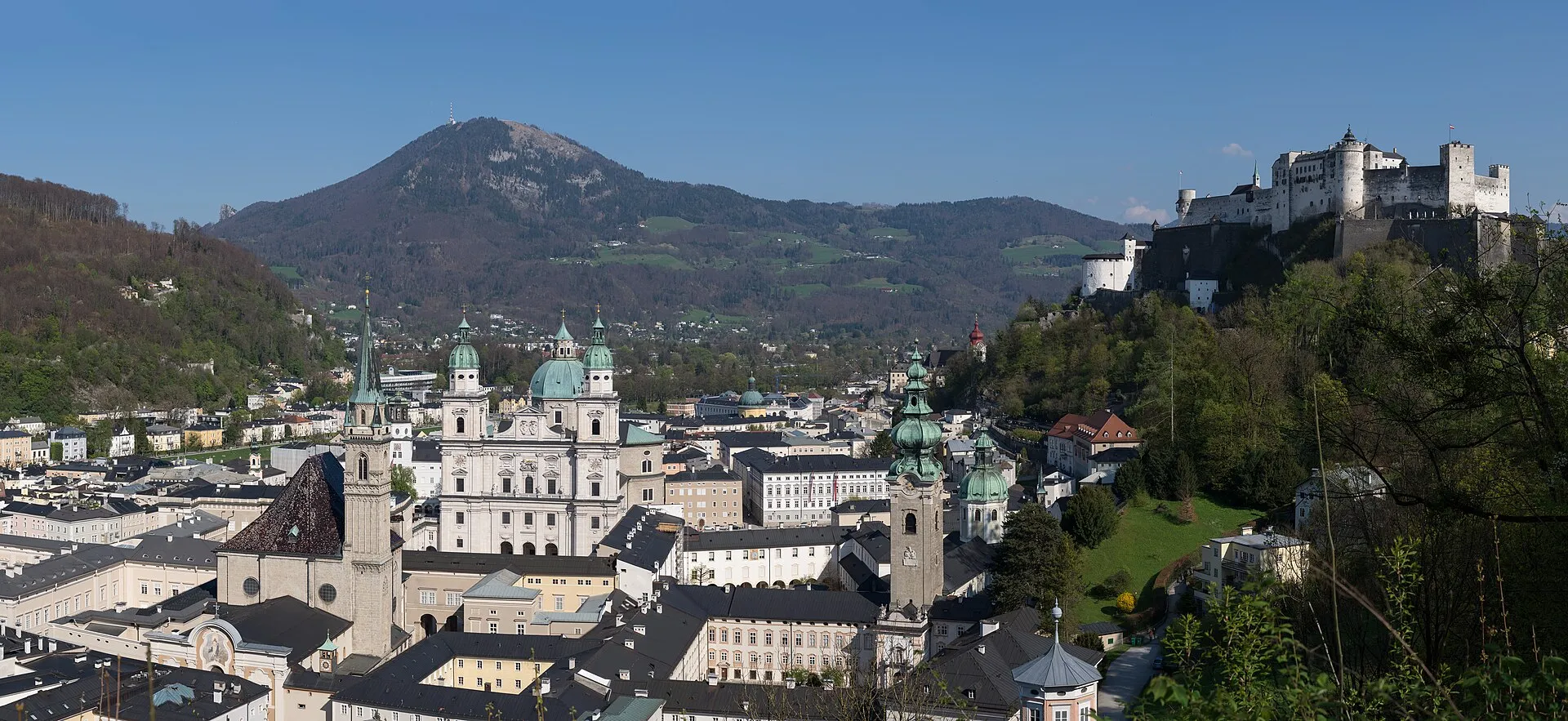
- Kuenburg Bastion: the best vantage on the whole hill for a panorama over the old town, the Salzach, and the Alps — the spot to photograph the domes below and the Untersberg beyond.
- Rampart walks: a circuit of the outer walls with views in every direction, east toward the Salzkammergut lakes on the road to Hallstatt.
Hohensalzburg Fortress in Pictures
When to Visit
The Festungsbahn funicular climbs from Festungsgasse every few minutes for a 1-minute ride; walking up the steep paths from Kapitelplatz or Festungsgasse takes 15-20 minutes. The fortress is open daily from 9 AM, closing at 5 PM in winter and 7 PM from May to September, with the funicular running until closing.
For the calmest visit, take the first funicular at 9 AM before the tour groups and cruise day-trippers arrive, or come in late afternoon, when low sun warms the old-town rooftops for photographs. The Salzburger Stier mechanical organ still sounds across the valley at 7 AM, 11 AM, and 6 PM, and evening chamber concerts run year-round in the medieval state rooms — worth timing a visit around. In peak July and August, book online to skip the funicular queue.
Admission and Costs
Tickets bundle the Festungsbahn funicular with the exhibits inside:
- All-inclusive ticket (funicular up and down + every exhibit, including the Fürstenzimmer and the panorama tour): €16.30 ($18) adults, €9.30 ($10) ages 6-14.
- Basic ticket (funicular + courtyards and bastions only): €13.80 ($15) adults.
- Walking up (exhibits included, no funicular): €12.70 ($14) adults — the cheapest option, and the path passes Salzburg's oldest lane on the way.
Fortress concerts run €35-45 ($38-49) per person and include the evening funicular ride. The Salzburg Card (€30-42 / $33-46 for 24-72 hours) covers fortress entry and the funicular along with every other major attraction, the Salzach cruise, and city buses — the single best value if you are seeing more than the castle. Under-6s enter free.
The Case for a Guide
Hohensalzburg looks formidable from below, but a guide decodes the politics and personalities locked inside its stones — from the prince-archbishops' absolute power to the myths The Sound of Music created about Salzburg.
- Torture museum with honest context: the medieval instruments come wrapped in accumulated mythology; a guide separates what the archbishop's court actually used from theatrical exaggeration, and explains its judicial procedures.
- The archbishop's private apartments: the Goldene Stube and its 1501 ceramic tile stove are open to all, but a guide explains which archbishop commissioned each carved detail and what political crises unfolded in the room.
- Funicular versus climbing: a guide advises whether to ride the Festungsbahn or walk up — and points out that the climbing route passes the oldest street in Salzburg, a detail absent from every ticket counter.
- Sound of Music location myths: most visitors arrive expecting scenes filmed here; a guide clarifies that the fortress appears only in establishing shots and that the songs were staged elsewhere — including the gardens of Mirabell Palace.
- Salt trade funding everything: guides trace how Salz (salt) and its medieval trade routes built and expanded the fortress across five centuries, making the prince-archbishops some of Europe's wealthiest rulers.
Tips for Visitors
- Allow 2-3 hours — the fortress is bigger than it looks; state rooms, museums, ramparts, and views all take time.
- Beat the funicular queue — lines build after 10 AM in summer, so walk up or ride at the 9 AM opening.
- Wear sturdy shoes — the cobbled courtyards inside and the steep paths outside are uneven.
- Bring a layer — the hilltop is exposed and often windy, even on warm days.
- Consider an evening concert — chamber music in a medieval hall is a uniquely Salzburg experience and includes the funicular ride.
- Combine with the old town — the funicular base is steps from Mozart's Birthplace and the cathedral, and the gardens of Mirabell Palace across the river frame the classic fortress photo — a natural half-day loop laid out in our Salzburg trip planner.
- Accessibility — the funicular reaches the main courtyards, but the oldest towers and some state rooms involve stairs and uneven medieval floors.
Frequently Asked Questions
What season is best for visiting Hohensalzburg Fortress?
May through September combines extended opening hours until 7 PM, the warmest conditions for walking the exposed ramparts, and the clearest views over the Salzach River toward the distant Salzkammergut lakes. The fortress hosts evening concerts year-round in its medieval state rooms, but summer crowds at the funicular can be intense — arriving at 9 AM opening or visiting in the golden October shoulder season avoids the worst queues.
How long to budget for Hohensalzburg Fortress and avoid queues?
Allow 2-3 hours: the fortress is larger than it looks — state rooms, museum, ramparts, and views take time. Funicular queues in summer build after 10 AM, so walk up or arrive at the 9 AM opening to avoid waiting.
What is the admission price for Hohensalzburg Fortress?
All-inclusive ticket (funicular + all exhibits): €16.30 (about $18) adults, €9.30 (about $10) ages 6-14. Basic ticket (funicular + courtyards only): €13.80 (about $15) adults. Walking up with exhibits included: €12.70 (about $14) adults, which saves the funicular fee. The Salzburg Card covers entry and the funicular.
Why did the archbishops of Salzburg need such a formidable fortress?
Salzburg's prince-archbishops were not only churchmen but sovereign rulers, and they built Hohensalzburg to guard against three threats at once: the Holy Roman Emperor, rival nobles, and their own subjects. That last danger was real — during the German Peasants' War of 1525, rebellious miners and townspeople besieged Archbishop Matthäus Lang inside the walls, and the fortress held.
Can you walk up to Hohensalzburg Fortress instead of taking the funicular?
Yes. A steep 15-20 minute climb on foot from Kapitelplatz or Festungsgasse reaches the gates, and the walk-up ticket (€12.70, about $14, exhibits included) is the cheapest way in because it skips the funicular fee. The path passes Salzburg's oldest lane, and you can always ride the Festungsbahn back down.
What is the Reisszug at Hohensalzburg Fortress?
The Reisszug is a rope-hauled freight hoist that climbs the Festungsberg to the castle, first documented around 1500 under Archbishop Leonhard von Keutschach. It is widely counted among the oldest operating railways in the world, though it carries goods, not passengers — visitors ride the modern 1892 Festungsbahn funicular instead.