
.jpg)
Overview
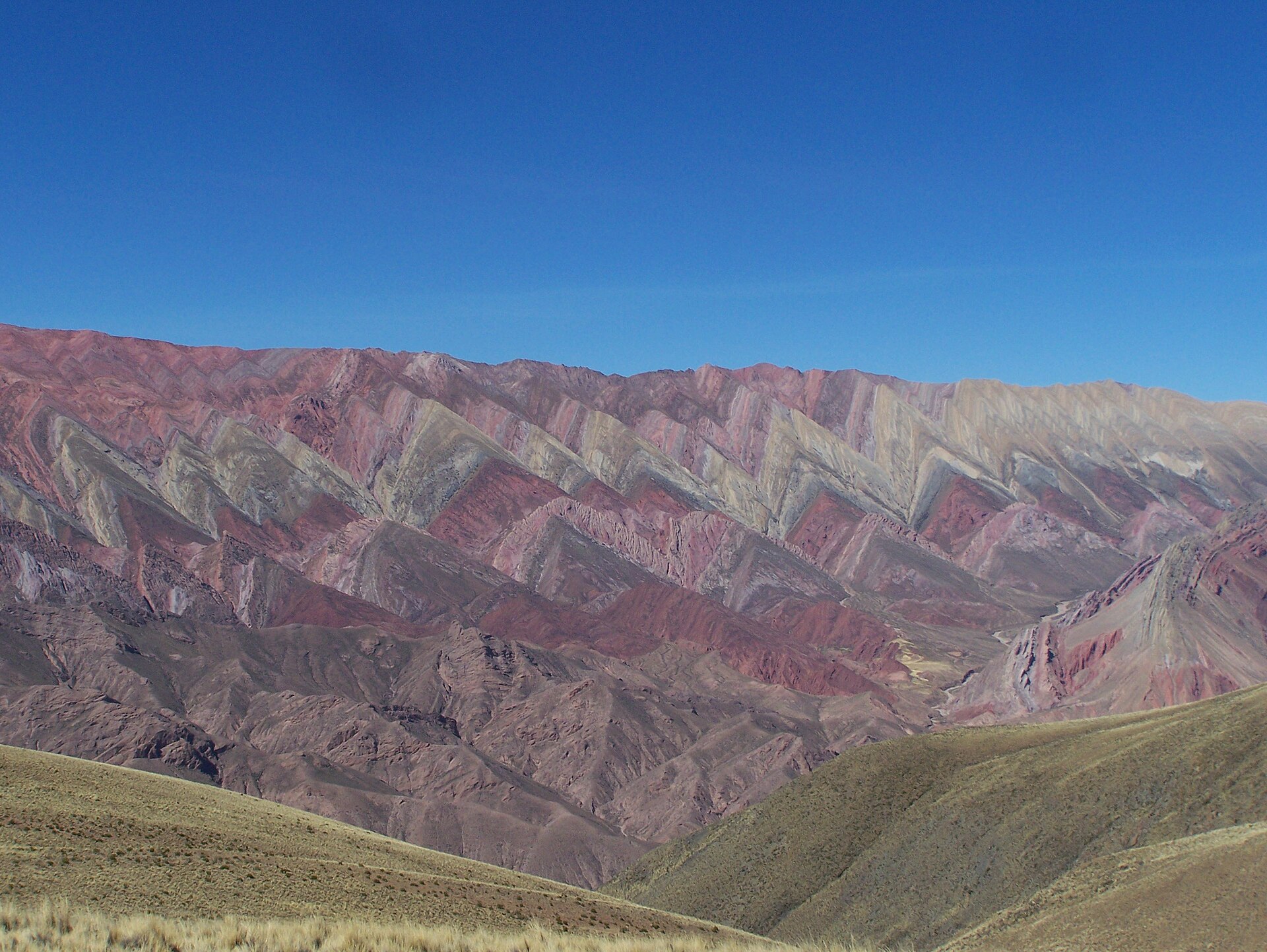
The Quebrada de Humahuaca is a 155-kilometer gorge carved by the Río Grande through the Andes of northwestern Argentina, declared a UNESCO World Heritage Site in 2003 for its extraordinary geological, archaeological, and cultural significance. The canyon walls display millions of years of geological history in bands of red, purple, green, yellow, and cream — sedimentary layers twisted and folded by tectonic forces into formations that look as if a painter dragged a palette knife through the earth. Cerro de los Siete Colores (Hill of Seven Colors) at the village of Purmamarca is the most famous of these striped mountains, but similar formations repeat throughout the gorge.
Human presence here stretches back over 10,000 years. The Pucará de Tilcara — a fortified pre-Inca settlement rebuilt on a hilltop above the town of Tilcara — gives tangible form to the Omaguaca, Tilian, and other indigenous cultures that thrived in the canyon long before the Inca Empire extended its road network (the Qhapaq Ñan) through this very gorge in the 15th century. Today, Quechua is still spoken in many of the quebrada's adobe villages, and traditional festivals like Carnaval de Humahuaca blend Catholic and indigenous Andean rituals in riotous celebrations of music, confetti, and devil masks. A bilingual guide is essential — the geological, archaeological, and cultural layers are impossible to read without someone who knows the stories. Most visitors base themselves in Salta and drive the quebrada as a day trip. The Tren a las Nubes departs from Salta in the opposite direction but pairs well over a multi-day itinerary.
Trails
Cerro de los Siete Colores: The Hill of Seven Colors at Purmamarca is a geological masterpiece — seven distinct mineral layers creating bands of crimson, ochre, green, cream, purple, pink, and brown against a cobalt sky. Pucará de Tilcara: A reconstructed pre-Inca fortress on a hilltop above the town, with panoramic views down the canyon and a small museum displaying ceramics, tools, and burial artifacts. Adobe villages: Purmamarca, Tilcara, and Humahuaca retain their mud-brick architecture and slow pace — their plazas, churches, and artisan markets feel unchanged in centuries. Salinas Grandes: A side trip west from Purmamarca climbs to the Puna at 3,450 meters, where a vast white salt flat stretches to the horizon like a frozen ocean. Living Quechua culture: Markets in Humahuaca sell dried llama meat, coca leaves, and hand-woven textiles. Festivals bring masks, music, and traditions that predate the Spanish conquest.
Wildlife
The quebrada's arid landscape harbors a distinctive Andean ecosystem. Vicuñas — wild relatives of the llama with prized golden wool — graze on sparse vegetation at higher elevations, particularly visible on the approach to Salinas Grandes. Herds of domesticated llamas are a constant presence around the adobe villages. Overhead, Andean condors soar on thermals rising from the canyon walls, and smaller raptors like the aguilucho (variable hawk) hunt rodents in the scrubland. The endemic horned coot inhabits high-altitude lagoons near the Puna, and flocks of flamingos gather at salt lakes above 3,500 meters during the wet season. Hardy cardón cacti — some towering 10 meters tall and centuries old — dot the hillsides, providing nesting sites for parrots and woodpeckers. A naturalist guide transforms the drive into a rolling wildlife safari.
When to Visit
Canyon access: Open year-round — it's a public road (Ruta Nacional 9) through inhabited villages. Pucará de Tilcara: Daily 9 AM - 6 PM. Best season: April through November (dry season) offers clear blue skies that make the rock colors pop. Avoid: December through March brings afternoon thunderstorms and occasional flash floods that can close roads. Duration: Full day as a round trip from Salta (290km each way); 2 days with an overnight stop is more comfortable.
Admission and Costs
Canyon access: Free — it's a public road through open landscape. Pucará de Tilcara entry: AR$5,000-10,000 ($5-10). Guided day trip from Salta: AR$50,000-90,000 ($50-90) with transport and guide. Two-day tour with overnight in Purmamarca: AR$120,000-200,000 ($120-200) per person. Local guide in Tilcara or Humahuaca: AR$15,000-25,000 ($15-25) for a 2-hour village and ruins tour.
Tips for Visitors
Start early from Salta: The drive is 290km and the canyon is best photographed in morning light. Departing at 7 AM gets you to Purmamarca by 10 AM. Altitude climbs steadily: The canyon rises from 1,200m to nearly 3,000m at Humahuaca. Drink mate de coca at the stops, stay hydrated, and watch for altitude symptoms. Side trip to Salinas Grandes: The salt flats are 50km west of Purmamarca via a mountain road that climbs above 4,000m. Only attempt with an experienced driver and acclimatized passengers. Photography gold: Morning sun (before noon) lights the eastern canyon walls most dramatically. The Siete Colores viewpoint in Purmamarca is best between 8 and 10 AM. Respect indigenous communities: Ask permission before photographing people, especially at markets and ceremonies. Buy directly from artisans rather than intermediary shops. Fill your tank in Salta: Gas stations in the canyon villages exist but can run dry — start with a full tank and top up when possible.