

Overview
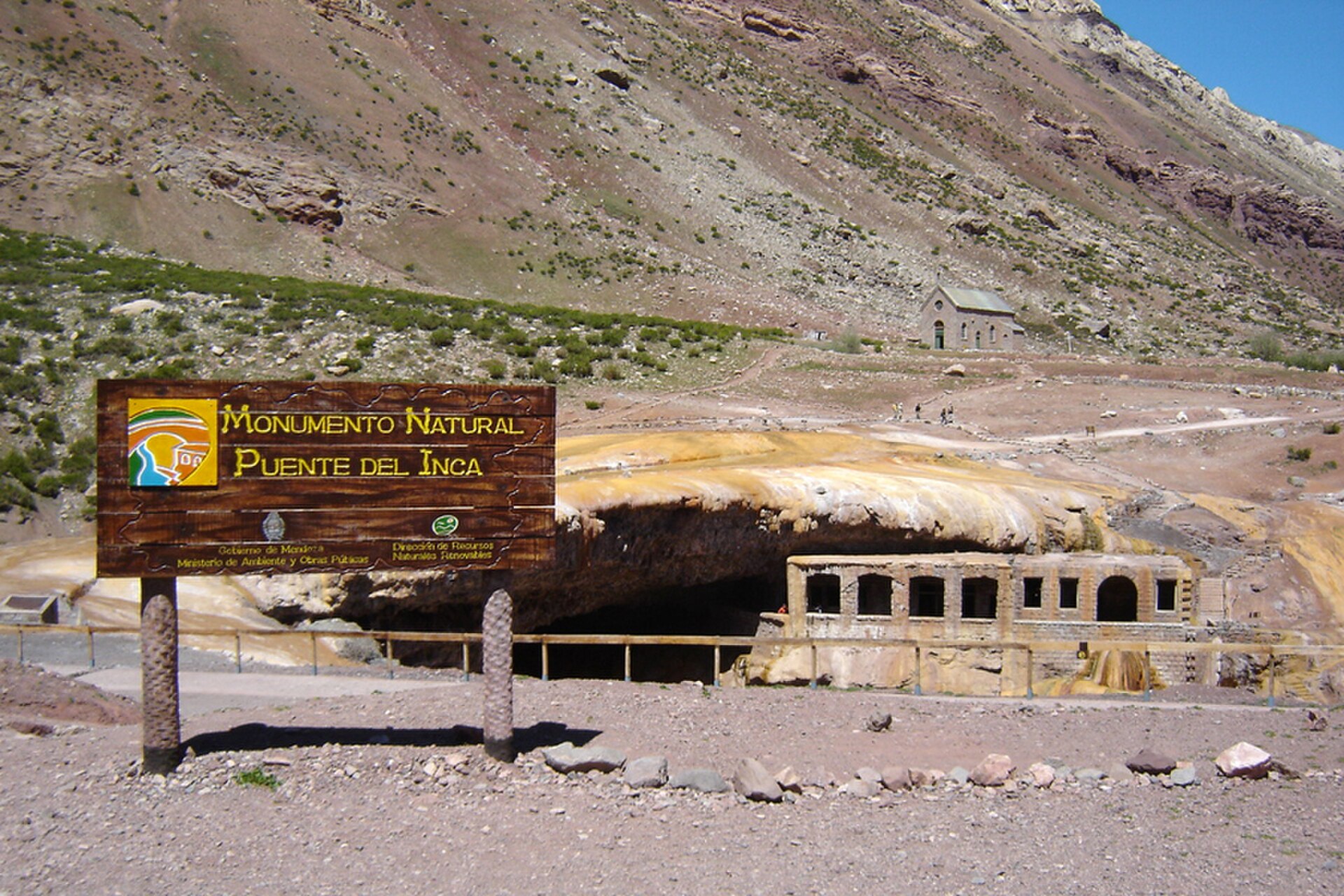
Puente del Inca is one of the strangest and most photogenic natural formations in Argentina — a 48-meter rock bridge spanning the Río de las Cuevas at 2,720 meters in the Andes, roughly 180 kilometers west of Mendoza on the old road to Chile. What makes it extraordinary isn't just the bridge itself but the vivid sulfurous yellow, orange, and green mineral deposits that encrust every surface, deposited over millennia by thermal springs that still flow beneath the span. The effect is otherworldly: the rocks glow like they've been dipped in paint.
Beneath the bridge sit the ruins of a thermal bath resort built in the early 1900s, which operated as a fashionable spa destination until an avalanche destroyed parts of it in 1965. The mineral springs continued to flow over the ruins, gradually coating the abandoned walls, bathtubs, and even old shoes left by visitors in a thick layer of yellow-orange mineral crust. Locals hang objects in the mineral-rich water to "petrify" them as souvenirs — a tradition that delights visitors and drives geologists slightly mad. The site sits along Ruta Nacional 7, the main Andean crossing route, making it a natural stop on day trips from Mendoza that also visit Aconcagua Provincial Park just 15 kilometers to the east. A guide explains the geological processes behind the mineral deposits, the Inca legends surrounding the bridge, and the poignant story of the lost resort.
Trails
Mineral-painted rock bridge: The vivid yellow-orange-green mineral deposits coating the natural arch are unlike anything else in the Andes — the colors shift with the light throughout the day. Abandoned thermal baths: The ruins of the early 20th-century spa slowly being consumed by mineral deposits create an eerie, beautiful tableau of nature reclaiming human construction. Petrified souvenirs: Vendors hang objects (shoes, bottles, toys) in the mineral springs to coat them in a yellow mineral crust — a quirky local tradition you can participate in. Andean scenery: The site sits in a stark, treeless valley at 2,720 meters with massive peaks on every side — the drive along Ruta 7 through the Uspallata valley is spectacular in its own right. Inca legend: According to Inca tradition, the bridge was formed when a sick prince was carried across the river on the backs of his warriors, who turned to stone — a guide tells the full story.
Wildlife
The high-altitude environment around Puente del Inca is stark but not lifeless. Andean condors glide above the valley on morning thermals, their 3-meter wingspan casting shadows across the scree slopes. Guanacos are occasionally spotted on hillsides above the road, grazing on sparse ichu grass. The rocky terrain harbors vizcachas — rabbit-like rodents that sun themselves on warm boulders near the bridge. Small flocks of Andean geese frequent the riverbanks downstream, and keen-eyed observers may spot puna hawks circling above. The thermal springs themselves support colonies of extremophile bacteria and algae responsible for the vivid mineral colors — a guide with geological knowledge explains how these microscopic organisms contribute to the bridge's otherworldly palette. The Malbec Wine Routes offer a dramatically different landscape just an hour's drive toward Mendoza.
When to Visit
Access: Daily, roughly 8 AM to 6 PM (no formal gates — it's a roadside site). Best: Morning light hits the mineral deposits most dramatically; midday sun washes out the colors. Closed: Heavy snow in winter (June-September) can block Ruta 7 — check road conditions before departing. Duration: 30-45 minutes at the site; usually combined with other Andes stops for a full-day trip.
Admission and Costs
Entry: Free — it's a roadside natural monument. Day trip from Mendoza (Aconcagua + Puente del Inca): AR$70,000-120,000 ($70-120). Full Andes day (Villavicencio + Uspallata + Aconcagua + Puente del Inca): AR$90,000-160,000 ($90-160). Souvenirs: Mineral-encrusted objects sold by local vendors cost AR$2,000-10,000 ($2-10).
Tips for Visitors
Combine with Aconcagua: Most day trips from Mendoza visit both sites in sequence — Puente del Inca is 15 kilometers further west along Ruta 7. Don't cross the barriers: The bridge is fragile and the thermal waters are scalding in places. Stay on marked viewpoints — the view is excellent from there. Altitude and cold: At 2,720 meters, temperatures can be 15-20°C colder than Mendoza city. Bring warm layers even in summer — wind chill on the exposed site is significant. Photography timing: Morning sun (before noon) casts warm light on the mineral deposits and creates the most vivid colors. Afternoon backlighting flattens the scene. Road conditions: Ruta 7 through the Andes closes during heavy winter snowfall. Between June and September, check with your guide or the vialidad (road authority) before departing Mendoza.