
_%C2%B7_Hito_Tres_Fronteras_(Puerto_Iguaz%C3%BA,_Argentina).jpg)
Overview
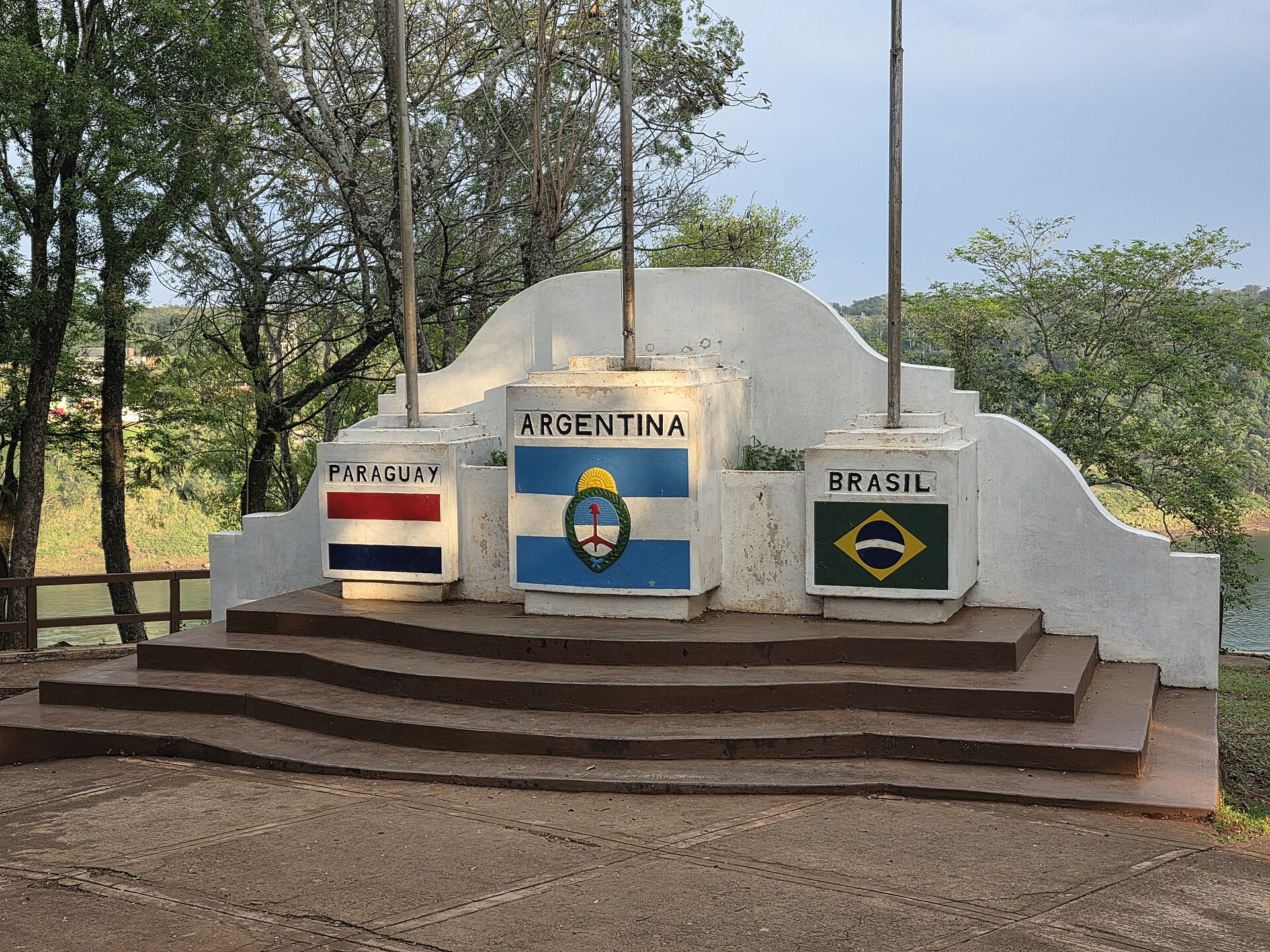
Hito Tres Fronteras (Triple Border Landmark) marks the geographical point where the Iguazú River flows into the Paraná River, creating a natural boundary between three South American nations. From the Argentine side, you stand on a bluff above the confluence and look directly across at the painted obelisks on the Brazilian and Paraguayan riverbanks — each country has its own monument in its national colors.
The Argentine landmark is a squat, light-blue-and-white striped pillar set in a landscaped park on the outskirts of Puerto Iguazú, about 3 kilometers from the town center. The site itself is modest — this isn't a grand monument but a geographical curiosity wrapped in geopolitical significance. The tri-border area was once infamous as a hub of contraband and intelligence activity; today it's a peaceful viewpoint where souvenir vendors sell trinkets from all three countries. And what a view: the wide, brown Paraná stretching toward Paraguay on the left, the smaller, tea-colored Iguazú arriving from the right (fresh from the falls), and the two rivers merging in a visible color line where different sediments swirl together. At sunset, the sky above the Paraguayan bank turns orange and pink, the Brazilian obelisk catches the last light, and the rivers below go metallic gold. A guide provides the historical and political context — the Guerra de la Triple Alianza, the smuggling routes, the intelligence services — that makes this more than a selfie spot. From here, San Martín Island and the falls are a short drive into the national park.
Architecture
The landmark itself is architecturally simple — a painted concrete obelisk in Argentina's light blue and white — but the setting is extraordinary. The viewpoint railing offers a panorama where the tea-brown Iguazú meets the muddy Paraná, creating a visible sediment line in the water. Across the rivers, Brazil's green-and-yellow obelisk and Paraguay's red-white-and-blue marker stand in mirror-image parks on their respective banks. The Argentine park grounds include a small anfiteatro (amphitheater) for cultural events and shaded walkways through native vegetation.
Historical Significance
The triple border carries layers of history that a guide unpacks far beyond the selfie opportunity. The devastating Guerra de la Triple Alianza (1864-1870) pitted Paraguay against the combined forces of Argentina, Brazil, and Uruguay, killing an estimated 90% of Paraguay's adult male population — one of the most catastrophic wars in modern history. The peaceful convergence of obelisks today belies that blood-soaked past. In the 20th century, the tri-border zone became a geopolitical flashpoint: smuggling networks, intelligence operations, and unregulated commerce flourished in the gaps between jurisdictions. Today the area is calmer, but the interplay of three currencies, three languages, and three legal systems within sight of a single viewpoint makes it one of South America's most fascinating border zones. A guide connects the dots between the 1810s independence movements, the 1860s war, and the modern diplomatic balance that keeps three flags flying in peace across the water.
When to Visit
Park access: Daily 8 AM - 8 PM (the landmark area is a public park). Best: Late afternoon (5-7 PM) for golden light on the rivers and sunset over Paraguay. Duration: 30-45 minutes for the viewpoint, souvenir browsing, and photos. Combine with: An afternoon visit works perfectly after a morning at the falls.
Admission and Costs
Entry: Free — it's a public park. Souvenirs: AR$2,000-10,000 ($2-10) for trinkets and crafts from all three countries. Guided excursion including transport: AR$15,000-25,000 ($15-25) — often bundled with other Iguazú activities. Taxi from Puerto Iguazú center: AR$5,000-8,000 ($5-8) each way.
Tips for Visitors
Time it for sunset: The site is pleasant anytime, but the golden hour transforms the rivers and sky into something genuinely memorable. Don't skip the Brazilian side: If you have a visa (or don't need one), the Brazilian Marco das Três Fronteiras monument offers a mirror-image perspective with a more developed visitor area. Combine with dinner: After sunset, head into Puerto Iguazú for surubí (local river fish) at La Rueda or Aqva — the town's best restaurants are a 10-minute taxi ride from the landmark. Mosquito protection: The riverbank is mosquito territory, especially at dusk. Apply repellent before arriving — dengue-carrying mosquitoes are present in the region. Quick stop, big context: This works best as a 30-45 minute stop, ideally with a guide who can pack the Guerra de la Triple Alianza, modern border dynamics, and geographic trivia into a short visit.