

Overview
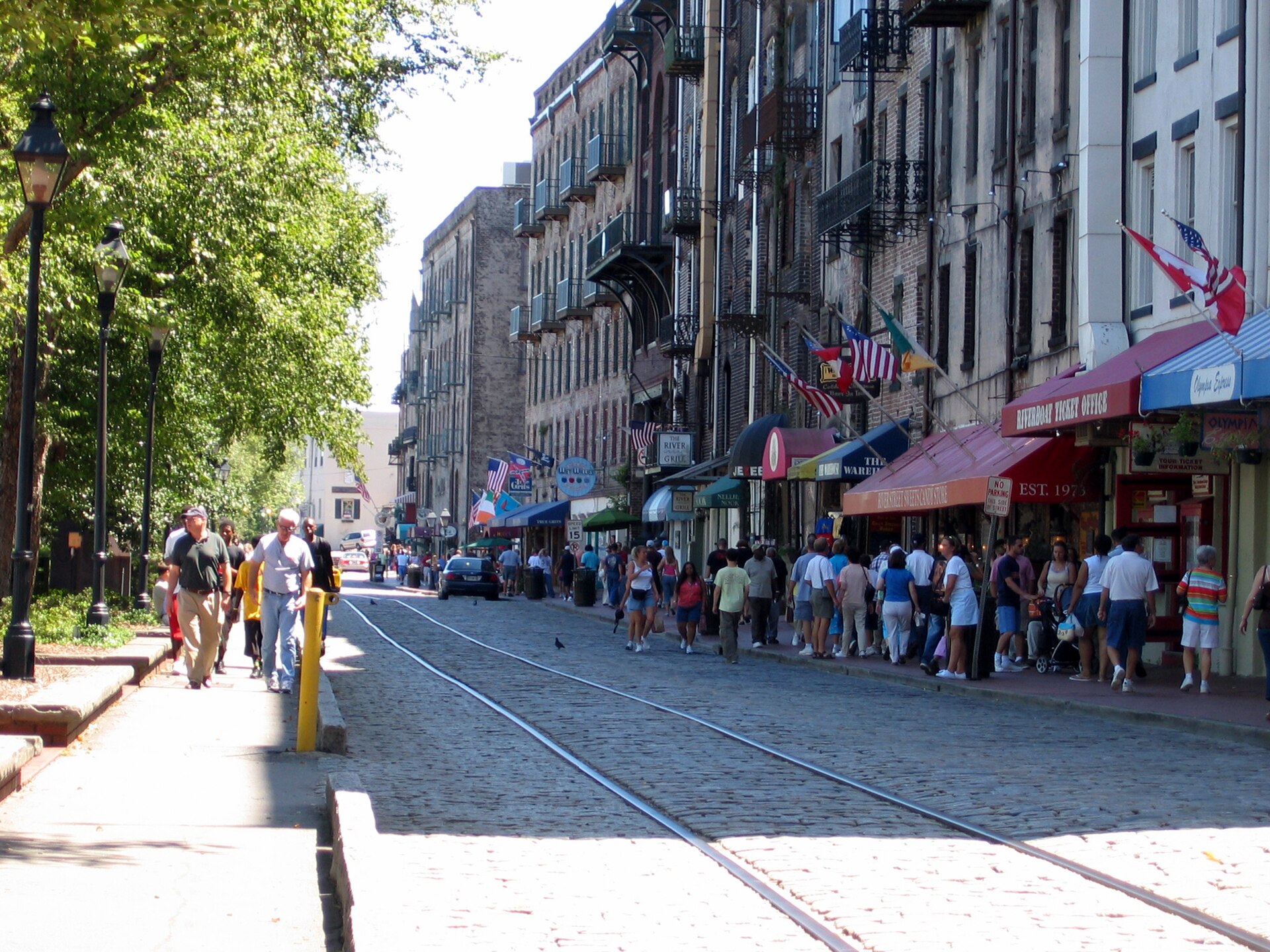
River Street runs along the south bank of the Savannah River at the base of a steep bluff, a cobblestoned waterfront strip that was once the commercial engine of the American cotton trade. The massive brick warehouses that line the street were built in the 18th and 19th centuries to store cotton, rice, and other goods before they were loaded onto ships bound for Liverpool, Le Havre, and ports around the world. Savannah was one of the busiest cotton ports in the United States, and these warehouses — some built with ballast stones from incoming trade ships — were the physical infrastructure of that wealth. Today the warehouses have been converted into restaurants, art galleries, candy shops, pubs, and boutiques, but their massive original timbers, exposed brick, and iron hardware remain visible, preserving the industrial character beneath the tourist-friendly veneer. The most striking feature of River Street is its working port. This is not a museum waterfront or a decommissioned harbor — enormous container ships pass within a few hundred feet of the restaurant patios, guided by tugboats through the narrow channel. The Savannah port is one of the busiest on the East Coast, and watching a ship the length of three football fields glide silently past while you eat lunch creates an experience available in few other American cities. The cobblestones underfoot are themselves historical artifacts: ballast stones carried by trade ships from across the Atlantic and used to pave the street, creating the uneven but characterful surface that has become one of River Street's defining features. Steep staircases and a pedestrian bridge connect River Street to the bluff-top Historic District above, making it easy to combine waterfront dining with a walk through the squares.
Photo Spots
Without context, River Street is a pleasant waterfront strip of shops and restaurants built in old brick buildings. With a guide, the warehouses become chapters in a global trade story: how Georgia cotton reached Manchester textile mills, how the ballast stones under your feet arrived from Europe and Africa in ships that carried enslaved people on other voyages, and how the engineering of the bluff-top city required an entire infrastructure of ramps, bridges, and iron-reinforced retaining walls to connect the port level to the residential streets above. Guides also provide economic context that casual visitors miss. The cotton factors — brokers who arranged the sale and shipment of plantation cotton — had their offices in these warehouses, and their business relationships connected Savannah to a web of global commerce that stretched from the Lowcountry plantations to the mills of England. The decline of the cotton trade after the Civil War left these warehouses derelict for nearly a century before the adaptive reuse movement of the 1970s transformed them into the dining and entertainment district visitors enjoy today. That transformation itself is a story worth telling — the tension between preservation and commercialization, the decisions about which elements to keep and which to modernize.
Landmarks Along
Container ship watching: Massive ocean-going vessels pass within a few hundred feet of the waterfront, guided by tugboats through the channel — an unforgettable sight from any riverside restaurant patio. Ballast stone cobblestones: The uneven stones underfoot were carried as ship ballast from Europe and Africa, giving River Street its distinctive texture and connecting it physically to global trade routes. Cotton warehouse architecture: Original timber beams, iron hardware, and hand-laid brick are visible inside many converted restaurants and shops, preserving the industrial character of the 1800s. Waving Girl statue: The statue of Florence Martus, who reportedly waved at every ship entering and leaving the port for 44 years, stands at the eastern end of the promenade. Savannah's Candy Kitchen: River Street is famous for its praline shops, where you can watch the traditional Southern confection being made in copper kettles. Live music venues: Several bars and restaurants along the waterfront feature live music, particularly on weekend evenings when the cobblestones fill with a festive crowd
When to Visit
Street access: Public at all hours, though most shops and restaurants operate from 10:00 AM to 10:00 PM (later on weekends). Best time to visit: Late afternoon when the light hits the river and the restaurant patios fill up, or evening for the lively bar and live music scene. Ship watching: Container ships pass through at unpredictable intervals, but mornings tend to see more traffic. The massive vessels are visible well before they reach River Street. First Saturday festivals: Monthly arts festivals on the first Saturday bring live music, street performers, and craft vendors along the waterfront
Admission and Costs
Walking the waterfront: Completely free. The cobblestone promenade, ship watching, and people watching cost nothing. Group historical walk: $20-35 per person, covering River Street's cotton trade history as part of a broader Savannah tour. Riverboat cruise: $30-50 per person for a 1-2 hour narrated cruise on the Savannah River with views of the port, bridge, and Historic District from the water. Food and drink tour: $55-85 per person, with tastings at several River Street and Bay Street establishments
Tips for Visitors
Watch your step: The ballast stone cobblestones are beautiful but treacherous. Flat, sturdy shoes are essential — sandals, heels, and thin soles are poor choices on this surface. Steep stairs: Access from the bluff-top Historic District requires descending steep stone staircases or using the pedestrian ramp near City Hall. Those with mobility concerns should use the ramp or the accessible elevator at the east end. Parking: River Street has very limited parking. Park in the bluff-top garages and walk down the stairs, or use a rideshare. Combine with the squares: River Street sits at the northern edge of the Historic District. Climb the stairs to Bay Street and you're immediately in the square grid. Rainy day option: The covered portions of the warehouses and the many indoor restaurants make River Street one of the better places to enjoy during Savannah's frequent afternoon showers. Open container reminder: Savannah's open-container laws apply on River Street, so you can carry your drink in a plastic cup along the waterfront