

Overview
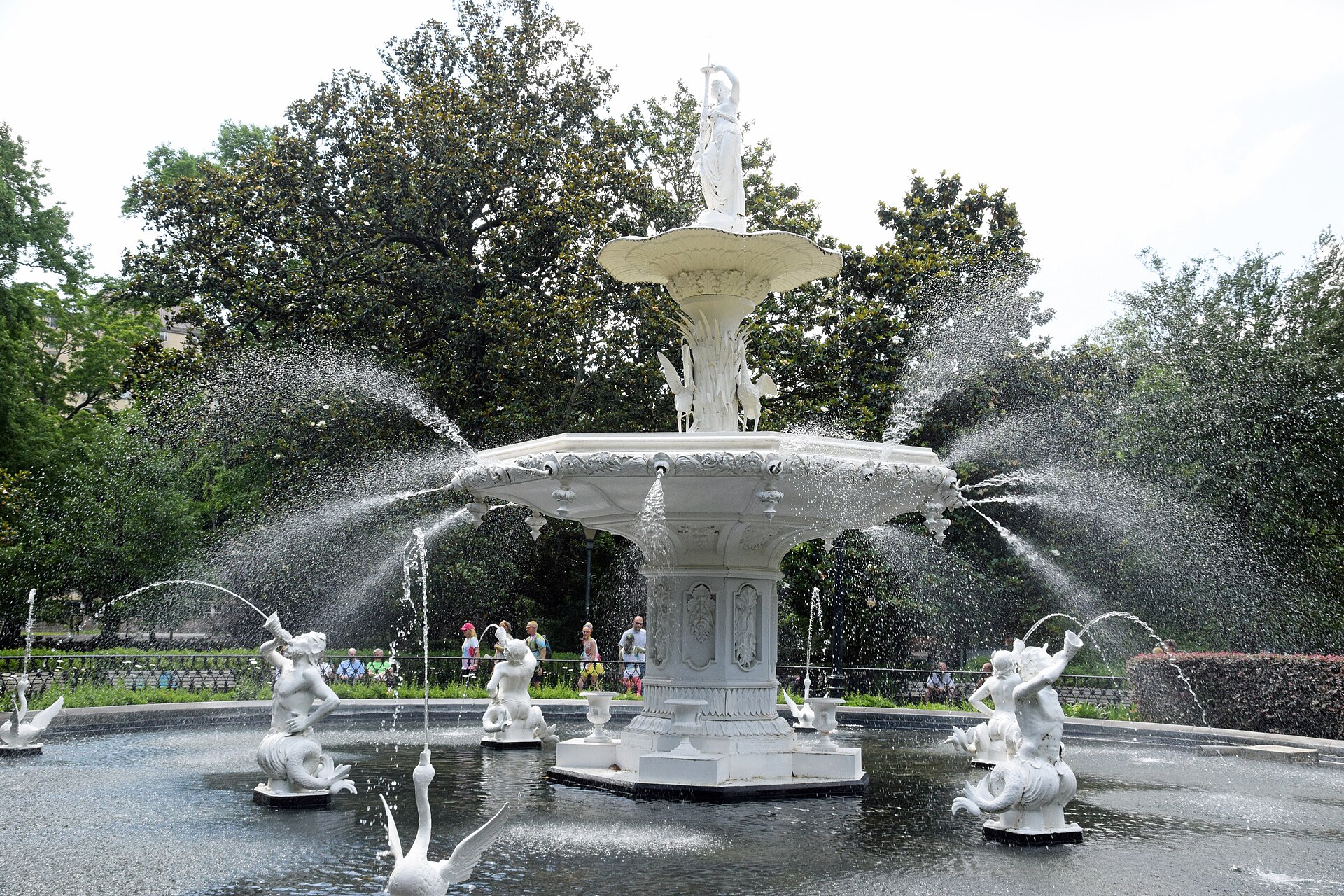
Forsyth Park stretches across 30 acres at the southern edge of Savannah's Historic District, a green expanse anchored by its famous cast-iron fountain. Installed in 1858, the fountain was modeled after those in the Place de la Concorde in Paris and quickly became the emblem of the city itself. Water cascades from its tiered basins into a wide reflecting pool surrounded by live oaks, their branches draping Spanish moss over paths where joggers, dog walkers, SCAD students, and tourists mingle throughout the day. The park was established in 1851 on land donated by William Hodgson and named for Georgia Governor John Forsyth, originally comprising only the northern half. The southern extension, added in 1858, expanded it to its current size and included a Confederate Memorial and a fragrant garden designed for the blind. Where Savannah's 22 squares function as intimate outdoor rooms, Forsyth Park serves as the city's grand living room. On any given Saturday, the park hosts a farmers' market beneath the live oaks, pickup soccer games on the open fields, families picnicking on blankets, and visitors photographing the fountain from every conceivable angle. The surrounding blocks — known as the Victorian District — contain some of Savannah's most ornate residential architecture, with gingerbread trim, turrets, and wraparound porches that contrast with the more restrained Georgian and Federal styles of the squares to the north. The park represents the transition from Oglethorpe's original colonial city to the Victorian-era expansion that doubled Savannah's footprint.
Seasonal Highlights
Forsyth Park appears straightforward — a beautiful fountain in a pretty park — but its history reflects the social dynamics of 19th-century Savannah in ways that reward interpretation. The fountain's design borrowed deliberately from Parisian models, signaling the aspirations of a Southern merchant class that measured itself against European capitals. The Confederate Memorial at the park's south end, erected in 1875, carries a complex legacy that guides address with the nuance it demands. The park's racial history — it was segregated until the 1960s — adds yet another layer to a space that now serves as one of the most integrated public gathering places in the city. Guides who know the surrounding Victorian District can extend a park visit into a broader architectural tour that covers the evolution of American residential design from the 1870s through the early 1900s. The ornate Queen Anne, Eastlake, and Romanesque Revival houses on the blocks bordering the park represent a dramatic departure from the restrained Georgian and Federal styles of the squares to the north, and the architectural contrast tells a story of changing tastes, new wealth, and the rebuilding that followed the Civil War.
Activities
The 1858 fountain: The iconic two-tiered cast-iron fountain modeled after Parisian designs, surrounded by a reflecting pool and one of the most recognizable landmarks in the American South. Live oak canopy: Ancient oaks line the walkways, their branches heavy with Spanish moss creating natural tunnels of dappled shade. Saturday Farmers' Market: Local vendors sell seasonal produce, artisan bread, honey, prepared foods, and handmade crafts under a canopy of oaks. Confederate Memorial: The 1875 monument at the park's south end, a significant but contested piece of Savannah's post-Civil War history. Fragrant Garden: A walled garden in the park's north section originally designed for visually impaired visitors, planted with scented flowers and herbs for a multi-sensory experience. Victorian District architecture: The blocks surrounding the park's southern half showcase ornate Queen Anne and Eastlake homes that contrast dramatically with the Historic District's more restrained styles
When to Visit
Park access: Open at all hours, free to visit anytime. The paths are lit at night but the fountain is most spectacular during daylight. Fountain: Runs daily from sunrise to sunset. Dyed green for St. Patrick's Day in March, a beloved Savannah tradition. Saturday Farmers' Market: Every Saturday from 9:00 AM to 1:00 PM on the south end of the park, featuring local produce, baked goods, prepared foods, and crafts. Best for photography: Early morning (7-9 AM) for soft light through the oaks, or late afternoon (4-6 PM) when the fountain glows in golden-hour light
Admission and Costs
Entering the park: Completely free at all times. Group walking tour including Forsyth: $20-35 per person, typically ending at the fountain after a 2-hour route through the Historic Squares. Private park and Victorian District tour: $175-300 for up to 6 people, focusing on the park's history and the surrounding residential architecture. Collins Quarter cafe: The popular restaurant in the park's historic building serves brunch and coffee — a natural post-tour stop with outdoor seating facing the fountain
Tips for Visitors
Bring a picnic: The open lawns are perfect for spreading a blanket. Grab supplies from the Saturday market or from Broughton Street shops nearby. Walk from the squares: Starting at Johnson Square and walking south through the Historic Squares to Forsyth Park covers about 1.5 miles and tells the chronological story of Savannah's growth. St. Patrick's Day fountain: The fountain is dyed bright green for the celebration in March — a uniquely Savannah tradition and a popular photo moment. Shade is available: Even on the hottest days, the live oak canopy provides substantial shade along the walkways. The open lawns are fully exposed, however. Restrooms available: Public restrooms near the south end of the park, a rarity in Savannah's Historic District. Evening strolls: The fountain is lit after dark and the park takes on a romantic atmosphere — though it's best to stick to main paths and well-lit areas at night