
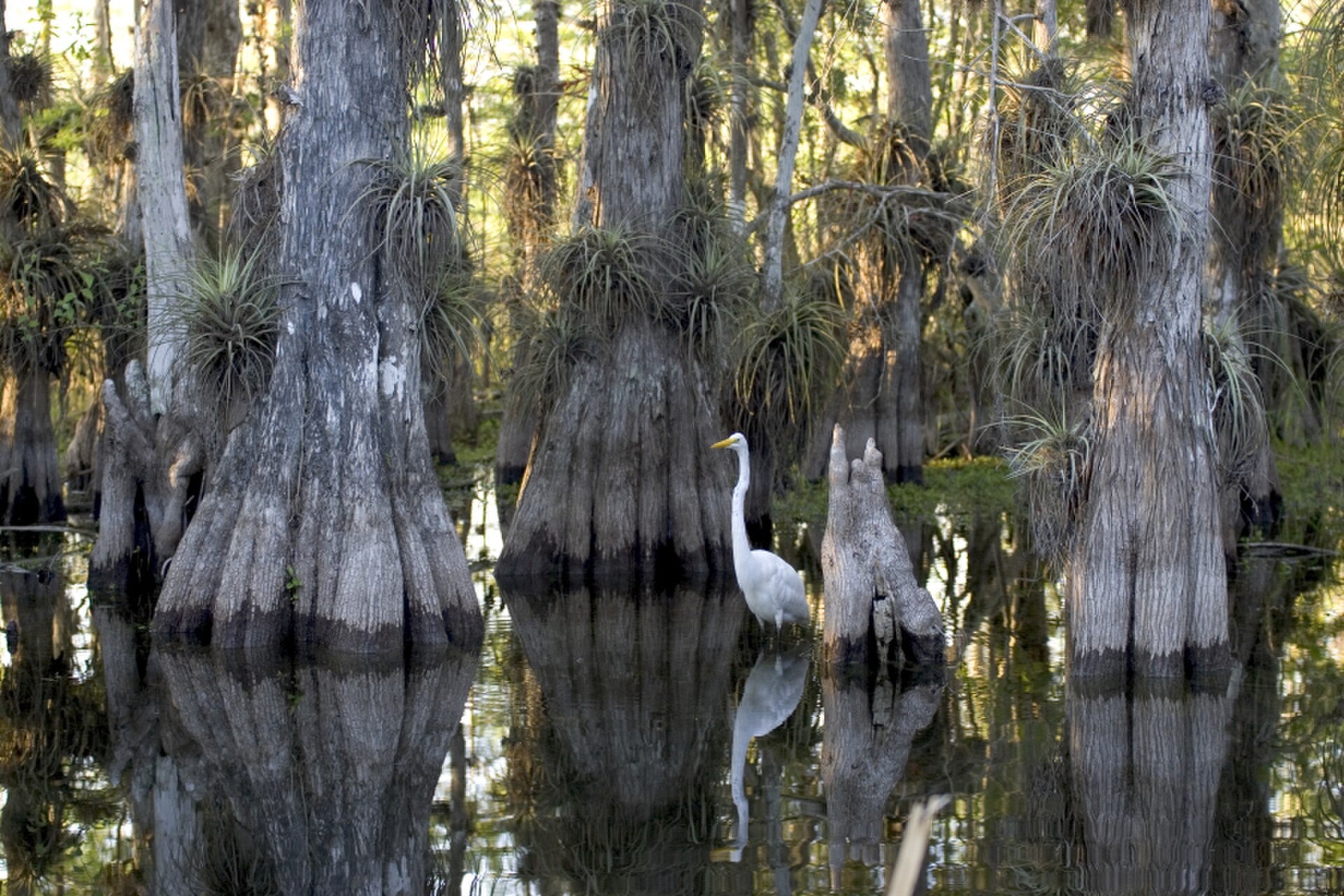

Overview
The Everglades is not a swamp. That single misconception has shaped and nearly destroyed this place for over a century. What stretches across 1.5 million acres of southern Florida is actually a slow-moving river, barely six inches deep and fifty miles wide, flowing imperceptibly from Lake Okeechobee southward to Florida Bay. Marjory Stoneman Douglas named it the "River of Grass" in her landmark 1947 book, and that phrase fundamentally changed how Americans understood this ecosystem. Before Douglas, the Everglades was viewed as worthless marshland to be drained for agriculture and development. After her, it became recognized as one of the most important and irreplaceable ecosystems on the planet, a UNESCO World Heritage Site, an International Biosphere Reserve, and a Wetland of International Importance. For visitors arriving from the polished towers of Miami, the Everglades provides a startling counterpoint. Within an hour's drive from South Beach's designer boutiques, you can find yourself gliding through sawgrass prairies where American alligators bask on mudbanks, roseate spoonbills wade through shallow waters, and Florida panthers stalk through hardwood hammocks. The park harbors over 360 bird species, 300 species of fish, and 40 species of mammals across a patchwork of mangrove forests, cypress domes, coastal prairies, and marine environments. No two visits reveal the same Everglades, as water levels, migrations, and seasons constantly reshape what you encounter.
Trails
Bug spray is essential: Everglades mosquitoes are legendary in their ferocity, especially during wet season. Bring DEET-based repellent and consider a head net. Sun protection: There is almost no shade in the sawgrass prairies. Wear a wide-brimmed hat, long sleeves, and high-SPF sunscreen. Bring water and food: Services inside the park are extremely limited. Pack more water than you think you need, particularly for hiking and paddling. Two entrances from Miami: Shark Valley (on US-41, 45 minutes from downtown) is best for a half-day visit. The main entrance at Homestead (1 hour south) opens up the full park. Day trip from Miami: The Everglades pairs well with a Miami visit. Morning in the park, afternoon at Vizcaya Museum creates a satisfying contrast between wilderness and civilization. Airboat etiquette: Commercial airboat rides operate outside the park boundaries on private land. They are exciting but noisy. For a quieter, more ecological experience, opt for kayaking or the Shark Valley tram inside the park. Alligator safety: Keep at least 15 feet from alligators. They appear sluggish but can lunge with shocking speed. Never feed wildlife
Wildlife
To the untrained eye, the Everglades can look like endless sawgrass with little happening beneath the surface. Naturalist guides shatter that illusion within minutes. They spot alligators that most visitors mistake for floating logs, identify the silhouettes of roseate spoonbills against the tree line, and know which shallow pools attract manatees during certain seasons. Their expertise transforms a landscape that might seem monotonous into a theater of constant activity where predators hunt, wading birds fish, and reptiles bask in precise locations shaped by water levels and temperature. Ecological complexity defines the Everglades, and understanding it requires an interpreter. Guides explain how this river of grass functions as a single interconnected system, where subtle changes in water depth create entirely different habitats within yards of each other. They describe the conservation battles that nearly drained these wetlands for agriculture and the multi-billion-dollar restoration effort now attempting to undo a century of damage. For those interested in human history, guides share the stories of the Miccosukee and Seminole peoples who have lived within this landscape for generations, adapting to its rhythms in ways that European settlers never managed. Safety in the Everglades is not optional. The park sprawls across 1.5 million acres with poorly marked trails that can flood without warning. Guides know which paths remain passable after rain, where mosquitoes reach tolerable levels, and how to navigate terrain that swallows unprepared visitors. They carry proper supplies and understand the weather patterns that bring sudden thunderstorms. After a morning in this wilderness, guides often recommend the contrast of returning to Miami for an afternoon at Vizcaya Museum, where manicured European gardens offer the opposite of untamed nature.
When to Visit
Park access: Everglades National Park is open 24 hours a day, 365 days a year. Visitor centers: Ernest Coe (main entrance) and Shark Valley generally open 9 AM to 5 PM daily.
Dry season (December through April): The absolute best time to visit, when receding water concentrates wildlife around remaining pools, making animal sightings almost guaranteed. Wet season (May through November): Intense heat, thunderstorms, and ferocious mosquitoes make exploration challenging but reveal a dramatically different, flooded landscape. Dawn and dusk: Wildlife is most active during the cooler hours, making early morning airboat tours and sunset kayak trips the most rewarding.
Admission and Costs
🐊 Anhinga Trail: A one-mile boardwalk at Royal Palm where alligators, anhingas, herons, and turtles gather so close you could almost touch them. 🌎 Shark Valley observation tower: Climb the 65-foot tower at the end of a 15-mile road for a 360-degree panorama of the endless sawgrass river. 🚢 Nine Mile Pond canoe trail: Paddle through mangrove tunnels and open marsh in one of the park's most scenic waterways. 🌅 Pa-hay-okee Overlook: A short boardwalk to an elevated platform offering a quintessential view across the river of grass. 🐦 Flamingo area: Drive to the park's southern tip where coastal prairies meet Florida Bay, offering the best chance to spot crocodiles and manatees. 🌕 Night sky: The Everglades has some of the darkest skies in the eastern United States, and ranger-led stargazing programs run during dry season. 🍃 Cypress dome hikes: Wade through shallow water into the cathedral-like interior of a cypress dome, where air plants and orchids cling to ancient trunks
Tips for Visitors
Bug spray is essential: Everglades mosquitoes are legendary in their ferocity, especially during wet season. Bring DEET-based repellent and consider a head net. Sun protection: There is almost no shade in the sawgrass prairies — wear a wide-brimmed hat, long sleeves, and high-SPF sunscreen.
Bring water and food: Services inside the park are extremely limited. Two entrances from Miami: Shark Valley (on US-41, 45 minutes from downtown) is best for a half-day visit; the main entrance at Homestead (1 hour south) opens up the full park. Day trip pairing: Morning in the Everglades, afternoon at Vizcaya Museum and Gardens creates a satisfying contrast between wilderness and civilization. Alligator safety: Keep at least 15 feet from alligators — they appear sluggish but can lunge with shocking speed. Never feed wildlife.