

Overview
Millennium Park is a 24.5-acre rooftop garden built over active railroad tracks and parking garages in the heart of downtown Chicago. What was once an eyesore of rail yards and surface lots became, after its 2004 opening, one of the most celebrated public spaces created anywhere in the 21st century. The park draws an estimated 25 million visitors annually, making it Chicago's single most-visited attraction, and remarkably, everything in it is free.
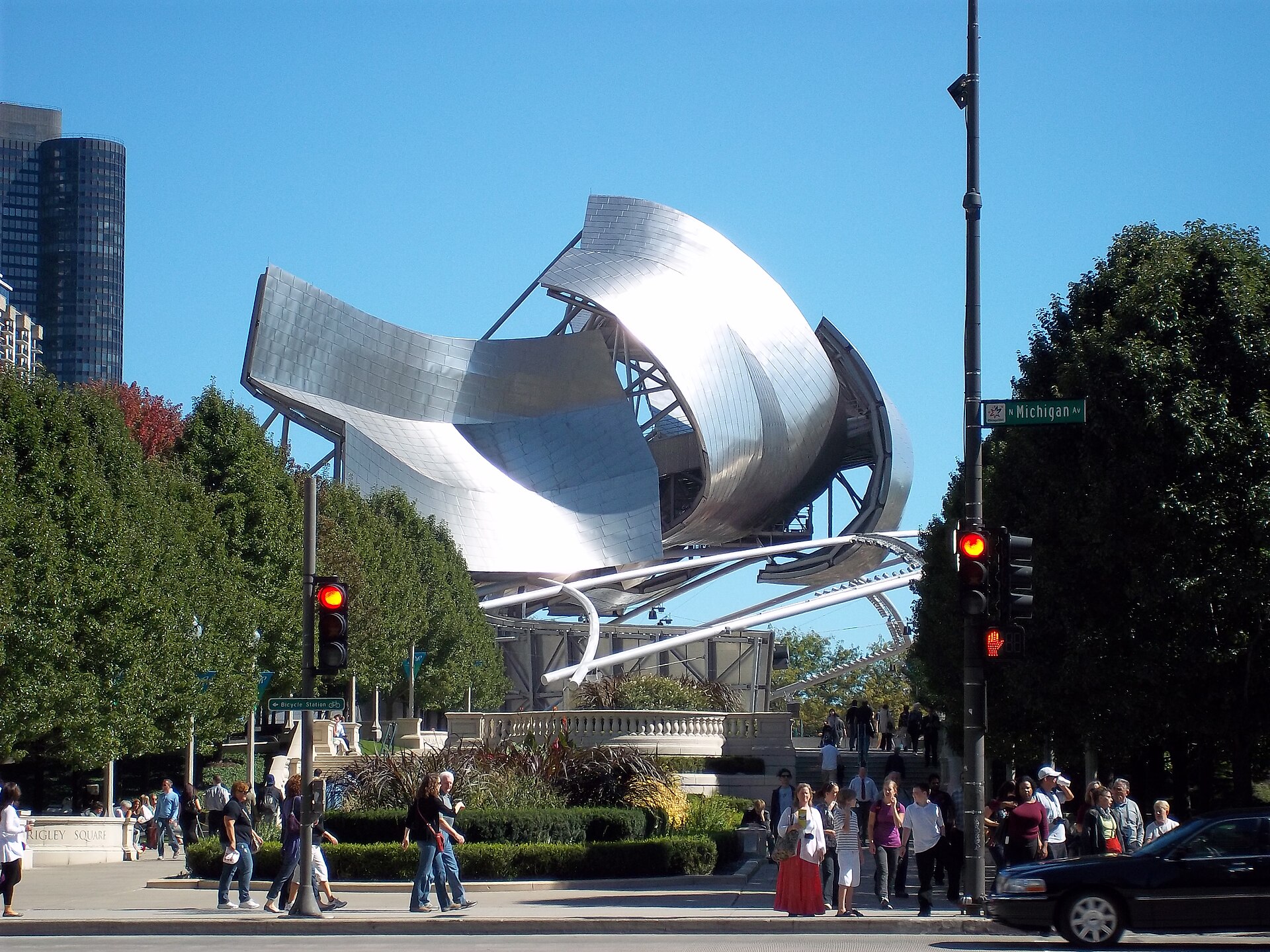
The centrepiece is Cloud Gate, Anish Kapoor's 110-ton polished stainless-steel sculpture that Chicagoans call "the Bean" for its liquid-mercury shape. It reflects and distorts the city skyline in ways that change with every step, every cloud, and every season, creating a different photograph each time you stand beneath its 12-foot arch. Beyond the Bean, the park layers surprise upon surprise. Jaume Plensa's Crown Fountain projects video faces of 1,000 Chicago residents onto two 50-foot glass towers that periodically spit water onto laughing children in the plaza below. Frank Gehry's Jay Pritzker Pavilion, a titanium-ribboned bandshell, hosts free concerts ranging from the Grant Park Orchestra's summer classical series to global music festivals. The Lurie Garden, designed by Gustave Carlson, Kathryn Gustafson, Piet Oudolf, and Robert Israel, is a hidden 5-acre haven of native prairie plants and perennial gardens tucked behind a 15-foot shoulder hedge. Walking from the Bean to the garden to the pavilion to the Art Institute via the Nichols Bridgeway, a visitor encounters more world-class design per square foot than nearly anywhere else on Earth, all without paying a cent. The park sits within easy walking distance of the Magnificent Mile to the north and the Field Museum to the south.
Seasonal Highlights
Beneath the reflective surface of Cloud Gate lies an engineering marvel that most visitors photograph without understanding. Anish Kapoor's 110-ton sculpture consists of 168 stainless steel plates welded together and polished until no seam is visible, a feat that fabricators initially said was impossible. Guides explain why Chicago officials nearly rejected the $23 million price tag before the Bean became the city's defining symbol, how the curved omphalos chamber beneath creates kaleidoscopic reflections, and why the sculpture's mirror finish required developing entirely new polishing techniques that have since been used on spacecraft.
The park's treasures extend far beyond its famous centrepiece. Jaume Plensa's Crown Fountain projects 1,000 Chicago faces onto twin 50-foot towers, each eventually pursing its lips before water spouts from its mouth. Frank Gehry's Jay Pritzker Pavilion uses a revolutionary trellis of crisscrossing steel pipes to suspend a sound system that delivers concert-hall acoustics in an open-air setting. The Lurie Garden hides behind a 15-foot hedge that represents Carl Sandburg's "City of Big Shoulders," its native prairie plants and perennial beds designed by four landscape architects working in collaboration. Most visitors walk past these layers without noticing that the entire 24.5-acre park is essentially a massive green roof built over active railroad tracks and parking garages. Connecting Millennium Park to Chicago's broader story requires understanding the Burnham Plan of 1909, which envisioned the lakefront as public parkland protected from private development. Guides trace this century-long civic ambition through the park's seasonal transformations, from the McCormick Tribune Ice Rink in winter to the Grant Park Music Festival's free summer concerts. The Nichols Bridgeway links directly to the Art Institute, while the Magnificent Mile begins a short walk north and the Field Museum awaits along the lakefront to the south.
Activities
Cloud Gate (the Bean): Walk beneath the 12-foot arch where the curved surface creates a surreal omphalos chamber reflecting your image in kaleidoscopic distortion against the skyline. Crown Fountain: Two 50-foot LED towers cycle through 1,000 Chicago faces, each eventually pursing their lips before a jet of water shoots from the mouth into the shallow reflecting pool below.
Jay Pritzker Pavilion: Frank Gehry's swooping titanium bandshell hosts free summer concerts from the Grant Park Orchestra. Bring a blanket and a bottle of wine for the Great Lawn experience. Lurie Garden: A serene 5-acre garden of native prairie plants, flowering perennials, and a boardwalk over a shallow pool, hidden behind a tall hedge that blocks city noise. BP Pedestrian Bridge: Gehry's snaking, wood-planked bridge arcs over Columbus Drive, offering elevated views of both the park and the lake while muffling traffic noise with its high brushed-steel sides. Nichols Bridgeway to the Art Institute: The 620-foot enclosed bridge rises gently from the park's southeast corner to the Art Institute's Modern Wing, framing lake and skyline views along the way. Wrigley Square and the Millennium Monument: A semicircular peristyle of Doric columns modelled after the original 1917 peristyle that stood in Grant Park, framing the Bean in the distance.
When to Visit
Park hours: Daily, 6:00 AM to 11:00 PM year-round. Cloud Gate: Accessible during park hours; occasionally closed briefly for cleaning. Best time for photos: Before 8:00 AM on any day, when the Bean reflects an undistorted skyline without crowds blocking the mirror surface.
Crown Fountain: Water features operate mid-May through mid-October; the video towers run year-round. Summer concerts: The Grant Park Music Festival runs June through August with free classical concerts at the Pritzker Pavilion, typically Wednesday, Friday, and Saturday evenings. Winter magic: The McCormick Tribune Ice Rink opens November through March, free to skate with a $15 skate rental.
Admission and Costs
Park admission: Completely free, always, no tickets required. Cloud Gate: Free to visit, touch, and photograph. Pritzker Pavilion concerts: Free seating on the Great Lawn; no tickets needed for most performances. Ice rink: Free to skate; $15 for skate rental (November-March).
Guided walking tour: $20-35 per person for a 90-minute park and public art tour, or $250-400 for a private group tour. Wrigley Square cafe: Casual food and drinks at park-side venues, $8-18 per item.
Tips for Visitors
Arrive early for the Bean: By 10:00 AM in summer, Cloud Gate is surrounded by hundreds of visitors. Dawn and early morning offer an intimate experience with the sculpture that most people never see. Bring a blanket for concerts: Great Lawn seating at the Pritzker Pavilion is first-come, first-served. Arrive 30-60 minutes early for the best spots on summer concert nights.
Wear walking shoes: The park connects seamlessly to the Art Institute, Magnificent Mile, and lakefront trails, and you will likely walk more than planned. Winter visits are rewarding: Cloud Gate dusted in snow is hauntingly beautiful, the ice rink is festive, and the park is dramatically less crowded. Transit access: The park sits directly above the Millennium Station Metra terminal. CTA buses stop along Michigan Avenue, and the Monroe and Randolph L stops are a 5-minute walk. Full-day plan: Start at the Bean, walk through Lurie Garden, cross the Nichols Bridgeway to the Art Institute, then head south to the Field Museum or north to Navy Pier for a complete Chicago day.