
_-_facade_view.JPG)
Overview
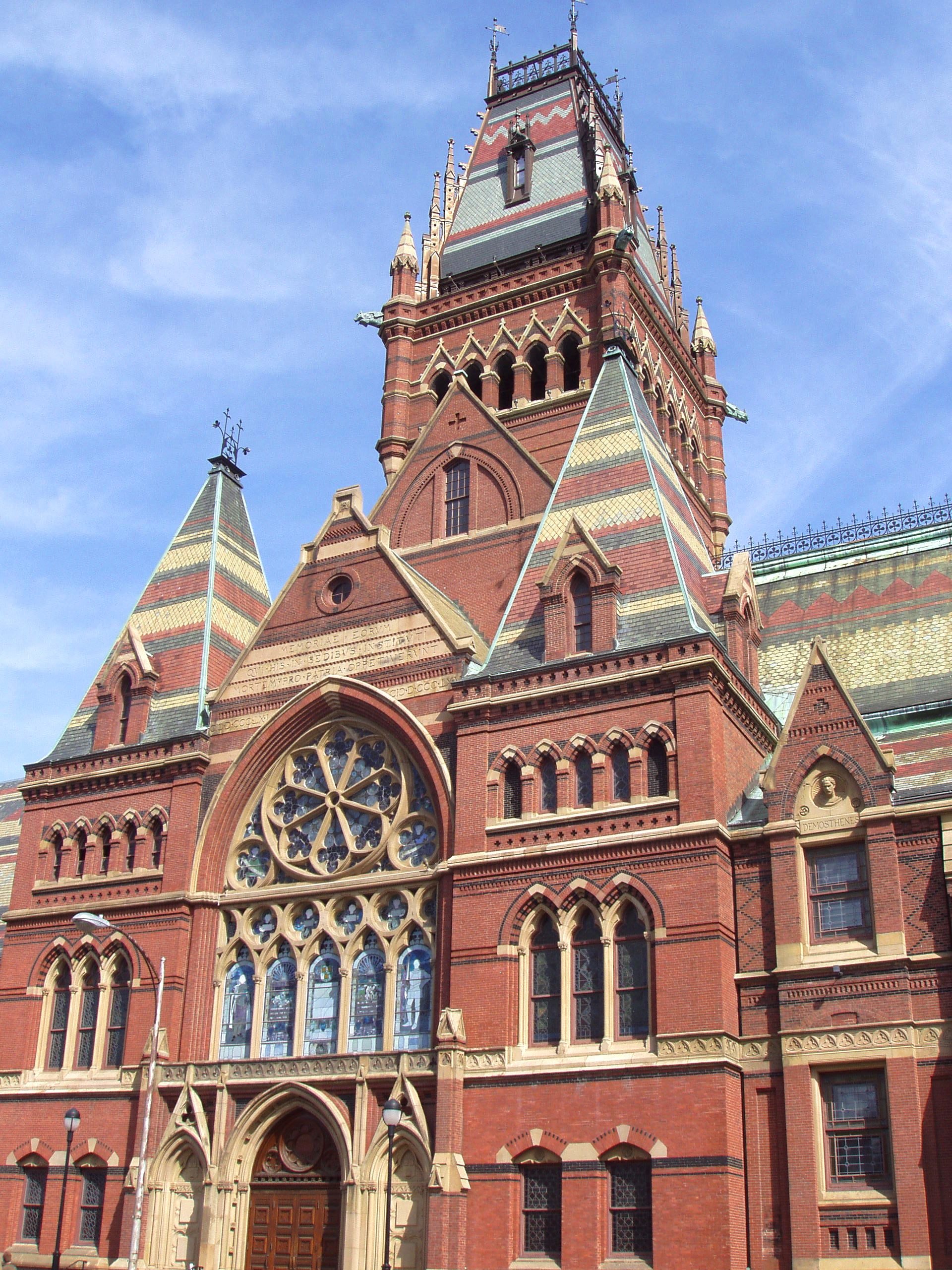
Harvard University was established in 1636, sixteen years after the Pilgrims reached Plymouth Rock and 140 years before the Declaration of Independence. Named for John Harvard, a young minister who bequeathed his 400-volume library and half his estate to the fledgling college, it has evolved from a small Puritan seminary into the wealthiest and arguably most influential university on Earth. The campus in Cambridge, directly across the Charles River from Boston, spans over 200 acres with more than 400 buildings ranging from colonial-era brick dormitories to Renzo Piano's luminous 2014 Art Museums glass canopy. Eight United States presidents are Harvard alumni, including both Adams presidents, both Roosevelts, and John F. Kennedy. The endowment exceeds $50 billion, funding research that has produced more than 160 Nobel laureates and foundational contributions across virtually every academic discipline. For visitors, Harvard's magnetism lies in the collision of intellectual grandeur with the lived-in warmth of a working campus. Harvard Yard, the original heart, is a tranquil enclosure of elm-shaded paths flanked by freshman dormitories and anchored by the John Harvard statue, whose left shoe gleams from the touch of millions hoping the gesture brings luck or future admission. The Widener Library presides with its grand Corinthian colonnade, housing 3.5 million volumes in a building donated by the mother of Harry Elkins Widener, a bibliophile who perished on the Titanic. Memorial Hall, a polychrome Victorian Gothic masterpiece honoring Civil War alumni, contains Sanders Theatre, one of New England's finest acoustic performance spaces. Beyond the gates, Harvard Square buzzes with independent bookstores, street musicians, and the intellectual hum of a community where Nobel laureates and undergraduates frequent the same coffee counters. A guided tour penetrates the mythology to reveal the real stories beneath the ivy.
Historical Significance
The bronze John Harvard statue in Harvard Yard is the university's most photographed landmark, yet its inscription contains three factual errors that the institution has never corrected -- guides explain each "lie" while visitors rub the statue's left shoe. Massachusetts Hall, the oldest surviving Harvard building from 1720, once quartered George Washington's troops during the Revolutionary War.
Mark Zuckerberg launched Facebook from his Kirkland House suite in 2004. T.S. Eliot wrote his earliest poems in his Harvard rooms. W.E.B. Du Bois studied here before becoming America's foremost civil rights intellectual. The Widener Library's grand Corinthian colonnade was donated by the mother of Harry Elkins Widener, a bibliophile who perished on the Titanic, and houses 3.5 million volumes.
Architecture
🦱 John Harvard statue and the "three lies": Rub the polished left shoe, then learn why the inscription contains three factual errors that the university has never corrected. 📚 Widener Library: The exterior colonnade is spectacular even without entering; the story of its construction as a Titanic memorial is among the campus's most moving tales. 🎨 Harvard Art Museums: The combined Fogg, Busch-Reisinger, and Sackler collections under Piano's glass roof hold works by Rembrandt, Monet, and Rothko alongside an unmatched trove of German Expressionism. 🏆 Memorial Hall: The polychrome Gothic masterpiece honors Civil War alumni; its Sanders Theatre has hosted speakers from Winston Churchill to Yo-Yo Ma. 🐥 Glass Flowers: The Blaschka collection at the Museum of Natural History comprises 4,300 botanically precise models crafted entirely from glass by a father-and-son team in Dresden between 1887 and 1936. 🌿 Arnold Arboretum: Harvard's 281-acre living laboratory holds over 15,000 plants, with a lilac collection that blooms spectacularly each May during Lilac Sunday
When to Visit
Harvard Yard and surrounding paths are open 24 hours, year-round; most buildings require a university ID. Free student-led tours depart from Smith Campus Center, typically at 10 AM and 2 PM on weekdays, 2 PM Saturdays during the academic year; summer adds extra departures.
Harvard Art Museums are open Tuesday-Sunday, 10 AM to 5 PM (closed Mondays). The Museum of Natural History is open daily 9 AM to 5 PM, featuring the celebrated Glass Flowers collection. The best visiting time is weekday mornings during the academic year (September through May), when students bustle between classes and the Yard is most alive.
Admission and Costs
Harvard is wrapped in so many legends that separating documented history from campus folklore has become an art form. The bronze John Harvard statue in Harvard Yard is the university's most photographed landmark, yet its inscription contains three factual errors that the institution has never corrected. Guides explain each lie while visitors rub the statue's left shoe for luck, then lead you past Massachusetts Hall, the oldest surviving Harvard building from 1720, where George Washington quartered troops during the Revolutionary War. They identify the exact dormitory where Mark Zuckerberg launched Facebook from his Kirkland House suite in 2004, the room where T.S. Eliot wrote his earliest poems, and the library where W.E.B. Du Bois studied before becoming America's foremost civil rights intellectual. The campus architecture spans four centuries, from colonial brick dormitories surrounding Harvard Yard to Renzo Piano's luminous 2014 glass canopy over the Art Museums. Guides read this timeline as a mirror of the nation's evolution, explaining why Memorial Hall was built as a polychrome Victorian Gothic memorial to Civil War alumni, why Widener Library's Corinthian colonnade was donated by the mother of a bibliophile who perished on the Titanic, and how the campus expanded across the Charles River into the Allston neighborhood. Tucked-away courtyards, gargoyles hidden on building corners, and traditions like the Primal Scream before finals reward visitors who know where to look. Student-led tours offer perspectives that no brochure can replicate. Current undergraduates share firsthand insights about the application process, daily campus life, and the experience of studying at an institution where eight United States presidents once walked the same paths. The Red Line from Harvard Station connects directly to Boston Common and the Freedom Trail in about fifteen minutes, or you can continue to the New England Aquarium for a different perspective on Boston entirely.
Tips for Visitors
Harvard Station on the Red Line puts you in Harvard Square; from downtown Boston the ride is about 15 minutes from Park Street. The Red Line from Harvard to Park Street connects directly to Boston Common and the start of the Freedom Trail.
Mr. Bartley's Burger Cottage in Harvard Square has been a student favourite since 1960, and the Harvard Book Store on Massachusetts Avenue is one of America's finest independents. Respect the campus -- Harvard Yard is a working university, so keep voices moderate near dormitories and stay out of ID-restricted buildings. Commencement in late May and freshman move-in in early September are atmospheric but crowded; spring and fall weekdays are ideal. After Harvard, take the Red Line to Aquarium Station for the New England Aquarium.