

Overview
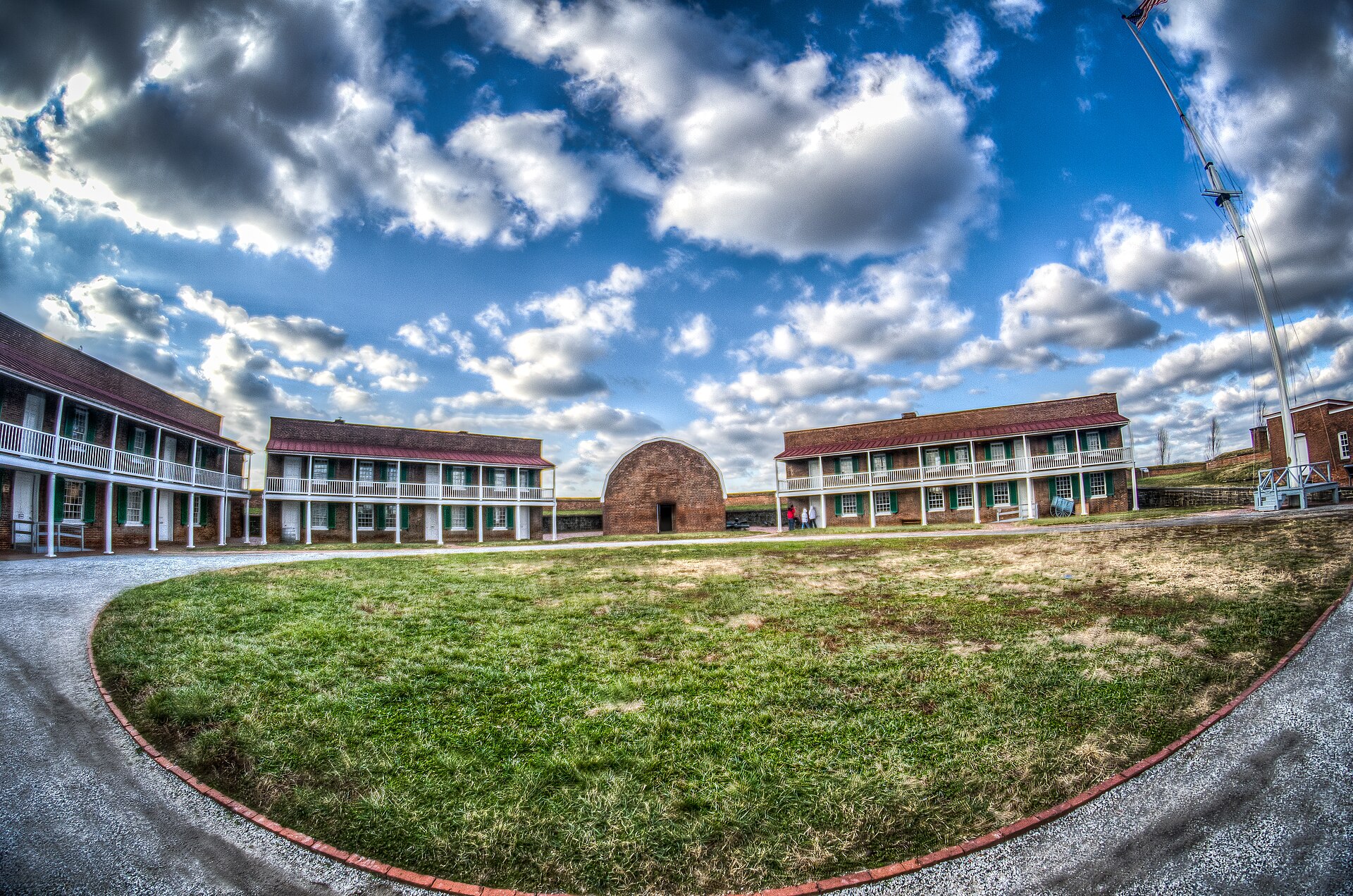
🏳 The flag: A massive replica of the garrison flag flies above the fort daily, and watching it snap in the harbor wind while standing on the ramparts is genuinely moving. 💣 Cannon emplacements: Walk the five bastions and see the original cannon positions that defended against the British fleet. 🎦 Visitor center film: The 10-minute introductory film ends with a dramatic screen reveal showing the flag flying over the actual fort through the theater window. 🏃 Rampart walk: Circle the entire star-shaped wall for 360-degree views of the harbor, the Patapsco River, and the Key Bridge in the distance. 📖 Enlisted men's barracks: Step inside the restored quarters where soldiers lived during the 1814 siege, complete with period furnishings and personal items. 🌞 Living history programs: Costumed interpreters demonstrate musket drills, cannon firing procedures, and daily military life during Defender's Day and summer weekends. 🌅 Harbor views: From the south bastion, look across the water toward the Inner Harbor skyline and imagine the British warships anchored in those same waters
Combination option: Pair Fort McHenry with a walk along the Inner Harbor waterfront (free) for a half-day that covers Baltimore's maritime story from 1814 to the present.
Historical Significance
On the night of September 13, 1814, British warships unleashed a 25-hour bombardment against this star-shaped fort guarding Baltimore's harbor. A young lawyer named Francis Scott Key, detained on a British ship eight miles away, watched through the night as rockets and mortar shells arced across the sky. When dawn broke and he saw the enormous American flag still flying above the ramparts, he scrawled the verses that would become "The Star-Spangled Banner" on the back of a letter. That single night at Fort McHenry gave the United States both its national anthem and one of its most enduring symbols of resilience. The fort itself predates the famous battle by nearly two decades. Completed in 1803 and named after James McHenry, Secretary of War under George Washington, the pentagonal fortification was designed with five pointed bastions to eliminate blind spots for defenders. Its strategic position on Locust Point, jutting into the Patapsco River, made it the last line of defense between the British fleet and Baltimore. Today, the fort stands as a National Monument and Historic Shrine, the only place in the country with that dual designation. Walking its ramparts with a knowledgeable guide transports you from a grassy park to a battlefield where the future of a young nation hung in the balance.
Architecture
Standing on the ramparts without narration leaves visitors imagining a gentlemanly exchange of cannon fire. Rangers and guides shatter that illusion, recreating the terror of 25 continuous hours under bombardment as 1,500 cannonballs and explosive rockets rained down on the small garrison. They describe defenders huddled behind earthworks, the screaming arc of Congreve rockets across the night sky, and the desperate uncertainty of Americans watching from the city who could not tell through the smoke whether the flag still flew. This vivid storytelling gives the star-shaped walls their emotional weight. Francis Scott Key's famous experience requires explanation that guides provide in compelling detail. They explain why this young lawyer was detained aboard a British ship eight miles from the fort, describe what he could and could not see through the darkness and smoke, and trace how his hastily written poem became the national anthem decades later through a process that involved tavern tunes, sheet music printers, and gradual patriotic adoption. The flag itself demands attention: measuring 30 by 42 feet, it was deliberately enormous so the British would see it from miles away, and Mary Pickersgill sewed it in her Baltimore home using 400 yards of fabric. Military architecture reveals its logic through guided interpretation. The star-shaped design is not decorative but functional, with five pointed *bastions* providing overlapping fields of fire that eliminated blind spots where attackers might shelter. This geometry became the standard for coastal fortifications across America, and Fort McHenry represents one of its finest surviving examples. Guides also surface later history that the famous battle obscures: the fort served as a military post through World War I and briefly imprisoned Confederate sympathizers during the Civil War, layers of use that extended its significance far beyond a single night in 1814.
When to Visit
Fort grounds: Open 9:00 AM to 5:00 PM daily, closed Thanksgiving, Christmas, and New Year's Day. Best time to visit: Morning, when the flag-raising ceremony and ranger talks create an atmospheric start to the day. Defender's Day (September): The annual commemoration of the 1814 battle features reenactments, cannon firings, and period music, and is the most immersive time to visit. Spring and fall: Comfortable weather for walking the outdoor ramparts and grounds, with thinner crowds than summer. Avoid midday summer: The fort's exposed grounds offer little shade, making July and August visits uncomfortable between 11 AM and 3 PM
Admission and Costs
Fort entry: $15 per adult (ages 16+), free for children 15 and under. Annual pass: National Park Service America the Beautiful pass ($80) covers entry to all national parks and monuments including Fort McHenry. Ranger programs: Free with admission, including flag talks, artillery demonstrations, and fort history walks. Group walking tours: $25-40 per person for guided War of 1812 heritage tours that include the fort. Private guide: $200-300 for a 2-3 hour focused tour of Fort McHenry and the surrounding Locust Point neighborhood. Audio guide apps: $5-8 for self-paced smartphone tours with historical narration
Tips for Visitors
Getting there: Fort McHenry sits on Locust Point, about 3 miles southeast of the Inner Harbor. Drive, take a rideshare, or use the seasonal water taxi from the harbor. Parking: Free parking lot at the fort entrance, rarely full except during Defender's Day weekend in September. Allow 1.5-2 hours: Watch the film, explore the fort interior, walk the ramparts, and browse the visitor center exhibits. Wear sturdy shoes: The grounds are grassy and uneven, and the rampart walls have stone steps that can be slippery when wet. Bring water in summer: The fort grounds are fully exposed with minimal shade, and summer temperatures regularly exceed 30C. Combine trips: After Fort McHenry, head to Fells Point (10 minutes by car) for lunch at one of Baltimore's oldest waterfront pubs. DC comparison: If you have visited the Smithsonian museums in Washington DC, you may have seen the original Star-Spangled Banner. Seeing the fort where it flew completes the story