
Tasting Guide
The heart of a good spice tour is the tasting, where your guide crushes, scratches, and peels each plant so you learn to recognise the living crop behind the dried supermarket product. Move through them slowly — the flavours build on one another, and a rushed walk blurs into a single green smell.
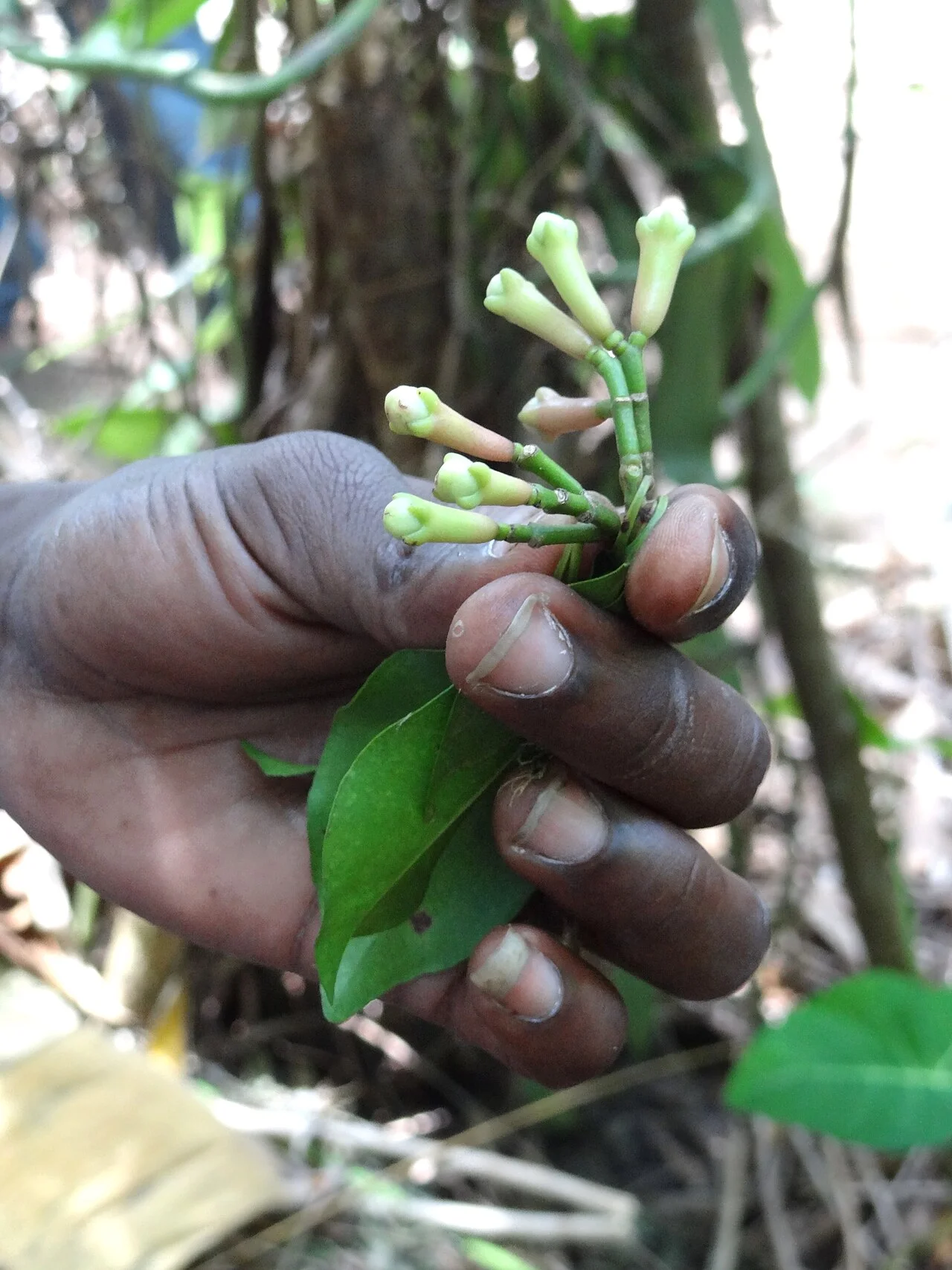
- Clove — bite the unopened flower bud fresh from the tree and you get a numbing, almost medicinal heat quite unlike the mellow dried spice; this is the compound eugenol that once made cloves worth their weight in gold and still numbs a toothache
- Nutmeg and mace — a single fruit yields two spices, the hard brown seed (nutmeg) wrapped in a scarlet lacy web (mace); guides split a ripe fruit open to show the contrast, warm and sweet against bright and resinous
- Cinnamon — scrape the bark of a young Cinnamomum branch for the familiar sweetness, then crush a leaf, which smells startlingly of clove; the root, uniquely, smells of camphor
- Vanilla — the world's second-most-expensive spice after saffron is a climbing orchid that must be hand-pollinated one flower at a time, which is why a single cured pod costs what it does
- Cardamom, turmeric, and ginger — the three rhizome-and-pod spices that give Zanzibari pilau and biryani their backbone; scratch a turmeric root and it stains your fingers sunflower-yellow for a day
- Black pepper — trained up living tree trunks as a vine, the same green berry dries to black, is picked ripe and soaked for white, or dried young for green
Ask your guide to demonstrate how clove essential oil is distilled and why the large, oil-rich Zanzibar clove is prized by perfumers even though smaller Indonesian cloves now dominate the cheaper commodity market.
Local Producers
Zanzibar's spice farms today are overwhelmingly smallholdings, not the great estates of the sultanate era. After the 1964 revolution the old plantations were broken up, and most spices are now grown on family plots of a few acres in the central districts, sold through a mix of the state marketing board and direct farm-gate sales to visitors.
- Kizimbani — the historic heart of the clove country, where Sultan Seyyid Said laid out some of the earliest imperial plantations; the government agricultural station here still trials spice and fruit varieties
- Kidichi — a cluster of smallholder farms beside the restored Kidichi Persian Baths, the ornate 1850 bathhouse the sultan built for his Persian wife, letting a farm visit double as a heritage stop
- Community and women's cooperatives — several farms near Mahonda and Bambi are run as cooperatives that also press ylang-ylang and lemongrass for essential oils, and buying spices or soap directly from them keeps far more of the money on the island than an airport gift shop does
Buying at the farm gate is both cheaper and fresher than any market stall, and it puts income straight into the hands of the growing family. A $5–20 bundle of vacuum-fresh cloves, vanilla pods, and cinnamon quills is the most useful souvenir Zanzibar offers — and a direct way to reward the smallholders who keep this two-century-old terroir alive.
Zanzibar Spice Plantations timeline
-
Omani rule established
Oman expelled the Portuguese from Zanzibar, tying the island into an Indian Ocean trade network that later carried its spices to Arabia, India, and Europe.
-
First clove trees planted
The Arab landowner Saleh bin Haramil al-Abray is credited with bringing clove seedlings from the French islands of Réunion and Mauritius, breaking their monopoly on the crop.
-
Sultan's capital and clove boom
Sultan Seyyid Said moved his court from Muscat to Zanzibar and compelled landowners to plant cloves, turning the interior into a plantation economy worked by enslaved labour.
-
The great hurricane
A rare cyclone flattened most of Unguja's clove groves; production shifted to the sister island of Pemba, which still grows the larger share of Zanzibar's cloves.
-
Slavery abolished
The legal status of slavery was ended in Zanzibar, restructuring but not dismantling the plantation economy that the spice trade had built.
-
Revolution and the clove monopoly
After the Zanzibar Revolution, the state took control of the clove trade through a marketing board, and smallholders replaced the old plantation estates.
When to Visit
Spice tours typically depart from Stone Town between 8 and 10 AM, reaching the plantation areas after a 25–35 minute drive. The guided farm walk takes 1.5 to 2.5 hours, and most tours include a Swahili lunch prepared on-site with spiced rice, grilled fish or chicken, coconut curry, and fresh fruit — usually served under a shaded thatched structure. Return to Stone Town is typically early-to-mid afternoon, allowing a free evening at the Forodhani waterfront food market. Clove harvest season (July–September) is the most atmospheric time: roadside mats of drying cloves appear throughout the interior districts, and the fragrance carries for hundreds of metres on the morning air. Avoid the peak of the long rains in April and May, when the earth paths turn to mud and the lowest month-ratings of the year fall — though the farms still operate and the vanilla orchid is in flower.
Admission and Costs
Spice tour prices are usually bundled with transport from Stone Town: $25–45 per person in a group minibus, including the guided farm walk, tastings, and often a Swahili lunch. Private tours cost $60–100 for up to four people. The farms themselves typically charge an included admission bundled into the tour price. Purchasing spices directly from the farm at the end of the walk costs $5–20 depending on quantity — far cheaper and more aromatic than airport gift shops. Carry small US-dollar bills or Tanzanian shillings: there is no card machine at a working farm, and tipping the guide $3–5 per person is customary for a good walk. Because a spice tour pairs naturally with the interior's wildlife, many Stone Town guesthouses sell a combined spice-and-Jozani Forest day for roughly $35–55 per person including transport and both stops — better value than booking each separately.
The Case for a Guide
A spice farm is the one Zanzibar attraction where the guide is not an optional extra but the entire experience — the plants are unlabelled, the paths unmarked, and without narration a visitor sees only a green garden. The difference between a memorable morning and a wasted one is entirely in who walks you round.
- Plant identification expertise — distinguishing between 25 spice species in their growing form requires experience; without a guide, most visitors cannot connect plants to the recognisable dried products they know from cooking
- Historical depth — the story of how cloves built an empire and enslaved thousands adds ethical and political dimension to what would otherwise be a pleasant garden walk, and connects directly to the slave-market history told at Stone Town's Anglican Cathedral
- Harvest technique — guides demonstrate the tools and hand methods still used to separate clove buds, hand-pollinate vanilla orchids, and peel cinnamon bark — skills passed through generations of farming families
- Cooking applications — good guides explain how each spice is used in Zanzibar's distinctive pilau rice, biryani, and cardamom-scented chai traditions, creating a direct connection between farm and kitchen
Tips for Visitors
Wear comfortable shoes with some grip — plantation paths can be muddy and uneven after rain. Long sleeves or a light cotton layer protect against sun and mosquitoes in the shadier plantation areas, and because Zanzibar is a year-round malaria zone, pack repellent. Bring a small bag for the spices you will inevitably purchase, and a little cash for the farm gate. Dress modestly out of respect for the Muslim farming families whose land you walk. Ask your guide about the difference between the large Zanzibar clove (prized for essential oil) and the smaller Indonesian varieties that have displaced it in global commodity markets — the economics of the global spice trade are surprisingly contemporary. Combining this tour with an afternoon visit to Jozani Forest makes an excellent full-day interior excursion, leaving your mornings and evenings free for Stone Town, a Changuu Prison Island boat trip, and the beach.
Frequently Asked Questions
What spices will I see on a Zanzibar spice tour?
A well-run spice tour typically reveals 15 to 25 different plants, including cloves (the most historically significant), nutmeg and mace from the same tree, vanilla orchids climbing their support poles, cardamom in its pale green pods, cinnamon (both the bark and the leaf), turmeric, ginger, black pepper, ylang-ylang (used in perfumery), and lemongrass. Guides often source fresh samples directly from the plant for tasting, which makes the experience far more vivid than any market display. Expect to leave with a selection of fresh and dried spices to take home.
How long does a Zanzibar spice tour last?
A standard guided spice walk takes 1.5 to 2.5 hours at a relaxed pace, moving through working plantation areas where crops are at various stages of growth and harvest. Most tours from Stone Town combine the spice farm with a visit to a local lunch prepared with the fresh ingredients you've just seen — an arrangement that significantly extends both the experience and its value. The drive from Stone Town to the plantation areas in the island's interior takes 25–35 minutes each way.
Are spice tours suitable in all seasons?
Yes — spice plantations operate and remain interesting year-round because different crops are always at different stages of growth. The clove harvest season from July through September is the most atmospheric, when the entire island is fragrant with drying cloves spread on woven mats along the roadside. The vanilla orchid flowers in the early dry season, and cinnamon is harvested from the bark of young trees in the wet season. A knowledgeable guide adapts the walk to whatever is in current harvest.
Which spice farm or village should I choose near Stone Town?
Most tours run to the smallholder farms clustered around Kizimbani and Kidichi in the island's central belt, a 25–35 minute drive from Stone Town — the same fertile district where Sultan Seyyid Said laid out his first plantations in the 1830s. Kidichi is worth requesting because the restored Persian Baths the sultan built for his wife Binte Irich Mirza in 1850 sit beside the farms, letting you fold a small heritage site into the walk. There is no single "official" plantation; quality depends far more on the guide than on the plot, so book through a licensed operator rather than a roadside tout and confirm that tastings and a Swahili lunch are included.
Is a Zanzibar spice tour worth it?
For most visitors, yes — it is one of the island's best-value half-days, turning an abstract history lesson into something you can taste, smell, and carry home for $25–45. It rewards anyone curious about food, botany, or the trade that built Stone Town. Skip it only if your trip is purely beach-focused and short, or if you dislike guided walks — the farms are working smallholdings, not a manicured botanical garden, and the value is almost entirely in the guide's narration. Paired with an afternoon at Jozani Forest, it fills a full day in the island's green interior.
Can I visit a spice plantation independently or by public transport?
It is possible but rarely worthwhile. The Bububu- and Mahonda-bound dala-dala minibuses from Stone Town's Darajani terminal pass near the Kizimbani and Kidichi farms for a few thousand Tanzanian shillings, but the plantations are working farms with no ticket office, no signage, and no guide waiting at the gate — arriving alone usually means being turned away or wandering a garden you cannot interpret. Because the guided walk, tastings, transport, and lunch are bundled for $25–45, almost everyone joins an organised tour; the dala-dala only makes sense if you have already arranged a farmer to meet you.
How should I pack and prepare for a spice farm walk?
Wear closed shoes with grip — the earth paths turn slick and muddy after rain — and a light long-sleeved layer against sun and mosquitoes in the shaded plots, since Zanzibar is a year-round malaria area. Bring a hat, drinking water, a little cash for spices bought at the farm gate, and a cloth bag to carry them. Zanzibar is predominantly Muslim, so cover shoulders and knees out of respect for the farming families whose land you are walking. If you have nut, pollen, or spice allergies, tell your guide before the tastings begin.