

Overview
Pair with the Jewish Quarter: San Juan de los Reyes sits at the edge of Toledo's historic Jewish Quarter; combine both for a rich half-day walk. Photography paradise: The cloister is one of the most photogenic spaces in Toledo -- bring a wide-angle lens for the arched galleries. Comfortable footwear: The streets leading to the monastery are steep and uneven cobblestones. Visit before the cathedral: Starting here and walking east toward Toledo Cathedral creates a natural downhill route through the old town. No large bags: Backpacks larger than a daypack may need to be left at the entrance. Respect the space: While no longer an active monastery, visitors are asked to maintain a quiet, respectful atmosphere inside
Visitor Etiquette
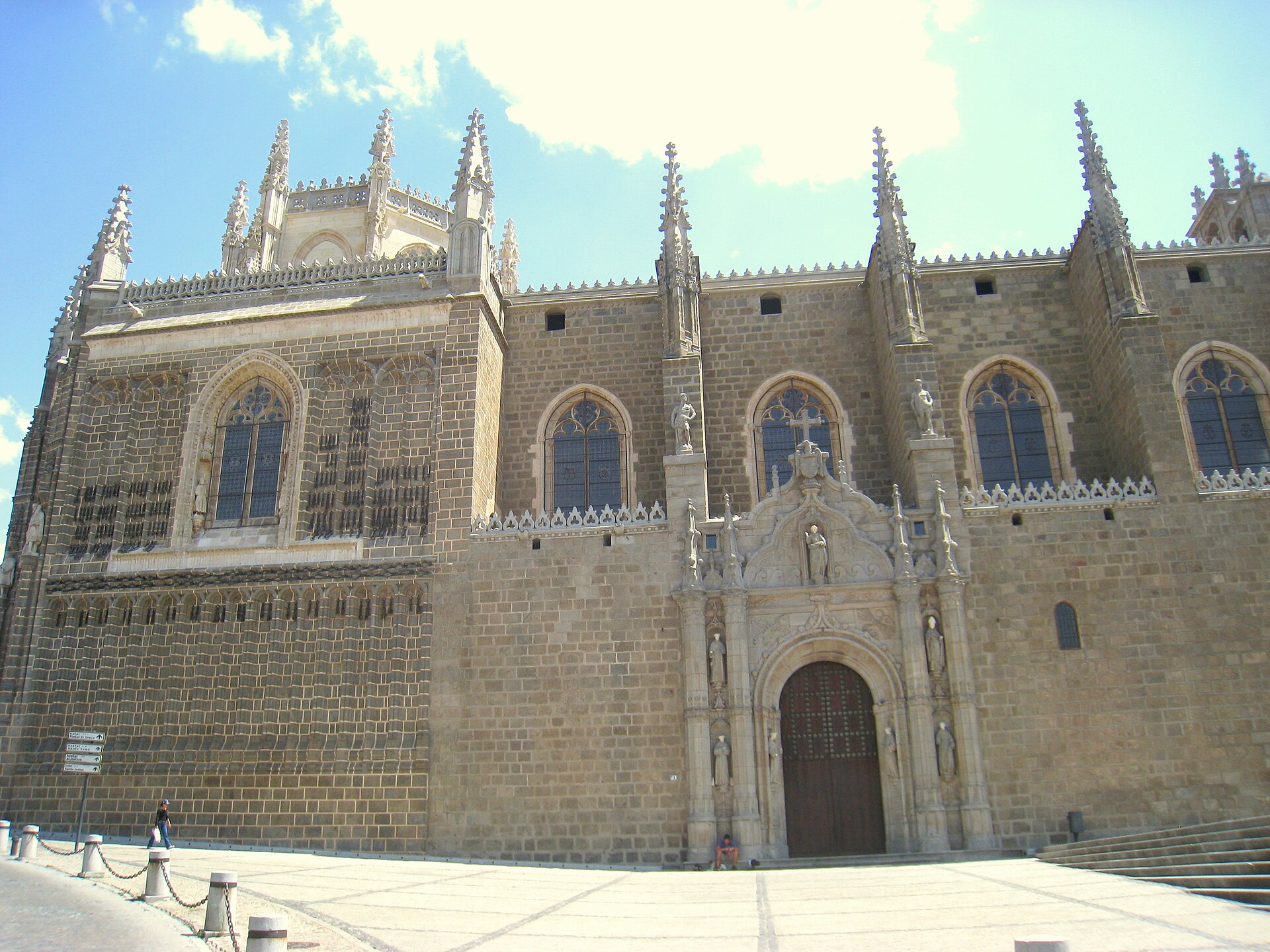
Tucked into the western end of Toledo's historic quarter, the Monastery of San Juan de los Reyes was commissioned by Queen Isabella and King Ferdinand in 1476 to celebrate their decisive victory at the Battle of Toro. The Flemish-trained architect Juan Guas crafted a building that served a dual purpose: a Franciscan monastery and a monument to royal power. Every surface brims with heraldic eagles, yoke-and-arrows emblems, and Latin inscriptions proclaiming the glory of the Catholic Monarchs. The exterior walls tell their own story -- iron chains of Christian captives freed during the Reconquista hang in rows across the stone, a visceral reminder of the wars that shaped Spain. Though Ferdinand and Isabella ultimately chose Granada for their burial, the monastery remains one of the purest expressions of Isabelline Gothic architecture anywhere on the peninsula.
Spiritual Significance
Facade chains: Run your gaze along the rows of iron shackles taken from Christian prisoners freed in Málaga, Almería, and Baeza during the Reconquista campaigns. Upper cloister: Stroll the serene Mudéjar-accented gallery on the second level, where geometric carved ceilings contrast with the Gothic arches below. Royal heraldry: Spot the repeated yoke-and-arrows motif of Ferdinand and Isabella carved into virtually every surface of the single-nave church. Cloister garden: Pause in the courtyard planted with orange trees and medicinal herbs, a tranquil oasis enclosed by ornate stone arcades. Ceiling bosses: Look up in the lower cloister to find intricately carved stone medallions depicting saints, angels, and fantastical creatures. Franciscan simplicity: Notice how the monks' austere living quarters contrast sharply with the lavish decoration of the public church and cloister
When to Visit
Every day: 10:00 AM - 6:45 PM (summer hours may extend to 7:00 PM). Best time to visit: Late afternoon, when low-angle sunlight floods the upper cloister gallery. Least crowded: Weekday mornings outside of Spanish school holiday periods. Allow: 45 minutes to 1.5 hours, depending on your pace through the cloister and church
Admission and Costs
General admission: €3 (church and cloister). Pulsera Turística: Multi-monument bracelet that bundles entry to San Juan de los Reyes with other Toledo landmarks at a reduced total price. Guided group tour: €10-€12 per person (approximately 1 hour, includes monastery entry). Private guided tour: €12-€15 per person for an in-depth visit with a local art historian
Tips for Visitors
Decoding heraldry: The walls are covered with royal symbols -- a guide reveals what each emblem, motto, and carved figure represents. Reconquista narrative: The chains on the facade are meaningless without historical context; guides bring the story of liberation and conquest to life. Architectural details: Isabelline Gothic is a uniquely Spanish phenomenon and guides explain how it differs from French and English Gothic traditions. Cloister appreciation: The interplay of Gothic tracery and Mudéjar geometry in the cloister is subtle; a guide draws your eye to details easily overlooked. Broader context: Guides connect San Juan de los Reyes to the wider story of the Catholic Monarchs, the fall of Granada, and the birth of modern Spain