
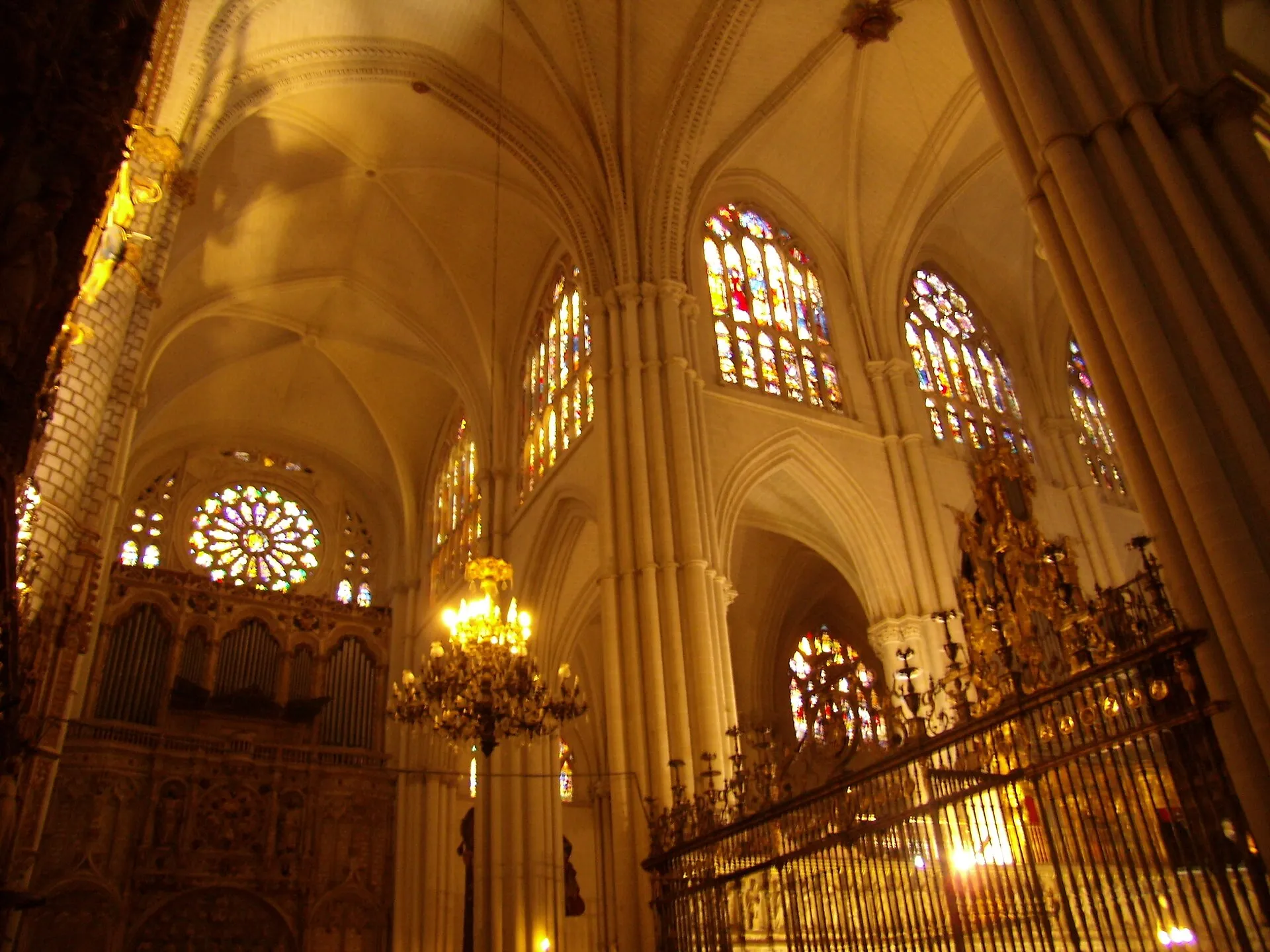
Visitor Etiquette
Toledo Cathedral remains an active Catholic basilica, and visitor behavior should reflect that. Silence is expected throughout — avoid loud conversations and switch phones to silent before entering. Mass is celebrated daily, and areas near the high altar may be temporarily closed to tourists during services; follow staff direction and wait rather than pressing forward. Do not touch the paintings, sculptures, or choir stall carvings, no matter how tempting it is to run a finger across the walnut reliefs. The treasury and sacristy require orderly queue behavior during peak season, as the spaces are small and crowded entry diminishes the experience for everyone. Group selfies in front of El Greco's The Disrobing of Christ are considered disrespectful by the cathedral community — observe quietly instead.
Spiritual Significance
Toledo Cathedral holds a singular place in the religious history of Spain as the Primatial See — the highest-ranking Catholic diocese in the country, with the Archbishop of Toledo standing above all other Spanish bishops. This authority was not merely ceremonial: for centuries the Archbishop of Toledo crowned Spanish monarchs, convened the great Councils of Toledo that shaped Iberian law and theology, and wielded influence that rivaled the crown itself.
The ground beneath the cathedral carries an even older spiritual charge. It was on this site in 589 CE that the Visigoth king Recaredo I formally renounced Arianism and converted to Nicene Christianity, an act that effectively established Catholicism as the defining faith of what would become Spain. Before the first Gothic stone was laid in 1226, the same site had already functioned for centuries as a Visigoth church and then as a mosque during the period of Moorish rule — layers of sacred use that make the ground itself a compressed history of the Iberian Peninsula.
At the spiritual core of the cathedral's living devotion stands the Virgen del Sagrario — Our Lady of the Tabernacle — a figure venerated by Toledo's faithful for more than 1,400 years. According to tradition, her cult predates the current building entirely, with roots in the early Christian community of Visigoth Toledo. Her chapel draws pilgrims year-round, and her image remains the emotional center of the cathedral's religious life far more than any painting or altarpiece.
That living devotion reaches its most spectacular expression during Corpus Christi, when the towering Custodia de Arfe — a gilded silver monstrance standing nearly three meters tall and weighing over 180 kilograms — is carried through Toledo's medieval streets in a procession that has continued unbroken for centuries. The procession remains one of Spain's most important religious festivals, drawing thousands of pilgrims and connecting the present city to an uninterrupted thread of Catholic practice stretching back to the late medieval period.
When to Visit
Monday to Saturday: 10:00 AM - 6:30 PM. Sunday: 2:00 PM - 6:30 PM (mornings reserved for worship). Best time to visit: Early weekday mornings just after opening, when tour groups have not yet arrived. Peak season: March through October sees the highest visitor numbers; winter months offer a more contemplative experience
Admission and Costs
General admission: €10 (cathedral, cloister, and treasury). Combined ticket with bell tower: €15. Guided group tour: €18-€25 per person (1.5-2 hours, includes priority entry). Private guided tour: €25-€30 per person for small groups with a dedicated art historian. Pulsera Turística (tourist bracelet): Multi-monument pass covering the cathedral and several other Toledo landmarks at a discounted rate
The Case for a Guide
Art history depth: The cathedral contains works by El Greco, Goya, Caravaggio, and Titian — a guide connects these pieces to their historical moment, explaining why the chapter originally rejected El Greco's Disrobing of Christ before it became one of Spain's most celebrated paintings. Architectural storytelling: Mudéjar ceilings, French Gothic vaulting, and Baroque additions coexist here; without context, the layering can feel overwhelming rather than extraordinary. Hidden details: Guides point out carvings, inscriptions, and choir stall scenes that most visitors walk past, including the 54 carved scenes depicting the Reconquista at the base of the lower stalls. Transparente timing: A knowledgeable guide positions you at the right angle when sunlight pours through the Baroque vault opening, transforming Tomé's theatrical masterpiece from confusing to breathtaking. Efficient routing: The cathedral has over 20 chapels; a guide ensures you see the highlights without backtracking through the maze of side aisles and locked gates.
Tips for Visitors
Dress modestly: Shoulders and knees should be covered as this is an active place of worship. Photography: Permitted without flash; tripods and selfie sticks are not allowed inside. Sunday mornings: The cathedral is closed to tourists for Mass until 2 PM, so plan accordingly. Combine visits: The Jewish Quarter and Monastery of San Juan de los Reyes are a short walk away. Audio guide: Available in multiple languages at the entrance if you prefer a self-paced visit. Arrive via Zocodover: Walking from the Plaza de Zocodover through the old town sets the scene beautifully
Frequently Asked Questions
What time of year is best to visit Toledo Cathedral?
April through June and September through October combine pleasant weather for exploring Toledo's steep medieval streets with manageable cathedral crowds. As a vast stone interior, the cathedral stays cool even in summer heat, making it a welcome refuge during hot months, but the surrounding city becomes exhausting in July-August. The Corpus Christi procession in late May or June is a once-a-year spectacle that begins at the cathedral doors.
When is Toledo Cathedral open outside of worship services?
Monday to Saturday: 10:00 AM - 6:30 PM. Sunday: 2:00 PM - 6:30 PM (mornings reserved for worship). Best time to visit: Early weekday mornings just after opening, when tour groups have not yet arrived.
How does a guide enhance a visit to Toledo Cathedral?
Art history depth: The cathedral contains works by El Greco, Goya, Caravaggio, and Titian -- a guide connects these pieces to their historical moment.
What hidden details do guides reveal in Toledo Cathedral?
Guides provide art history depth, connecting works by El Greco, Goya, Caravaggio, and Titian to their historical moment. They point out hidden carvings and choir stall scenes most visitors walk past, and position you at the right angle for the Transparente's sunlight effect.