

Overview
Vertigo warning: The upper deck is 60 meters above the river with open sides — the lower deck is the alternative for those uncomfortable with heights. Wind exposure: The upper deck catches Atlantic gusts — hold phones and cameras firmly. Upper deck access: Enter from near the Sé cathedral (Porto side) or Mosteiro da Serra do Pilar (Gaia side). Lower deck access: Enter from Ribeira waterfront level on either bank. Cross both ways: Walk the upper deck one direction and the lower deck back — completely different perspectives. Combine with port tastings: Cross to Gaia, visit a cellar or two, then walk back across the lower deck at river level
Observation Points
Engineering story: The Seyrig-Eiffel connection, the structural innovations, and why Porto needed a double-deck design — context that transforms a walk into a lesson. Historical routing: Guides sequence the bridge crossing within a wider Ribeira-to-Gaia itinerary, maximizing what you see without doubling back. Photography coaching: Guides know the exact spots on the upper deck where the composition of Ribeira, the river, and the arch align perfectly. Gaia transition: After crossing, guides navigate you directly to the best port wine cellars or the Mosteiro da Serra do Pilar viewpoint
Engineering Facts
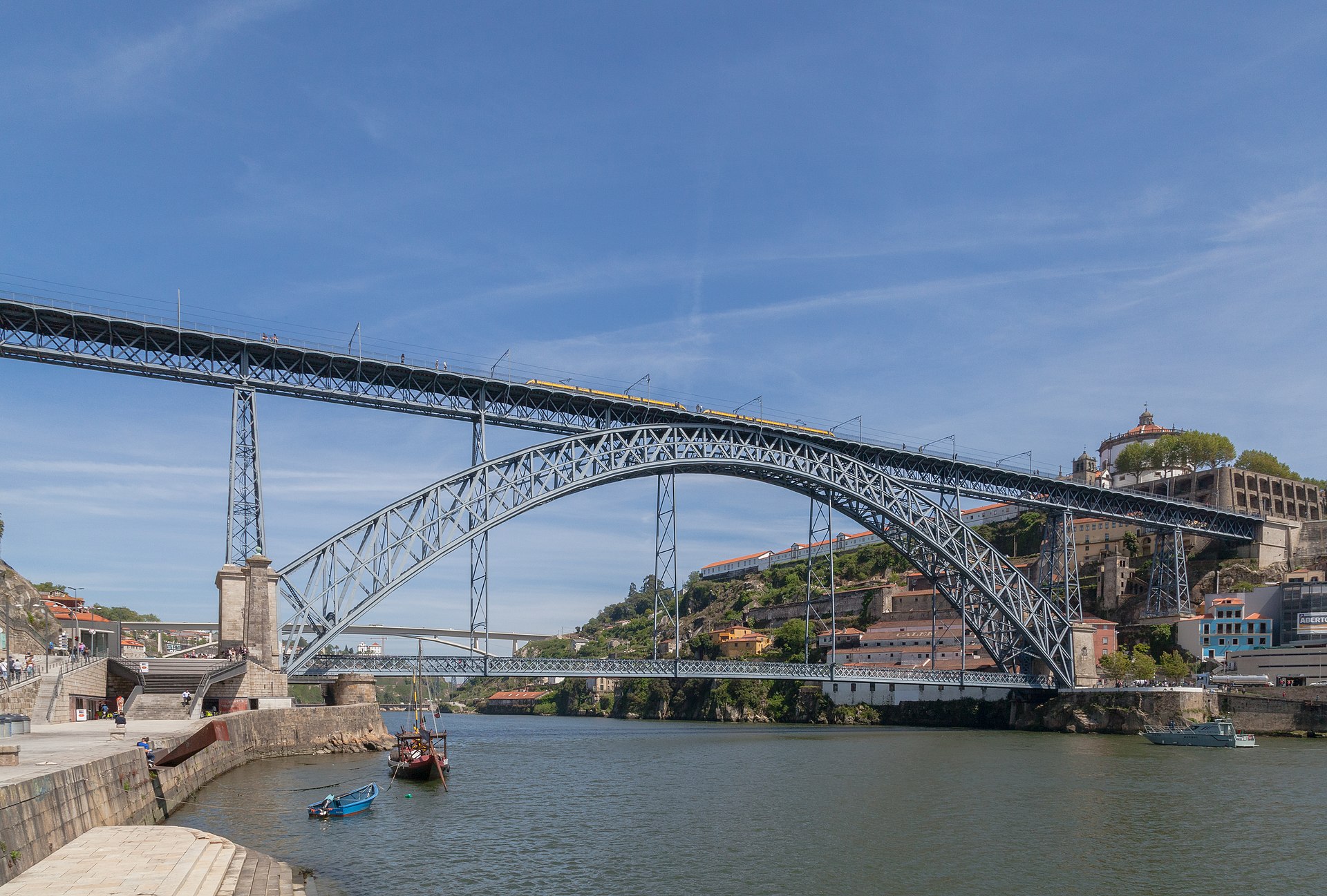
Ribeira panorama — From the upper deck, the UNESCO waterfront spreads below in a cascade of colorful buildings. Gaia wine lodges — The south bank reveals the rooftops of Taylor's, Graham's, Sandeman, and dozens more port houses. Douro canyon views — Look upriver toward the terraced vineyards of the Douro Valley, downriver toward the Atlantic. Iron arch structure — The single 172-meter arch span was a major engineering achievement of the 1880s. Metro crossing — The upper-deck metro line offers a different perspective if you prefer not to walk. Serra do Pilar viewpoint — On the Gaia side, this circular monastery terrace gives the postcard-perfect Porto panorama
When to Visit
Sunset: Walk the upper deck westward for golden light flooding the Douro canyon — the best photographic moment in Porto. Morning (8-10 AM): Quiet upper deck with soft eastern light illuminating Ribeira's facades. After dark: Both decks and the arch are illuminated, and the Ribeira and Gaia waterfronts light up beautifully. Avoid: Midday in summer — the iron structure radiates heat and there's zero shade. Duration: 10-15 minutes to cross the upper deck; longer if stopping for photos at every angle
Admission and Costs
Walking the bridge: Free (both decks open to pedestrians 24/7). Metro crossing: Upper deck metro from Porto to Gaia costs one zone fare. Guided Ribeira + Bridge + Gaia tour: €15-25 per person (3 hours, includes walking the bridge and a port cellar visit). Private photography tour: €80-150 for up to 4 people (bridge + best viewpoints + sunset timing)
Tips for Visitors
The Ponte Luís I is Porto's defining landmark — a double-deck iron arch bridge that vaults 172 meters across the Douro gorge, connecting Porto's historic center on the north bank to the port wine lodges of Vila Nova de Gaia on the south. Completed in 1886, it was designed by Théophile Seyrig, a former partner of Gustave Eiffel (who built the nearby Maria Pia Bridge a decade earlier). The upper deck stands 60 meters above the water and carries the metro line and a pedestrian walkway; the lower deck handles road traffic and pedestrians at river level. Walking the upper deck is one of Porto's essential experiences — the views up and down the Douro canyon, across the stacked facades of Ribeira, and over the terracotta-roofed wine lodges of Gaia are vertigo-inducing and unforgettable.