
Architecture
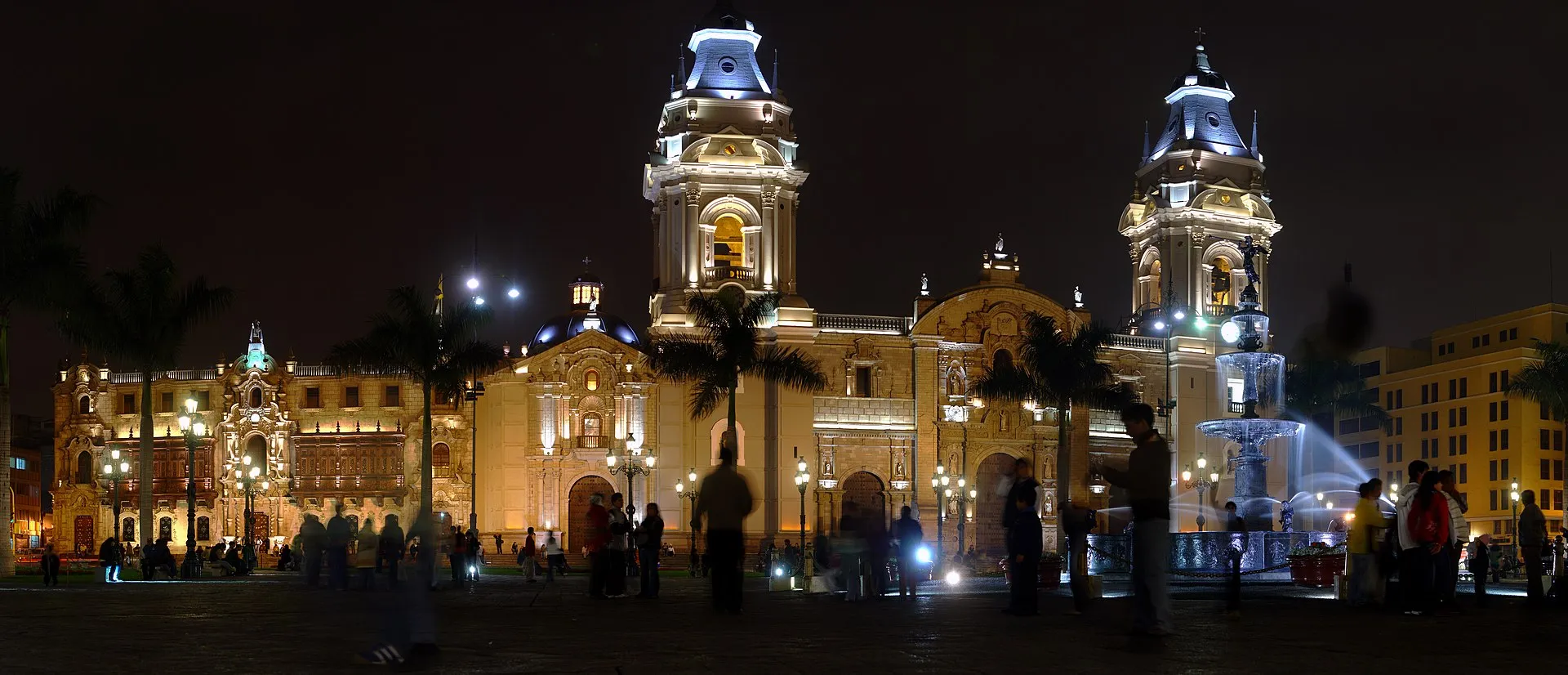
Cathedral of Lima: A Pizarro chapel, baroque choir stalls carved from cedar, and a museum of religious art spanning four centuries of viceregal devotion. Government Palace: The noon changing of the guard features a military band in full dress — a brief but photogenic ceremony on the plaza's north side. Colonial balconies: The Archbishop's Palace and surrounding streets showcase Lima's signature enclosed wooden balconies, carved in Moorish-influenced style and cantilevered over narrow sidewalks. San Francisco catacombs: Beneath the monastery, thousands of bones are arranged in geometric patterns in the crypts that served as Lima's cemetery until 1808. Jirón de la Unión: The pedestrian boulevard connecting Plaza Mayor to Plaza San Martín passes colonial facades, ice cream parlours, and the historic Gran Hotel Bolívar. 1651 bronze fountain: The plaza's centrepiece has survived earthquakes, revolutions, and nearly four centuries of Lima weather.
Historical Significance
Plaza Mayor marks the founding point of Spanish colonial power in South America. When Pizarro laid out the grid in 1535, he established the administrative centre that would govern the Viceroyalty of Peru — at its height, the richest and most powerful colonial territory in the Americas, stretching from Panama to Patagonia. The Cathedral houses Pizarro's remains in a chapel near the entrance, a contested memorial that encapsulates the unresolved legacy of conquest. The Convento de San Francisco's catacombs, used as Lima's primary cemetery until 1808, contain an estimated 25,000 burials arranged in eerie geometric patterns beneath the nave — a visceral encounter with the scale of colonial-era mortality. The Jirón de la Unión connecting the two main plazas was once the most fashionable promenade in South America, and its buildings — though faded — still carry the ornamental ambition of a city that saw itself as the equal of Madrid. Combine the Historic Centre with the Larco Museum for a day spanning conquest and the civilisations it displaced, or walk along the Miraflores Boardwalk at sunset for the contrast between colonial Lima and its modern Pacific-facing identity.
When to Visit
Plaza: Open 24 hours — best visited in the morning light when the colonial facades glow gold. Cathedral: Monday-Saturday 9 AM - 5 PM (includes museum and catacombs of the adjacent Sagrario). Government Palace: Changing of the guard daily at 11:45 AM — arrive 15 minutes early for a good position. Convento de San Francisco: Daily 9 AM - 8 PM, guided catacomb tours run every 15-20 minutes. Best day: Weekday mornings before 11 AM for thinner crowds and better photography light.
Admission and Costs
Cathedral entry: S/15 ($4) adults, S/5 for students. San Francisco catacombs: S/15 ($4) — the bone-lined vaults are Lima's most atmospheric underground experience. Guided walking tour of Historic Centre: S/50-120 ($14-32) per person, typically 2-3 hours. Private half-day guide: S/150-300 ($40-80) covering the plaza, cathedral, catacombs, and surrounding streets.
Tips for Visitors
Arrive before 11 AM: The changing of the guard at noon draws large crowds — explore the cathedral and surrounding streets first, then watch the ceremony. Combine with Barranco: After the morning in the Historic Centre, take a taxi or the Metropolitano bus south to Lima's bohemian quarter for lunch and afternoon exploring. Watch for pickpockets: The Historic Centre is safe by day but requires standard vigilance — keep valuables close, especially during the guard ceremony when crowds cluster. Free walking tours: Several companies offer tip-based free walking tours that depart from the plaza — quality varies, so check reviews beforehand. Photography: Morning light (8-10 AM) catches the colonial facades beautifully; the afternoon sun falls behind the buildings and flattens the scene. Wear comfortable shoes: The Historic Centre grid covers several kilometres of uneven colonial-era sidewalks and cobblestones.
Frequently Asked Questions
What is the best time of year to visit Lima's Plaza Mayor?
December through March is Lima's summer, delivering sunshine that makes the colonial facades glow golden and the changing of the guard ceremony feel festive. The cathedral and catacombs are indoor attractions unaffected by weather, but the plaza itself is most photogenic under clear skies. June through August cloaks the Historic Centre in grey garua fog, lending a moody atmosphere some visitors appreciate but most find dispiriting, with temperatures dropping to cool levels unusual for a coastal South American capital.
When can visitors tour Plaza Mayor & Historic Centre?
Plaza: Open 24 hours — best visited in the morning light when the colonial facades glow gold. Cathedral: Monday-Saturday 9 AM - 5 PM (includes museum and catacombs of the adjacent Sagrario).
How much is the entrance fee for Plaza Mayor & Historic Centre?
Cathedral entry: S/15 ($4) adults, S/5 for students. San Francisco catacombs: S/15 ($4) — the bone-lined vaults are Lima's most atmospheric underground experience.
What should visitors know before visiting Plaza Mayor & Historic Centre?
Arrive before 11 AM: The changing of the guard at noon draws large crowds — explore the cathedral and surrounding streets first, then watch the ceremony.