

Overview
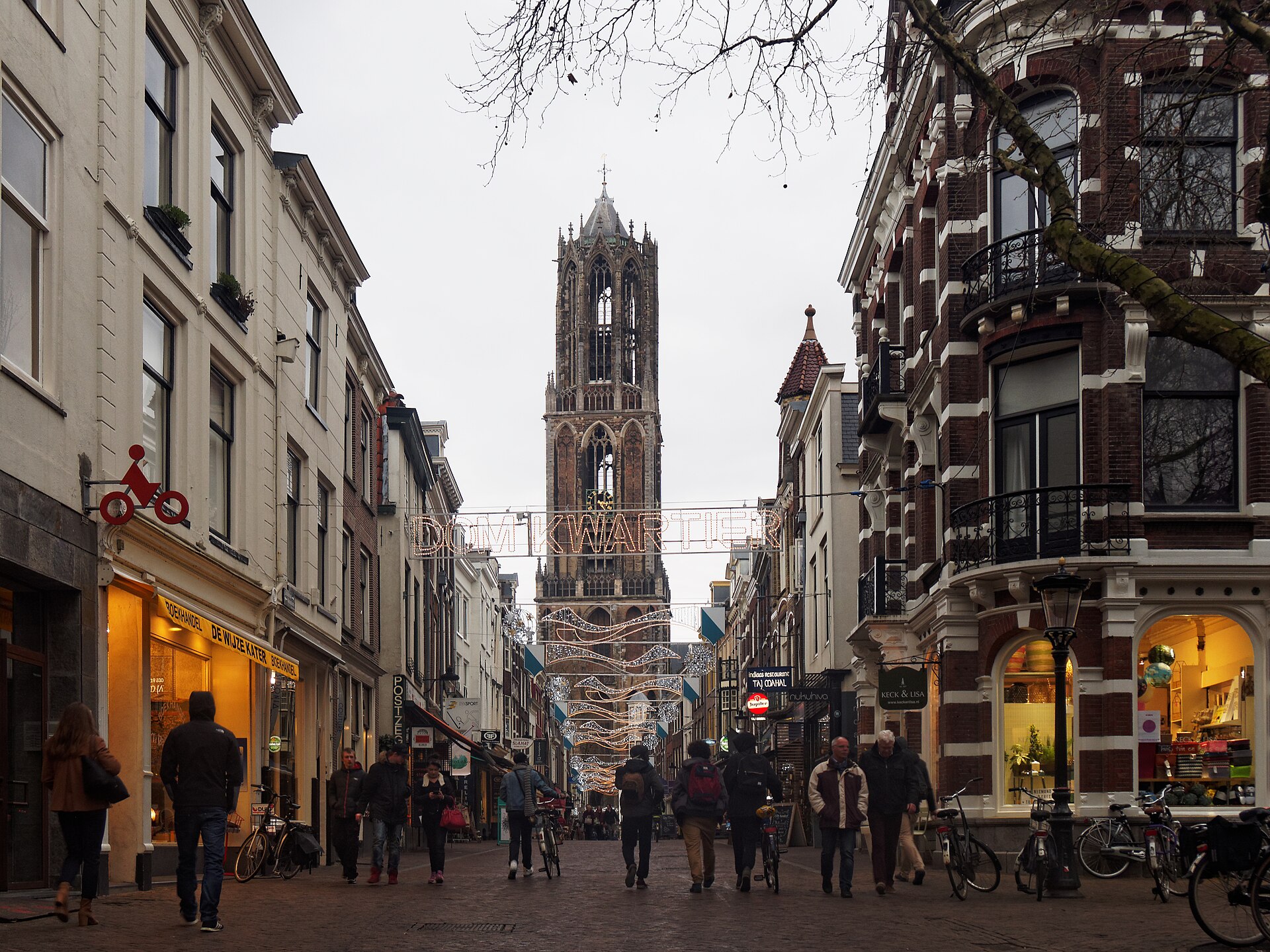
The Domtoren has defined Utrecht's skyline since its completion in 1382, rising 112.32 meters above Domplein — making it the tallest church tower in the Netherlands. Built as part of the Cathedral of St. Martin, the tower was connected to the nave by a section that collapsed during a catastrophic tornado on August 1, 1674. Rather than rebuild the connection, the citizens of Utrecht left the gap, and today the tower stands separate from the surviving choir across an open square, its solitary stance lending it a dramatic quality that an attached cathedral would diminish. The gap between tower and choir — now Domplein — remains one of Europe's more unusual public spaces: a square created by weather rather than urban planning.
Every visit to the Dom Tower is guided — there are no self-guided options, because the climb's narrow spiral staircases, medieval chambers, and bell room require explanation and supervision. Guides lead small groups through 465 steps, pausing at the chapel level (where 14th-century wall paintings survive), the bell room (where 14 bells including the massive Salvator produce the carillon music that rings across the city), and the upper galleries where views extend to Amsterdam on clear days. The tower's slight lean — visible from certain angles — adds an element of antiquity that Dutch engineers monitor but consider stable. Standing among the bells during a carillon performance, with sound vibrating through the stone at a volume that makes conversation impossible, remains one of the most visceral experiences available in any Dutch city.
Spiritual Significance
Bell Room: Standing among 14 bells — the largest, Salvator, weighing over 8,000 kg — during a carillon performance is a full-body sonic experience that reverberates through your skeleton. Medieval Chapel: Halfway up, a chapel with surviving 14th-century wall paintings offers a rest stop and a glimpse into the tower's original liturgical function. Panoramic Views: On clear days, the view extends across four provinces — pick out Amsterdam's skyline to the northwest, the Veluwe forests to the east, and the river landscape to the south. The Missing Nave: From the tower, look down at Domplein — the empty square where the cathedral nave stood until 1674. The footprint of the demolished church is marked in the pavement stones. Gothic Engineering: The guide explains how 14th-century builders constructed a 112-meter tower without modern engineering — including the flying buttresses, stone spiral staircase, and the slight intentional lean.
Visitor Etiquette
The Dom Tower climb is always guided — arriving without a booking risks finding all slots filled, especially on weekends and holidays. Groups are kept small to manage the narrow staircase safely, so patience during the ascent is essential. The bell room visits are timed to avoid carillon performance moments when the volume becomes physically overwhelming for those standing among the bells. Photography is permitted throughout but tripods cannot be accommodated in the narrow passages. The Domplein square below — where the cathedral nave once stood — is freely accessible and provides the best ground-level perspective on the tower's full height. Combine the Dom Tower with Museum Speelklok (5-minute walk) for a morning of Utrecht's musical and architectural heritage, then descend to the canal wharves for lunch at water level.
When to Visit
Open: Daily 10:00-17:00 (guided tours depart regularly; last tour typically 16:00). Best: Clear-sky mornings for the best panoramic views from the top. Carillon concerts: Saturday afternoons — the city carillonneur plays the 14-bell instrument, audible from the square and inside the tower. Allow: 1 hour for the full guided climb and descent.
Admission and Costs
Guided tower climb: €12 adults; €7 children 4-12; free under 4 (but not recommended for very young children due to steep stairs). DOMunder (underground tour): Separate ticket, €14.50 — explores archaeological layers beneath Domplein. Combination tickets: Available for Dom Tower + DOMunder at reduced combined price. Booking: Online advance booking recommended; walk-ups possible when slots remain.
Tips for Visitors
Book ahead: Tours depart in small groups and popular time slots (late morning, early afternoon) fill up quickly on weekends and holidays. Physical fitness: The 465-step climb involves narrow, steep spiral staircases with no elevator alternative. If you have knee problems or claustrophobia, consider the ground-level DOMunder tour instead. Weather check: Views from the top are the main reward — if it's foggy or raining heavily, the panorama disappears. Check the forecast and aim for a clear day. Combine with DOMunder: The underground archaeological tour beneath Domplein complements the tower climb — one takes you up, the other takes you down through 2,000 years of history. Carillon timing: If visiting on a Saturday, time your climb to coincide with the afternoon carillon concert — experiencing the bells from inside the tower is dramatically different from hearing them from the square. After the climb: Descend and walk to the canal wharves for a well-earned drink at water level — the contrast between tower-top panorama and canal-level intimacy captures Utrecht's character.