

Overview
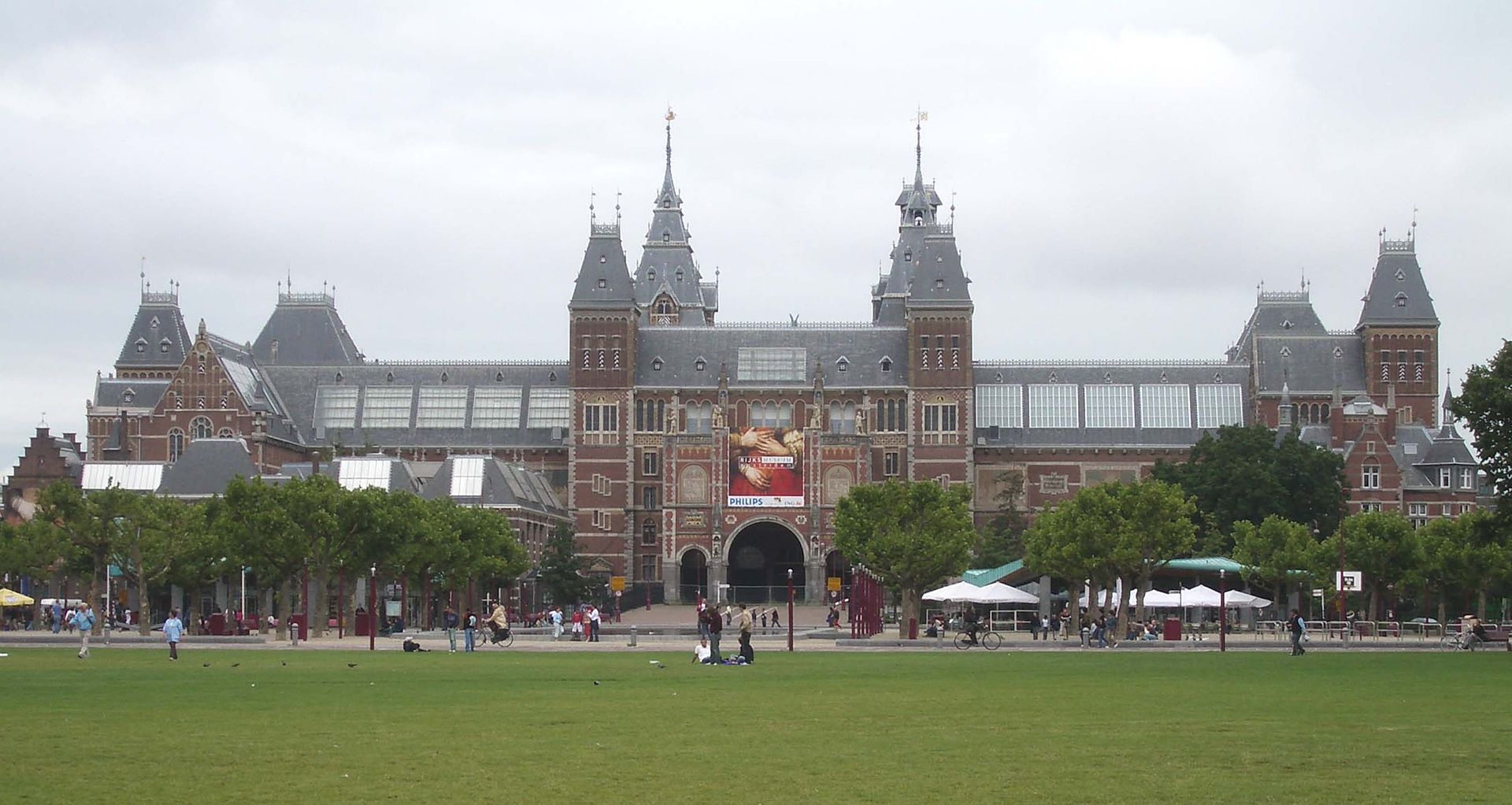
The Rijksmuseum occupies a building that architect Pierre Cuypers designed in 1885 as a deliberate cathedral to Dutch culture — its brick and stone facade decorated with terracotta tiles depicting the history of art itself. After a decade-long renovation completed in 2013, the museum reopened with restored galleries flooded with natural light, a sequence of period rooms that walk visitors chronologically through Dutch history, and a Gallery of Honour that functions as a pilgrimage route ending at Rembrandt's Night Watch. The collection spans 8,000 objects across 80 galleries: Vermeer's intimate The Milkmaid, Jan Steen's raucous household scenes, ship models from the Dutch East India Company, and Delftware ceramics that tell the story of global trade from a small country's perspective.
The building itself sits astride a public passageway where cyclists still ride through, connecting Museumplein to the city center — a very Amsterdam arrangement. Most visitors head straight for the Night Watch and leave within two hours, but the Rijksmuseum rewards slower exploration. The Asian Pavilion houses Buddhist sculpture rarely seen outside Japan. The library — the largest art history library in the Netherlands — occupies a spectacular reading room. The gardens contain fragments from demolished buildings, outdoor sculptures, and a quiet cafe far from the crowds. A guide with art history training reveals connections invisible to casual viewers: how Rembrandt's use of chiaroscuro influenced cinematography centuries later, why Vermeer produced only 36 known paintings in his entire career, and how the museum's arrangement of objects tells a story about Dutch identity that goes far beyond individual masterpieces.
Collections Highlights
Night Watch (Gallery of Honour): Rembrandt's largest and most ambitious painting dominates its own wall. The recent Operation Night Watch restoration project used AI and imaging technology to reveal details hidden for centuries — a guide can point out what was discovered. The Milkmaid (Vermeer Gallery): Vermeer's mastery of light — sunlight falling on bread, the texture of a rough wall, milk flowing in a thin stream — achieves something photographic two centuries before photography existed. Period Rooms: Walk through reconstructed Dutch interiors from the 17th to 19th centuries: canal house parlors with painted ceilings, pharmacies with original cabinets, and dollhouses that cost as much as real houses. Maritime Collection: Ship models and navigational instruments trace the Dutch East India Company's transformation of global trade — and the colonial exploitation that financed Amsterdam's Golden Age prosperity. Cuypers Library: The ornate reading room with spiral staircases and iron balconies is one of Europe's most photogenic library spaces, yet most visitors never find it.
Guided Tours
A guide trained in Dutch art history transforms the Rijksmuseum from an overwhelming 80-gallery maze into a coherent narrative. The standard 2-hour private tour covers the Gallery of Honour highlights — Night Watch, The Milkmaid, The Merry Drinker — while weaving in the social and economic context of the Dutch Golden Age that produced them. Specialist tours focus on Rembrandt's technique (his use of impasto and chiaroscuro), Vermeer's optical innovations (the camera obscura theory), or the colonial trade history embedded in the maritime and Delftware collections. Combine a Rijksmuseum visit with the Van Gogh Museum across Museumplein for a full day of Dutch art history, or pair with the Royal Palace on Dam Square for Golden Age architecture and governance context.
When to Visit
Open: Daily 9:00-17:00 (no exceptions, including holidays). Best: Arrive at opening (9:00) and head to the Gallery of Honour before crowds build; or visit after 15:00 when tour groups begin leaving. Busiest: 11:00-14:00, especially weekends and school holidays. Quietest: Monday and Tuesday mornings; Friday afternoons. Allow: 2 hours minimum; 4 hours for a thorough visit.
Admission and Costs
General admission: €22.50 adults; free for under 18. Guided group tour: €5 supplement on top of admission (45 minutes, gallery highlights). Private guide tour: €150-250 for 2 hours (booked independently, museum entry separate). Audio guide: Included free with admission via Rijksmuseum app. Museumkaart: Annual museum pass (€65) grants unlimited access to 400+ Dutch museums including Rijksmuseum.
Tips for Visitors
Advance tickets essential: Buy timed-entry tickets online — the museum frequently reaches capacity, and walk-ups risk long waits or being turned away. Skip the main entrance: The museum has a second entrance via the garden side (Atrium entrance) that typically has shorter queues during peak hours. Download the app: The free Rijksmuseum app provides multimedia tours, floor maps, and lets you bookmark works to find later — it replaces the old audio guide. Combine with Van Gogh Museum: The two museums face each other across Museumplein. Doing both in one day is possible but exhausting — better to split across two mornings. Coat check: Free and mandatory for large bags and umbrellas. Lockers available for smaller items. Arrive prepared to check belongings. Photography: Allowed without flash or tripods. The Night Watch gallery is perpetually crowded — patience yields better photos than elbowing to the front. Garden and cafe: The museum gardens are free to enter and contain sculptures, architectural fragments, and a peaceful cafe — a good mid-visit break.