
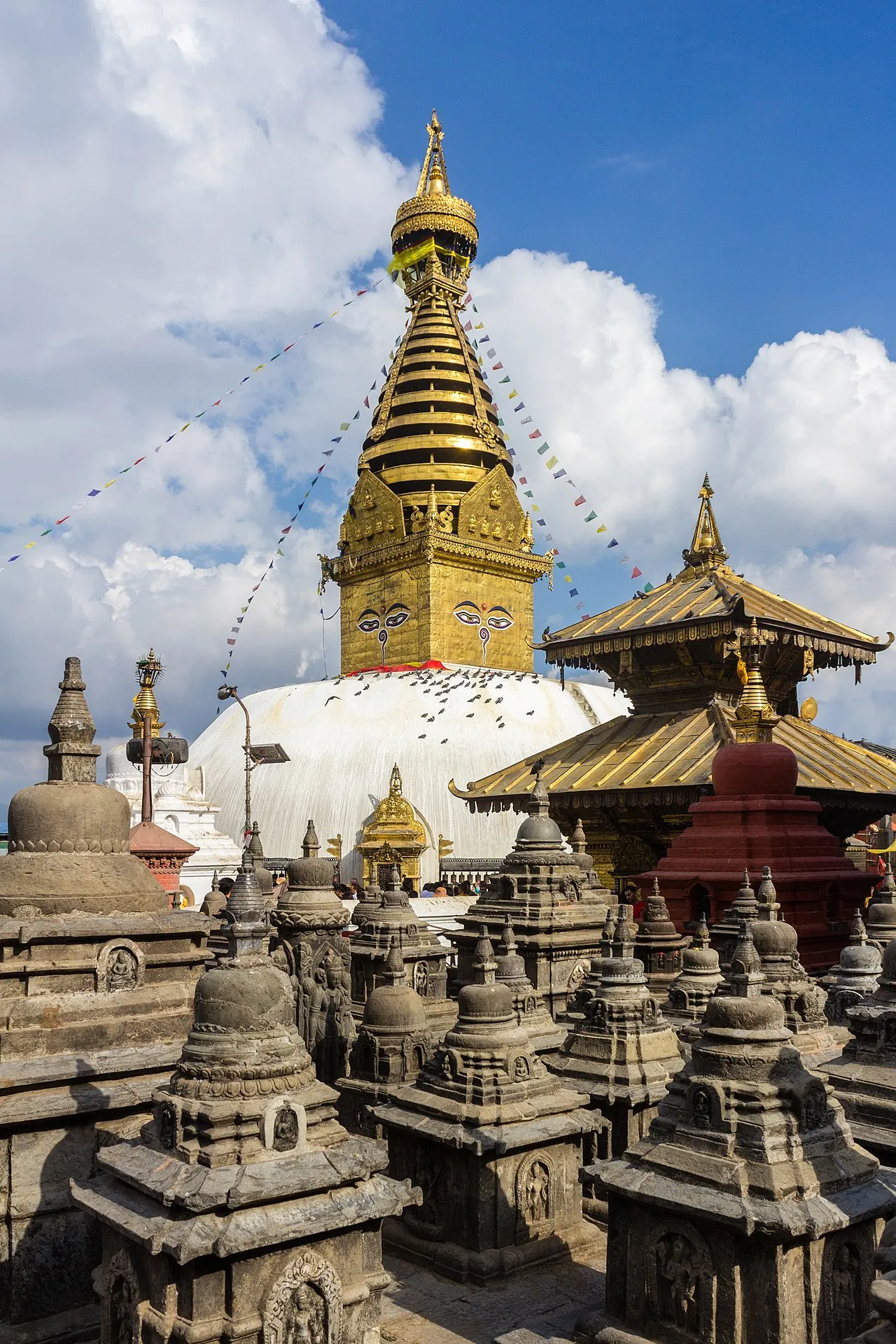
Tips for Visitors
East staircase: The 365-step climb is the intended devotional approach — worth doing despite the steepness. The west road entry is for the vehicle-accessible approach. Monkeys: Keep food, bags, and loose items secured — the macaques are expert thieves. Clear day windows: October–December and February–March offer the best Himalayan visibility from the north terrace. Combine with: Pashupatinath Temple and Boudhanath Stupa in a single day with a guide and private vehicle is the standard full-day Kathmandu spiritual circuit. Evening: The stupa is illuminated after dark — a very different atmosphere from the daytime pilgrim activity.
When to Visit
Complex open: Daily sunrise to sunset (approximately 5 AM – 7 PM). Best sunrise timing: Arrive at the east gate by 5:30 AM for the sunrise view over Kathmandu — the city wakes slowly and the morning light on the valley is extraordinary. Monkey activity: Most active in the morning (7–10 AM) when monks feed them. Evening puja: Approximately 5–6 PM in the main gompa.
Admission and Costs
Foreign visitor entry: NPR 200 (approximately $1.50). East staircase approach: Included. Road approach to west gate: Also included. Monastery visits: Free with respectful entry.
The Case for a Guide
Swayambhunath's hilltop is compact but densely layered with iconographic meaning that rewards guidance.
- Stupa symbolism vs. Boudhanath: Both are great Tibetan-style stupas, but Swayambhunath and Boudhanath have significant architectural and cosmological differences — a guide who visits both in the same day explains what each prioritizes and what the differences reveal about their different origins and patron communities
- Harati Devi temple: The Hindu goddess of smallpox and children embedded within a Buddhist complex is a living example of Nepal's religious syncretism — a guide explains why Buddhists pray to Hindu goddesses at Swayambhunath and what Harati represents in the Newari religious calendar
- Manjushri legend: The founding mythology of Swayambhunath — Manjushri draining the lake with his sword, creating the Kathmandu Valley as a livable plain — is the founding story of human settlement in the valley; a guide traces this narrative across the visible geography of the hilltop
- Morning versus evening light: The painted Buddha eyes catch horizontal light very differently from overhead midday light — a guide plans the visit for optimal illumination depending on whether you arrive for sunrise or sunset
Frequently Asked Questions
Why is Swayambhunath called the Monkey Temple?
The hill is inhabited by hundreds of Rhesus macaque monkeys (Macaca mulatta) who are considered sacred because they are believed to be the descendants of lice from the hair of the Bodhisattva Manjushri, who according to legend drained the ancient lake that once filled the Kathmandu Valley. The monkeys range freely across the temple complex, accepting food offerings from pilgrims, climbing the stupa's ceremonial stairs, and coexisting in long-established proximity to the resident monks. They are entirely accustomed to visitors but can be assertive — keep bags closed and food out of sight.
How old is Swayambhunath and who built it?
Swayambhunath is one of the oldest Buddhist monuments in the world. The Tibetan-style stupa is believed to have been constructed — or an earlier structure replaced — in the 5th century CE, though the hilltop has been a sacred site since at least the 3rd century BCE according to Licchavi stone inscriptions. The stupa's name means Self-Existent or Self-Arisen in Sanskrit, referring to the legend that the flame of enlightenment emerged spontaneously from this lotus hill before human civilization arrived in the valley.
What are the views from Swayambhunath like?
The 365-step east staircase ascent (or the road approach from the west) arrives at a hilltop terrace approximately 77 metres above the Kathmandu Valley floor. On clear mornings — particularly October through March — the Himalayan range including Ganesh Himal, Langtang, Manaslu, and on very clear days Everest itself is visible from the northern side of the hilltop. The view over Kathmandu city to the south and east is panoramic and particularly beautiful at sunrise and in the early evening golden hour.