
.jpg)
Overview
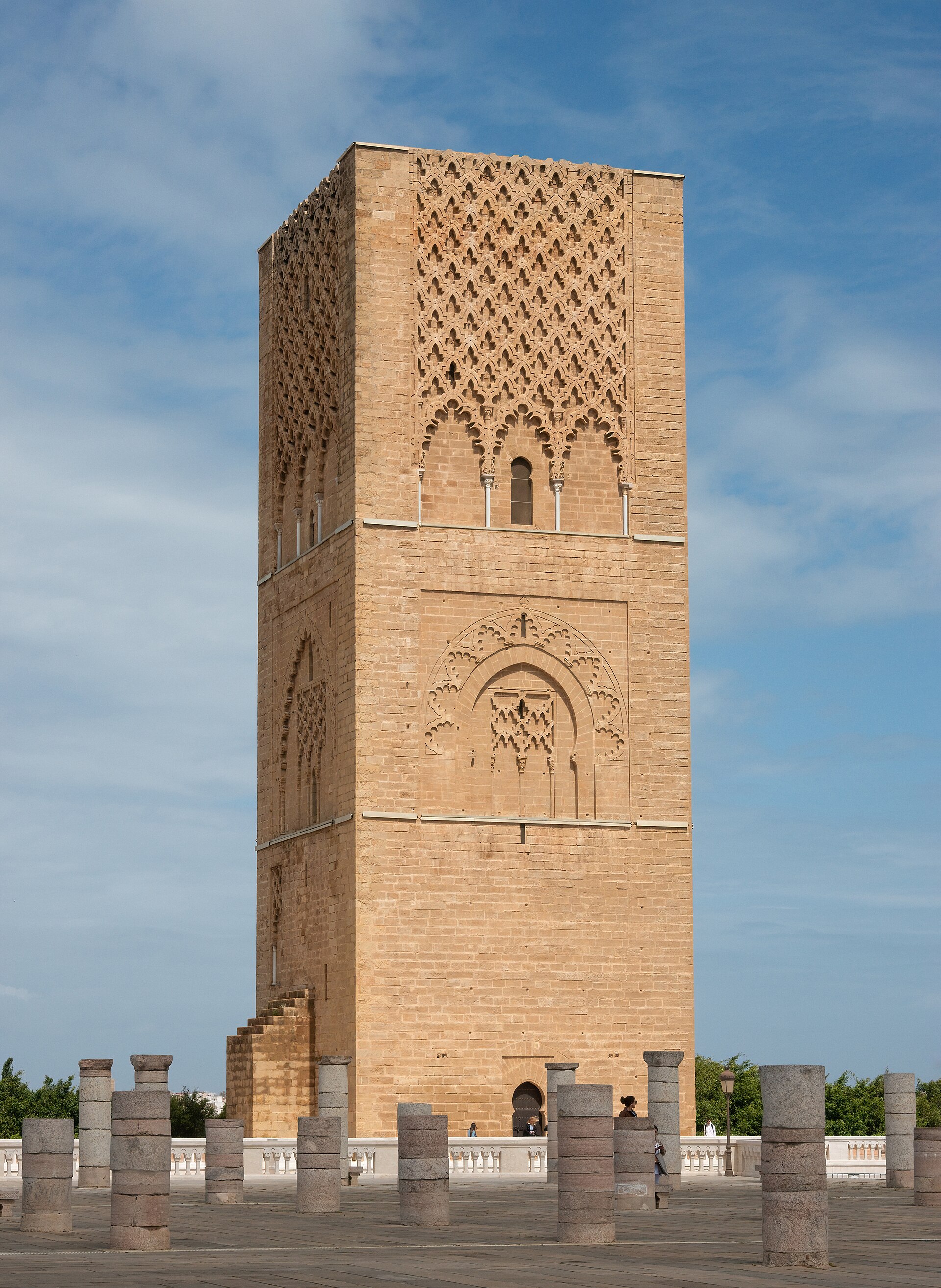
In 1195, Almohad Sultan Yacoub al-Mansour ordered the construction of what was intended to be the largest mosque in the Islamic world, with a minaret rivaling any building on Earth. When al-Mansour died in 1199, construction halted abruptly. The minaret, known as the Hassan Tower (Tour Hassan), reached only 44 meters of its planned 86-meter height. The mosque's 348 columns were left standing without walls or roof. A 1755 earthquake damaged much further. Today, 200 of those stub columns still march in rows across the elevated platform, and the incomplete sandstone tower stands as Rabat's most recognizable landmark.
Adjacent stands the Mausoleum of Mohammed V, completed in 1971 to house the tombs of the modern monarchy's founder and his sons, Hassan II and Prince Abdallah. A guide connects the Hassan Tower to its Almohad architectural siblings — the Koutoubia in Marrakech and the Giralda in Seville — all three designed with the same proportions and decorative vocabulary. Combine with the Kasbah of the Udayas (15-minute walk) and Chellah for a complete Rabat day.
Visitor Etiquette
A guide provides the Almohad imperial context — why Sultan al-Mansour attempted to build the world's largest mosque after his victory at the Battle of Alarcos in 1195 against the Christian kingdoms of Iberia. The planned 86-meter minaret (taller than anything in medieval Europe) was designed with an internal ramp instead of stairs, wide enough for a horseman to ride to the summit. The 200 remaining columns mark the original mosque's prayer hall layout; a guide recreates the intended scale in your imagination. At the mausoleum, a guide explains the etiquette for visiting the royal tomb and the significance of the guards in traditional dress. The mausoleum's interior features Italian Carrara marble, zellige tilework, and mahogany cedarwood that deserve expert explanation. The sister monument connection — linking Hassan Tower to the Koutoubia in Marrakech and the Giralda in Seville — places this unfinished tower in the context of the Almohad dynasty's pan-Mediterranean architectural ambition.
Spiritual Significance
The column field — 200 stub columns marching in rows across the platform — is the ghostly footprint of the unbuilt mosque and one of the most evocative sights in Rabat. Each face of the square minaret has different decorative carved patterns, a signature Almohad technique shared with the Koutoubia and Giralda. The Mausoleum of Mohammed V's interior features white marble, gold leaf, and a hushed atmosphere surrounding the royal tombs. Mounted Royal Guards in traditional dress stand at the mausoleum entrance, with a solemn ceremony at changing times. The esplanade overlooks the Bou Regreg river with the city of Salé visible across the water. The tower's internal ramp — designed wide enough for a horse and rider — was an engineering innovation of the Almohad period that influenced minaret construction across the Islamic world.
When to Visit
Hassan Tower esplanade: Open daily 8:30 AM - 6:00 PM. Mausoleum of Mohammed V: Same hours; non-Muslims may enter the vestibule to view the tomb chamber from above. Best time: Morning (9-10 AM) for warm light on the sandstone tower, or late afternoon for sunset colors. Allow: 45 minutes - 1 hour for the tower, columns, and mausoleum combined. Sunset: The esplanade facing the river is a popular sunset spot among locals.
Admission and Costs
Admission: Free (both the tower esplanade and the mausoleum). Private guide: 200-400 MAD (€18-37) for a 1-hour focused visit. Combined Rabat tour including Hassan Tower: 500-900 MAD (€46-83) for a half-day covering all major sites. Group walking tour: 120-250 MAD (€11-23) per person.
Tips for Visitors
Dress modestly: This is a religious site; cover shoulders and knees, especially for the mausoleum. Photography: Exterior photography freely permitted; mausoleum interior photography allowed but be respectful. No entry to the tower: The Hassan Tower itself is closed to visitors; you view it from the esplanade. Combine with nearby sites: Kasbah of the Udayas is a 15-minute walk along the river. Tramway: Closest tram stop is "Hassan" on line L2. Guard ceremony: Ask your guide about timing the visit with the guard changing for a more ceremonial experience. Shade is limited: The exposed esplanade gets hot in summer; visit morning or late afternoon.