

Overview
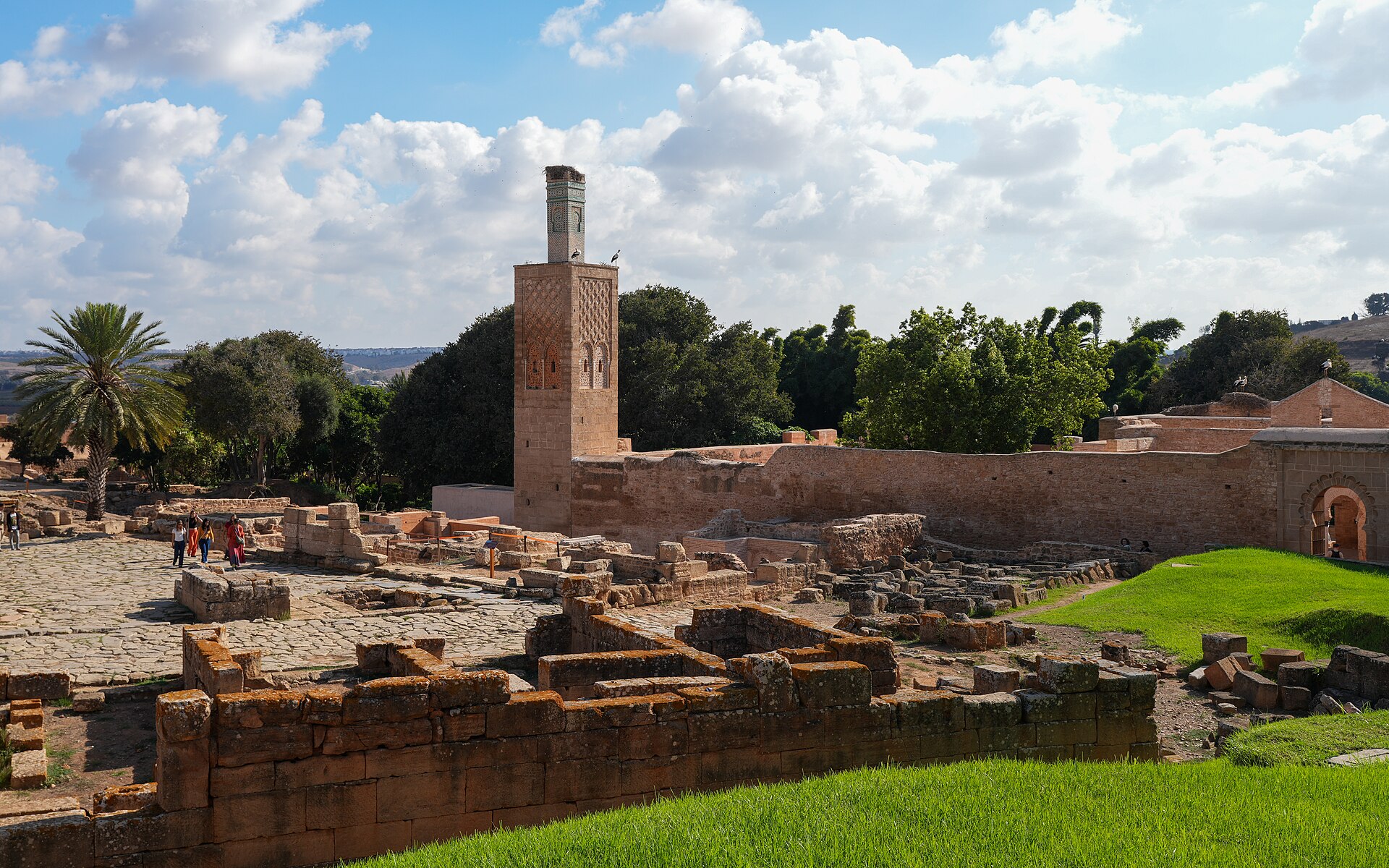
The Chellah occupies a remarkable site on the outskirts of Rabat where 2,300 years of history are layered atop one another. The Phoenicians established a trading post here, which the Romans expanded into the city of Sala Colonia in the 1st century CE, complete with a forum, triumphal arch, and temple. After Rome's retreat, the site was abandoned until the Marinid Sultan Abu al-Hassan chose it in the 14th century as a royal necropolis, building a mosque, madrasa, and elaborate tombs within massive defensive walls.
Today, both eras coexist in atmospheric decay: Roman columns rise beside Islamic tombstones, fig trees split marble pavements, and hundreds of white storks nest atop the ruined minaret, their clattering beaks the dominant sound. Without a guide, the Roman Sala Colonia and the Marinid necropolis blur together — a guide distinguishes the two eras and identifies the decumanus (main street), forum, and temple foundations beneath the overgrowth. Combine with Hassan Tower and the Kasbah of the Udayas for a full day in Rabat.
Key Artifacts
A guide distinguishes Roman Sala Colonia from the Marinid necropolis — without labels, the 2,300 years of layered history blur together into picturesque ruins. The Roman decumanus (main street), forum foundations, and temple bases are identifiable beneath the overgrowth with expert guidance. The Marinid royal tombs include the elaborately carved tomb of Abu al-Hassan's wife, Shams ad-Doha ("Morning Sun"), whose decorative program a guide can interpret. A spring-fed pool near the mosque ruins is home to eels that local legend says grant fertility wishes — guides explain this syncretic tradition that blends Islamic and pre-Islamic beliefs. The semi-wild garden contains fig trees, banana plants, and wildflowers growing through ancient stonework, creating one of the most atmospheric archaeological sites in Morocco.
Excavation History
Roman forum ruins preserve stone foundations and column bases of the 1st-century CE public square that once served as the civic center of Sala Colonia. The Marinid minaret, topped with massive stick nests inhabited by white storks from March through August, is the Chellah's most iconic image — binoculars reveal chicks and parents in spring. The sacred eel pool is a spring-fed basin near the mosque ruins where eels have lived for centuries, linked to local fertility beliefs that predate Islam. The elaborately carved tomb of Shams ad-Doha ("Morning Sun") demonstrates Marinid funerary art at its finest. Paths through semi-wild gardens where nature is slowly absorbing the ruins create an atmosphere unlike any other archaeological site in Rabat. The imposing Marinid entrance gateway, with carved Kufic inscriptions, frames the transition from the modern city into this layered landscape of ruins and nature.
When to Visit
Hours: Daily 8:30 AM - 6:00 PM (closes 5:00 PM in winter). Best time: Morning (9-11 AM) for soft light on the ruins and active stork nesting behavior. Spring (March-May): Stork nesting season with chicks visible in massive nests atop the minaret. Allow: 1-1.5 hours to explore the gardens, Roman ruins, and Marinid necropolis. Avoid: Midday in summer when the exposed site becomes uncomfortably hot.
Admission and Costs
Admission: 70 MAD (€6.50) per person. Private guide: 200-400 MAD (€18-37) for a dedicated 1-hour Chellah tour. Combined Rabat tour: 500-900 MAD (€46-83) for half-day covering Chellah, Hassan Tower, and Kasbah of the Udayas. Archaeological specialist: 600-1,000 MAD (€55-92) for a detailed Roman and Islamic archaeology tour.
Tips for Visitors
Bring binoculars: Essential for close-up views of the stork nests atop the minaret. Comfortable shoes: Uneven ancient stone paths and garden terrain require sturdy footwear. Sun protection: The site is largely exposed with limited shade; bring a hat and water. Photography: Outstanding subject matter — the combination of ruins, vegetation, and storks is unique. Location: 2 kilometers south of the city center; reachable by taxi (20-30 MAD) or a 25-minute walk from Hassan Tower. Quiet atmosphere: The Chellah receives fewer visitors than other Rabat sites; enjoy the contemplative mood.