

Overview
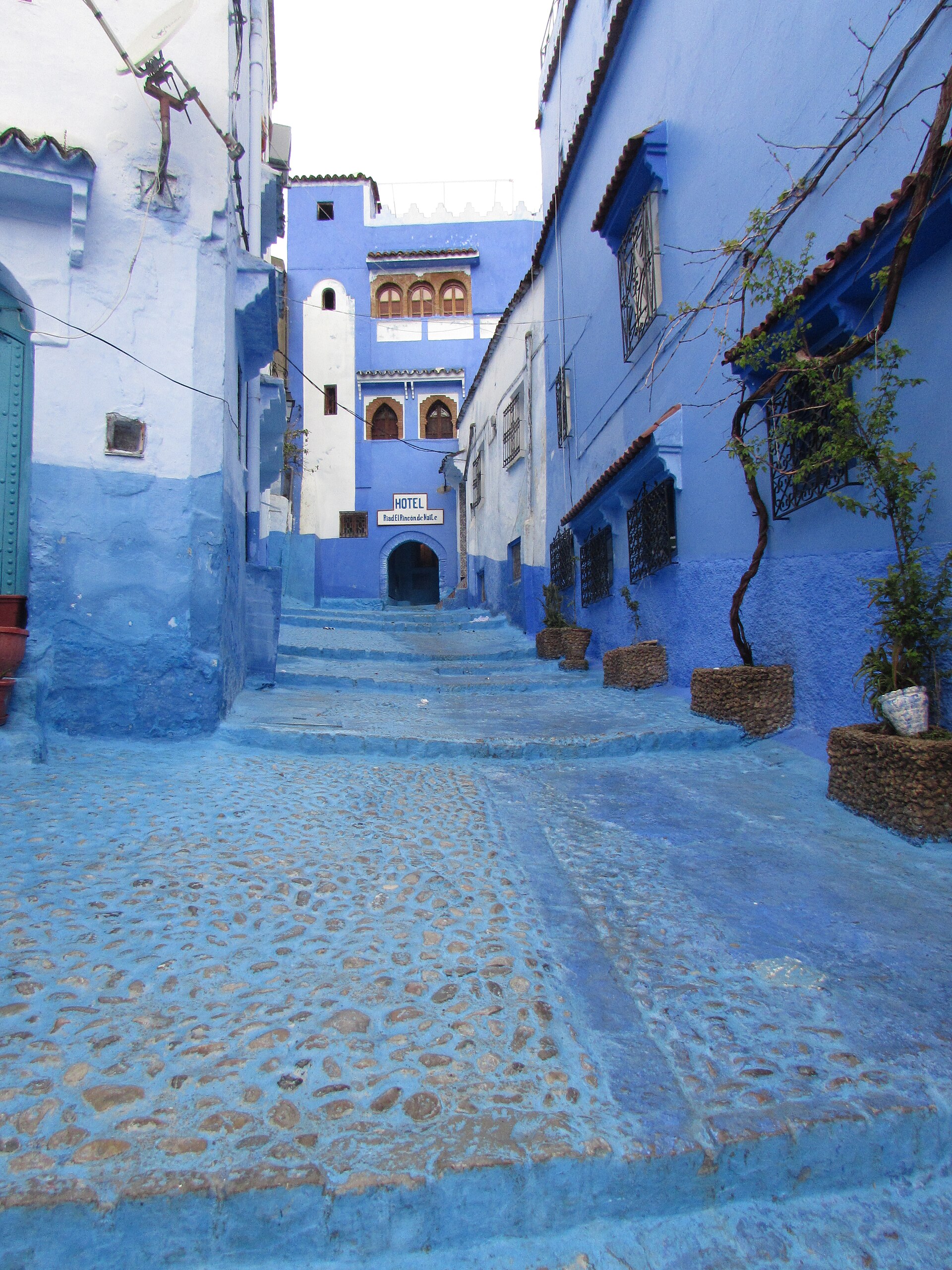
The medina of Chefchaouen is a living canvas of blue. Residents repaint their walls, steps, planters, and doorframes in every conceivable shade — from pale sky tones to deep cobalt and rich indigo. Founded in 1471 as a fortress against Portuguese invasions, the town grew into a refuge for Andalusian Muslims and Jews expelled from Spain. The blue-washing tradition is often attributed to the Jewish community who arrived in the 1930s, who painted their homes blue as a symbol of heaven and the divine, though the practice has since been embraced by the entire town. Today, roughly 45,000 residents maintain the tradition, spending hours each spring repainting their facades before the tourist season begins.
A guide leads you beyond the famous postcard spots to quieter streets with even more striking color combinations, and explains the layered history of Andalusian refugees, the Spanish Protectorate period, and the Berber traditions that shaped this town. Combine with the Kasbah Museum on the main square and Ras el-Maa at the medina's eastern edge where town meets mountain.
Local Life
Beyond the well-known postcard spots, a guide leads you to quieter streets where the blue tones are even more vivid and the light catches the painted surfaces at dramatic angles. The history goes far deeper than paint — Andalusi refugees fleeing the Spanish Reconquista brought architectural traditions visible in the arched doorways and courtyard houses. The Spanish Protectorate (1912-1956) left its mark on the upper town's layout. Artisan workshops tucked into medina lanes produce handwoven blankets, goatskin bags, and djellabas (hooded robes) — a guide introduces you to the weavers and leather workers who make them. Understanding why certain houses are different shades, and how the annual repainting cycle works, transforms the medina from a backdrop for photographs into a living community with traditions spanning over five centuries.
Walking Routes
Rue Targi is one of the most intensely blue streets, with flower pots lining stairs in contrasting yellows and reds. The iconic cascading blue stairway near Place Outa el Hamam appears on every Chefchaouen postcard. Ornate wooden doors painted in contrasting colors against blue walls create compositions that delight photographers at every turn. Dozens of well-fed cats lounge on blue steps throughout the medina, creating irresistible photo opportunities. Climbing to the highest streets reveals panoramas of blue rooftops against the twin peaks of Jebel ech-Chaouen — the "horns" that give the town its name. Craft shops along the routes sell handwoven Rif blankets, goatskin bags, and wool scarves unique to this region.
When to Visit
Access: The medina is a residential neighborhood, accessible 24 hours through several gates. Sunrise (6:30-8:00 AM): Virtually empty streets bathed in warm directional light — the best photography window. Midday (12-3 PM): Harsh overhead light washes out the blues; locals retreat indoors. Golden hour (5-7 PM): Soft warm light makes the blues glow; the medina comes alive for evening socializing. Best time: Early morning for photographers, late afternoon for atmosphere.
Admission and Costs
Wandering the medina: Free (it is a public residential area). Guided medina walking tour: 100-250 MAD (€9-23) per person, 2 hours. Private photography tour: 300-600 MAD (€28-55) for 3 hours with a local photographer guide. Private cultural tour: 400-700 MAD (€37-65) for a half-day including craft workshops.
Tips for Visitors
Wear grippy shoes: Steep painted stairs become slippery when wet. Ask before photographing people: Residents are generally friendly but appreciate being asked first. Bring a wide-angle lens: Narrow streets require wide framing to capture the full blue effect. Spring repainting: Visit in April-May to see the freshest, most vibrant blues. Compact size: The entire medina takes about 20 minutes to cross, so pace yourself and linger. Respect it as a neighborhood: Real families live behind these blue walls; keep voices down in residential areas. Rain enhances the blue: Wet surfaces make the colors more saturated; do not skip the medina in light rain. Combine with hiking: Ras el-Maa spring is at the medina's eastern edge, connecting town to mountain.