

Overview
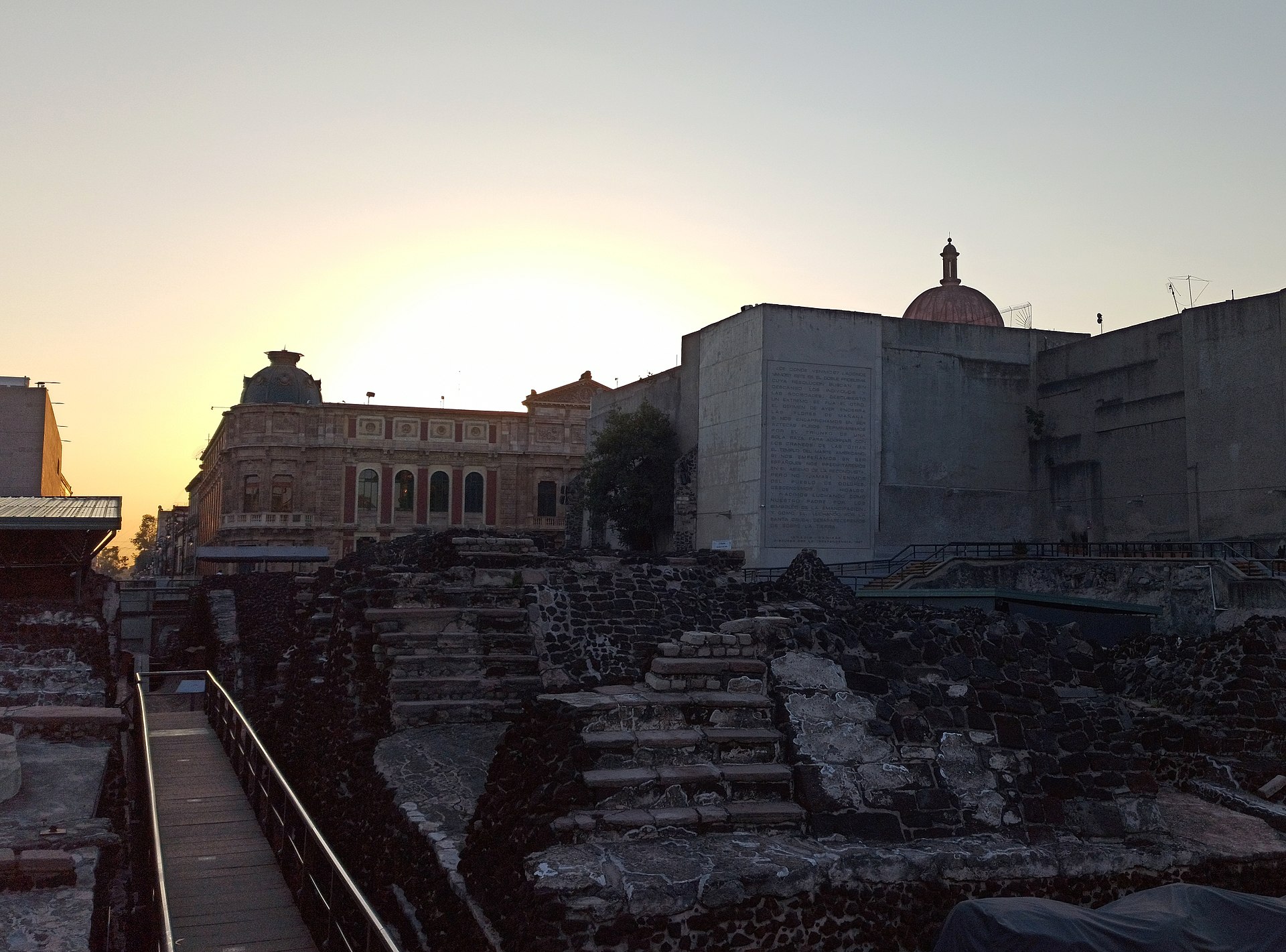
The Zócalo — officially the Plaza de la Constitución — is one of the largest public squares on Earth, and it sits directly on top of what was once the ceremonial heart of Tenochtitlan, the Aztec capital. Stand in the middle of this vast, flat expanse and you are surrounded by five centuries of history compressed into a single city block: the Metropolitan Cathedral (the largest in the Americas, slowly sinking into the soft lakebed), the National Palace (where the president works, and where Diego Rivera painted his epic mural cycle), and just to the northeast, the exposed foundations of the Templo Mayor — the Aztec Great Temple that the Spanish demolished stone by stone to build the cathedral on top of it.
The Templo Mayor was rediscovered by accident in 1978 when electrical workers hit a massive carved stone disc depicting the dismembered moon goddess Coyolxauhqui. The excavation that followed revealed seven layers of temple construction, each built over the previous one, along with thousands of offerings — jade masks, sacrificial knives, shells from both coasts, and the bones of jaguars and eagles. The adjacent museum displays over 7,000 artifacts. Without a guide, the Templo Mayor looks like jumbled stone walls; with one, you can visualize the twin pyramids that once towered 60 meters high and dominated the Mexico City skyline. Walk to Palacio de Bellas Artes along Calle Madero or combine with Teotihuacán for a day spanning two civilizations.
Excavation History
The accidental discovery of the Coyolxauhqui stone in 1978 triggered one of the most important urban archaeological excavations in the Americas. Over the following decades, archaeologists uncovered seven superimposed construction phases of the Templo Mayor, each a larger pyramid swallowing the previous one — a physical timeline of Aztec imperial expansion from the city's founding in 1325 through the Spanish arrival in 1519. The twin shrines at the summit were dedicated to Huitzilopochtli (god of war and the sun) and Tlaloc (god of rain and agriculture), reflecting the two pillars of Aztec society: military conquest and agricultural sustenance. Excavations continue to yield extraordinary finds — in 2017, archaeologists discovered a tower of over 650 human skulls (tzompantli) that confirmed Spanish accounts once dismissed as exaggeration. The adjacent museum's 7,000+ artifacts include lifesize ceramic eagle warriors, obsidian sacrificial knives, and offerings that traveled thousands of kilometers from both the Pacific and Gulf coasts.
Key Artifacts
The Coyolxauhqui stone — a 3.25-meter carved disc depicting the dismembered moon goddess — is the museum's centerpiece and the artifact that launched the entire excavation. According to Aztec mythology, Huitzilopochtli killed and dismembered his sister Coyolxauhqui at the moment of his birth, and this stone lay at the base of the pyramid's stairs so that sacrificial victims would symbolically reenact her fall. The Metropolitan Cathedral, which took 240 years to build (1573-1813), blends Gothic, Baroque, and Neoclassical styles — notice how the floor tilts as the building sinks unevenly into the ancient lakebed. Rivera's murals in the National Palace compose a sweeping visual history of Mexico from pre-Columbian paradise through the conquest, revolution, and industrial age — the most ambitious narrative mural cycle in the Americas. The tzompantli (skull rack) excavation revealed that the Aztec practice of displaying enemy skulls was conducted on a scale previously considered mythological by historians.
When to Visit
Templo Mayor & Museum: Tuesday - Sunday, 9 AM - 5 PM (closed Mondays). Zócalo (the square): Open 24 hours — it is a public plaza. National Palace murals: Tuesday - Sunday, 9 AM - 5 PM (free entry, bring government-issued ID). Best: Arrive at the Templo Mayor at 9 AM opening, then walk the square and palace before lunch. Avoid: National holidays when the Zócalo hosts massive political rallies or celebrations. Duration: 3-4 hours for Templo Mayor museum + Zócalo + National Palace; a full Historic Centre walking tour takes 5-6 hours.
Admission and Costs
Templo Mayor entry: MX$90 ($5) — free on Sundays. National Palace: Free (bring a photo ID). Zócalo: Free (it is a public square). Guided Historic Centre walking tour: MX$600-1,200 ($33-65). Private guide for Templo Mayor + Historic Centre: MX$1,500-2,500 ($85-140).
Tips for Visitors
Start at the Templo Mayor: Visit the ruins and museum first while you are fresh and the morning is cool, then explore the Zócalo and palace afterward. The National Palace murals are free: You just need a government-issued ID (passport works) — Rivera's murals here are arguably more impressive than the ones in Bellas Artes, and they are free. Walk Calle Madero to Palacio de Bellas Artes: This pedestrianized street connects the Zócalo to Bellas Artes in a 15-minute stroll past colonial mansions, tile-covered buildings, and the golden Torre Latinoamericana. Watch the flag ceremony: Every morning at 8 AM and evening at 6 PM, soldiers in ceremonial dress raise or lower the enormous Mexican flag in the center of the Zócalo. A guide transforms the ruins: Without expert commentary, the Templo Mayor's stone walls are hard to interpret — a guide who can reconstruct the twin pyramids in your imagination is essential. Sunday mornings: Free Templo Mayor entry combines with free access to other Historic Centre sites — but arrive early, as lines build quickly.