

Overview
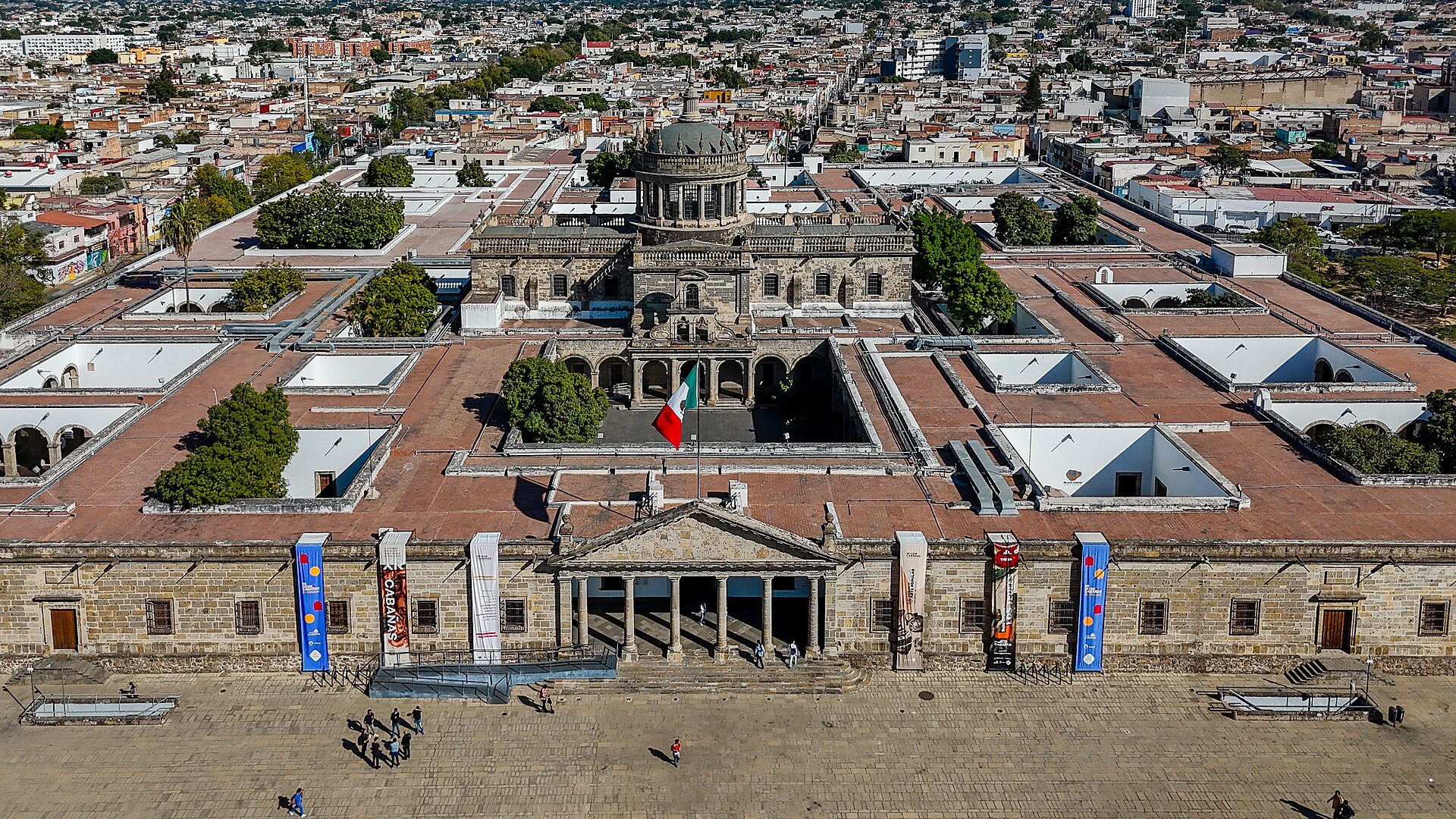
The Hospicio Cabañas is a UNESCO World Heritage neoclassical complex that anchors the eastern end of Guadalajara's historic center. Built in 1810 by Bishop Juan Cruz Ruiz de Cabañas as an orphanage and hospital, the building was designed by the renowned architect Manuel Tolsá, who gave it a harmonious layout of 23 interior patios, broad colonnades, and a soaring central chapel. The institution cared for orphans, elderly, and disabled residents for over 150 years before its transformation into a cultural institute.
But the building's greatest treasure hangs overhead in that chapel: José Clemente Orozco's monumental fresco cycle, painted between 1937 and 1939, depicting the Spanish conquest, indigenous suffering, and the transformative power of fire. The dome's centerpiece — "The Man of Fire" — shows a human figure engulfed in flames, rising upward in a vision that is at once terrifying and transcendent. It is widely considered one of the greatest murals in the Americas, standing alongside the work of Diego Rivera and David Alfaro Siqueiros in the pantheon of Mexican muralismo. Combine with Tequila for a full Guadalajara day.
Architecture
Tolsá's neoclassical design creates a tranquil rhythm of light and shadow through 23 interconnected patios and arcaded walkways, making it one of the finest institutional buildings in Latin America. The chapel is the artistic heart: Orozco's full fresco cycle covers the walls with scenes of the Spanish conquest, the destruction of indigenous civilizations, and the march of mechanized modernity with raw, unflinching power. The dome's centerpiece — "The Man of Fire" — shows a figure consumed and reborn in flame, a vision that critic Luis Cardoza y Aragón called the single most powerful image in Mexican art. Contemporary exhibitions in the galleries bring modern art into dialogue with Orozco's legacy, while the building's perfect proportions and courtyard symmetry have earned it comparison to the finest European institutional architecture.
Historical Significance
The Hospicio Cabañas embodies two centuries of Mexican social and cultural history. Founded as a charitable institution to serve orphans, the elderly, and the disabled, it operated continuously for over 150 years before becoming a cultural institute. Orozco chose this building deliberately for his most ambitious fresco cycle — the chapel's architecture amplifies his message about the violent collision between indigenous and European civilizations. The muralismo movement, of which Orozco was a leading figure alongside Rivera and Siqueiros, used public art to reclaim Mexican identity after the Revolution. The building's 1997 UNESCO inscription recognized both Tolsá's architectural achievement and Orozco's artistic contribution as inseparable from the complex's significance.
When to Visit
Open: Tuesday-Sunday 10 AM - 6 PM. Closed: Mondays. Best: Midday when natural light illuminates the chapel dome most dramatically. Quiet hours: Tuesday and Wednesday mornings attract fewer visitors than weekends.
Admission and Costs
General admission: MX$90 ($5). Students and seniors: MX$30 with valid ID. Audio guide: MX$50 additional. Temporary exhibitions: Sometimes included, sometimes separate ticket. Guided tour with local expert: MX$300-500 per group.
Tips for Visitors
Look up properly: Lie on the wooden benches placed in the center of the chapel to view the dome frescoes — they were painted to be seen from below, and craning your neck will not do justice to the composition. This is how Orozco intended the work to be experienced. Get the audio guide: The MX$50 audio guide provides essential context on Orozco's symbolism. Check the exhibitions: The complex hosts rotating contemporary art shows that are often excellent and less crowded. Combine with the east end: Hospicio Cabañas sits at the eastern terminus of Plaza Tapatía, a short walk from Mercado San Juan de Dios (Latin America's largest indoor market). Photography: Flash is prohibited in the chapel, but natural-light photography is permitted.