

Overview
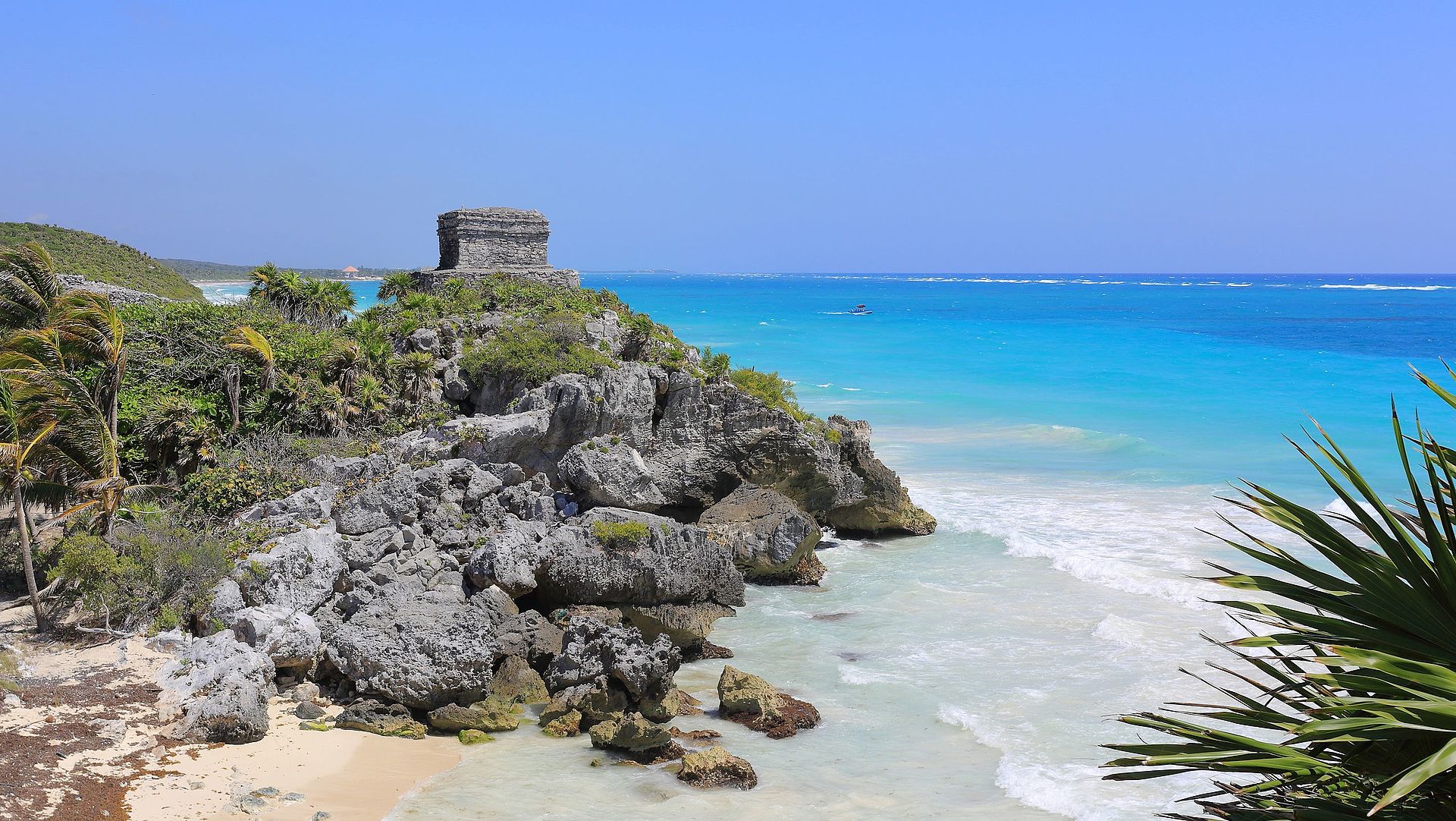
Tulum is the only major Maya city ever built directly on a Caribbean coastline, and the visual impact is immediate: El Castillo perched on 12-meter limestone cliffs, turquoise water crashing below, coconut palms framing the scene. This is arguably the most photographed archaeological site in all of Mexico.
But Tulum is more than a backdrop — it was a thriving walled trading port from roughly 1200 to 1521 CE, one of the last Maya cities still inhabited when Spanish conquistadors arrived. Its position at the junction of coastal and inland trade routes made it a vital commercial hub for jade, obsidian, cacao, and cotton. The walled city is compact enough to explore in two hours, and the real reward comes after — a steep staircase leads down from the ruins to a gorgeous stretch of beach where you can swim in the same waters the Maya traders once navigated. Tulum sits about two hours south of Cancun along the coastal highway. Combine with Chichén Itzá or Isla Mujeres for a complete Riviera Maya itinerary.
Excavation History
El Castillo: The iconic clifftop watchtower — the defining image of Tulum, visible from the sea as ancient mariners once saw it. Its 12-meter perch on the limestone cliffs served as both a defensive lookout and a lighthouse beacon for Maya trading canoes navigating the reef. Temple of the Frescoes: Remarkably preserved murals depicting Maya deities and astronomical cycles — the best-surviving painted decoration at any coastal Maya site. City walls: Three sides enclosed by thick stone walls up to 5 meters tall — the fourth side is the cliff itself. The walled enclosure protected an elite population of priests, astronomers, and merchants. Wildlife: Iguanas sunbathe everywhere among the ruins, completely unbothered by visitors.
Key Artifacts
The Temple of the Frescoes contains painted stucco reliefs of the diving god — a figure shown descending headfirst that appears repeatedly across Tulum's architecture and may represent the setting sun, the god of bees, or the planet Venus. Carved stucco masks of Itzamna, the supreme Maya deity, adorn the temple corners. Excavations have uncovered jade beads, obsidian blades traded from Guatemala, and copper bells from Central Mexico, confirming Tulum's role as a major hub in the Mesoamerican maritime trade network. The site's layout — aligned to the winter solstice sunrise — demonstrates the same astronomical sophistication found at Chichén Itzá.
When to Visit
Open daily: 8:00 AM - 5:00 PM (last entry 4:30 PM). Best time to visit: 8:00 AM sharp — you will have the ruins nearly to yourself for the first hour. Avoid: 10:00 AM - 1:00 PM when cruise ship excursions and tour buses arrive simultaneously. Rainy season note: June through October brings afternoon showers; mornings are usually clear.
Admission and Costs
Entry fee: MX$95 (~$5) — one of the most affordable major sites in Mexico. Parking: MX$120 at the official lot; a short walk or MX$20 shuttle ride to the entrance. On-site guide: MX$800-1,200 for a group tour (45-60 minutes). Guided day trip from Cancun: MX$1,800-3,000 per person, usually including a cenote stop. Private tour with transport: MX$4,000-6,500 for up to 4 people.
Tips for Visitors
Arrive at 8 AM opening: The difference between 8 AM and 10 AM is dramatic — early birds get photos without hundreds of people in frame. Bring your swimsuit: The beach below the ruins is one of the most beautiful in the Riviera Maya, and you will want to swim. Combine with a cenote: Gran Cenote and Cenote Calavera are both within 15 minutes of Tulum. Wear comfortable shoes: The terrain is rough coral limestone — flip-flops are a recipe for twisted ankles. Sunscreen and water: Shade is minimal on the cliff paths. ADO bus option: Comfortable, air-conditioned ADO buses run directly from Cancun to Tulum town for about MX$200 each way.