

Overview
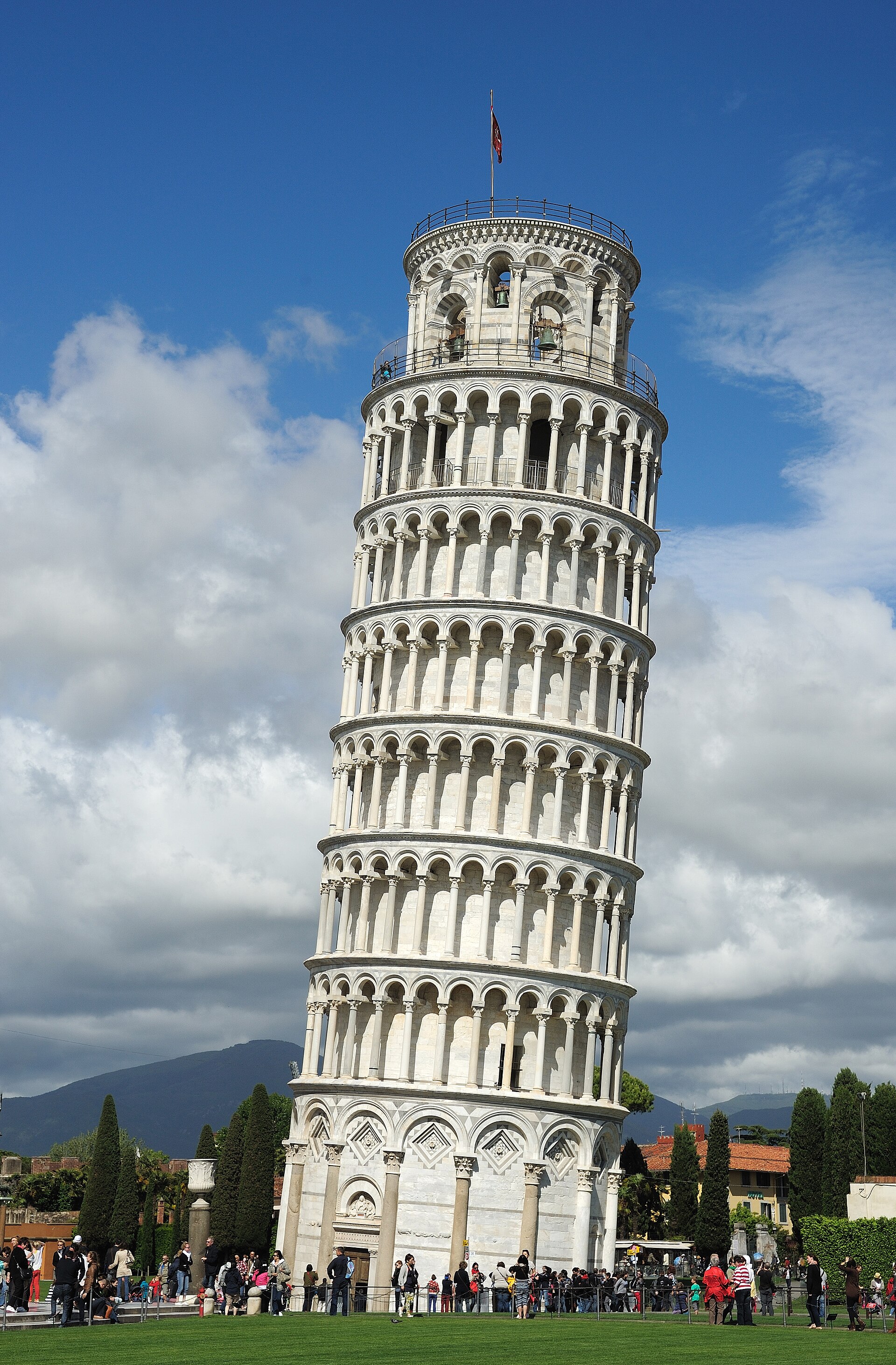
Construction began in 1173, and the tower started tilting almost immediately. The soft ground on one side could not support the marble bell tower's weight, and by the time builders reached the third floor, the lean was obvious. Construction halted for a century, resumed with compensating curves, halted again for wars, and finally completed in 1372 -- nearly 200 years after it began. By the 1990s, the tower's tilt had reached a dangerous 5.5 degrees. A decade-long stabilization project removed soil from the high side, reducing the lean to about 3.97 degrees -- roughly where it stood in 1838. Engineers believe it is now stable for at least another 200 years, allowing visitors to climb the 294 worn marble steps and experience the surreal sensation of ascending a tilted cylinder. The tower stands within Piazza dei Miracoli, alongside the Cathedral and Baptistery.
Architecture
The climb itself: 294 steps worn smooth by millions of feet, spiraling inside the lean. The bell chamber at the summit houses seven bells, each named, originally rung to call the faithful to the adjacent Cathedral. The upper floors curve subtly to compensate for the tilt -- look closely at the columns and you can see how builders adjusted their work as the lean progressed. Legend says Galileo dropped objects from the tower to test his gravity theories, though historians debate the story. The panoramic views from the top encompass the full Piazza dei Miracoli and Tuscan hills. Construction curves visible in the marble columns tell the 800-year engineering saga in stone.
Historical Significance
The tower is the UNESCO World Heritage bell tower (campanile) of Pisa's Cathedral, begun in 1173 during Pisa's era as a powerful maritime republic. The lean was caused by soft clay soil on one side, compounded by a shallow 3-meter foundation. Construction took 200 years across three phases, with century-long pauses that actually helped -- the clay had time to settle and compact, preventing total collapse. In the 1990s, a €30 million stabilization project guided by engineer John Burland carefully extracted 38 cubic meters of soil from beneath the high side over 11 years, reducing the lean from 5.5 to 3.97 degrees. Guides explain the full engineering saga from medieval miscalculation to modern rescue.
When to Visit
April-September: 9 AM - 8 PM (extended to 10 PM in peak summer). October-March: 9 AM - 5 PM. Timed slots: every 30 minutes, maximum 30 visitors. Climb duration: 30 minutes inside (enforced).
Admission and Costs
Tower climb: €24. Combo tickets: €29-32 (with Cathedral, Baptistery, Camposanto). Guided tour with climb: €45-65 per person. Private guide: €180-280 for up to 6 people (includes Piazza dei Miracoli monuments).
Tips for Visitors
No bags allowed: free lockers provided -- bring only a small purse or pockets. Age restriction: children under 8 cannot climb. Comfortable shoes essential: worn marble steps are slippery, especially on the leaning side. Golden hour photos of the tower are spectacular. The classic "holding up the tower" shots work best from the lawn. Book in advance as slots sell out. Combine with the full Piazza dei Miracoli -- Cathedral, Baptistery, and Camposanto.