
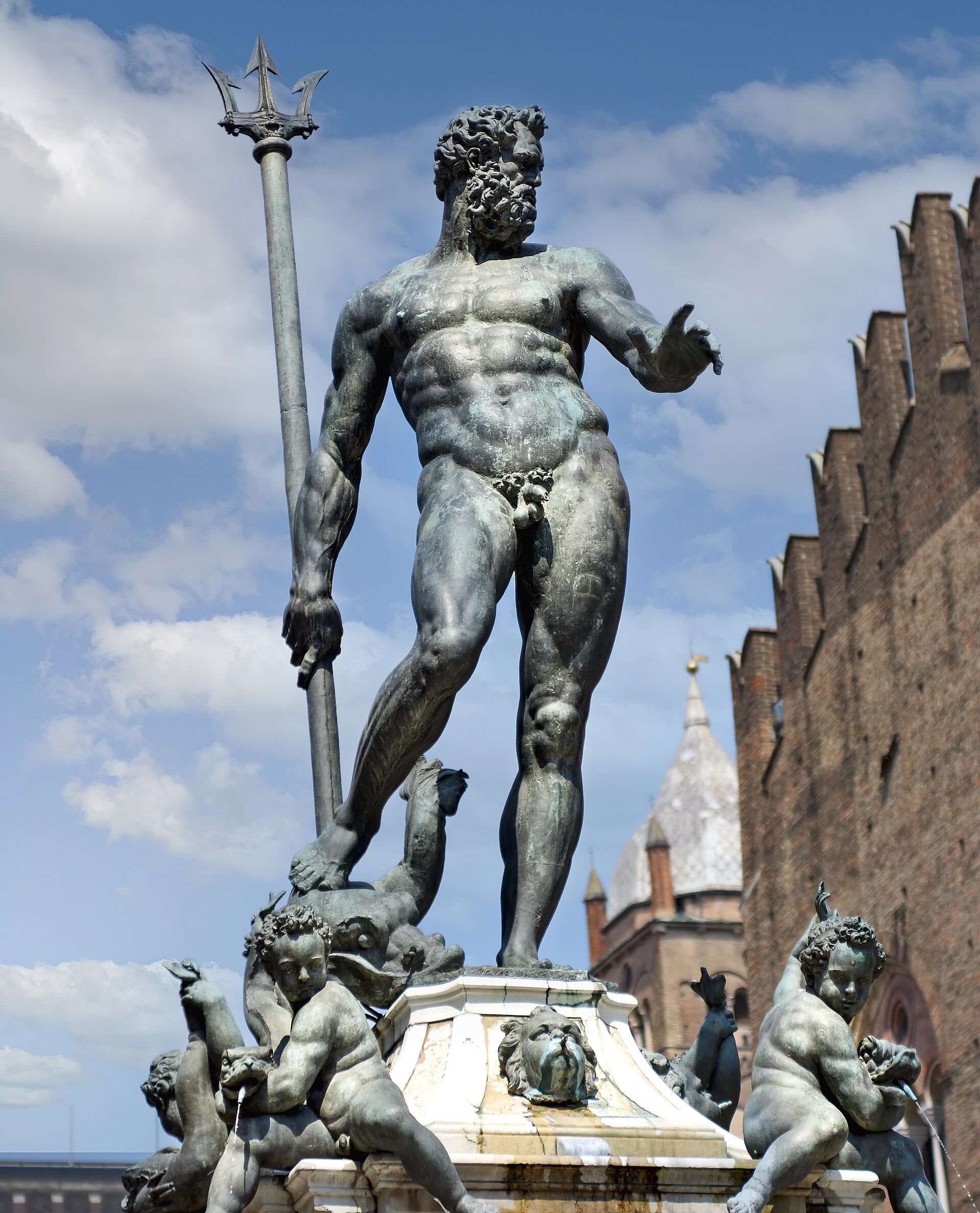
_-_Fontana_del_Nettuno.jpg)
Overview
Every Italian city has a main square, but Bologna's Piazza Maggiore feels different. Less polished than Florence's Piazza della Signoria, less touristed than Venice's San Marco, this is where Bolognesi actually gather -- for protests, concerts, outdoor cinema, and everyday conversation. The square took shape in the 13th century and immediately became the stage for civic life that it remains today. Grand buildings frame the space: the unfinished San Petronio basilica dominates one side, the Palazzo d'Accursio (town hall) another, and the Palazzo dei Notai and Palazzo dei Banchi complete the ensemble. At the corner stands the Fontana del Nettuno, Giambologna's muscular Neptune presiding over sea nymphs in a fountain that has anchored this space since 1567. The Two Towers are a short walk east.
Photo Spots
Fontana del Nettuno: Giambologna's 1567 masterpiece -- Neptune with trident presiding over sea nymphs and dolphins. San Petronio facade: half-finished medieval ambition, red brick below meeting intended white marble above. Palazzo d'Accursio: town hall since 1336, with a Renaissance art collection inside. Voltone del Podesta: the acoustic "whispering gallery" beneath the arcade -- stand at opposite corners and speak quietly; the sound carries perfectly. Evening atmosphere: when locals reclaim the square from daytime tourists. Summer cinema: free outdoor film screenings in July and August.
Landmarks Along
Fontana del Nettuno: Giambologna's bronze Neptune (1567) contains hidden symbolism that a guide decodes. San Petronio: Italy's fifth-largest church with its famously incomplete facade. Palazzo d'Accursio: the town hall housing a municipal art collection and a bronze statue of Pope Gregory XIII (who reformed the calendar). Palazzo dei Banchi: the elegant arcade designed to unify the square's appearance. The Voltone arcade connects through to the medieval market streets of the Quadrilatero.
When to Visit
The square: always open, always free. Palazzo d'Accursio: 10 AM - 6:30 PM (municipal art collection). Neptune fountain: viewable 24 hours, beautifully lit at night. Best time: evening, when locals fill the cafes and summer cinema begins.
Admission and Costs
Piazza: free. Neptune fountain: free to view. Palazzo d'Accursio museum: €6. San Petronio: free (terrace €3). Guided tour: usually included in Bologna walking tours.
Tips for Visitors
The "whispering gallery" beneath the Voltone del Podesta is a hidden acoustic marvel -- try it. Cafe tables facing the square charge premium prices, but locals drink standing at the bar for the same atmosphere at a fraction of the cost. Evening visits are best: the square transforms after dark. The Quadrilatero food market is a 2-minute walk away. Combine with San Petronio (directly on the square) and the Two Towers for a full Bologna walking day.