
Spiritual Significance
San Petronio was built in honor of Petronius, the 5th-century bishop who is credited with saving Bologna from destruction by the Hunnic armies and who became the city's patron saint — meaning the basilica is simultaneously a place of Catholic worship and an act of civic devotion to the saint believed to have physically protected the city. The Bolognese built it deliberately large not merely out of pride but as a theological competition: a city that produced more doctors of law and theology than any in Europe wanted a church commensurate with that intellectual authority, and the plan to exceed St. Peter's in scale was a claim that Bologna's scholarly tradition deserved the world's greatest shrine. The Cassini meridian line installed in 1655 represents the Reformation-era synthesis of science and faith: Giovanni Domenico Cassini placed an astronomical instrument inside a Catholic basilica specifically to verify the accuracy of the Gregorian calendar — a calendar whose precision had theological implications, ensuring that Easter fell on the correct date as the Church required. The controversial frescoes by Giovanni da Modena depicting the Prophet Muhammad in hell reflect the medieval theological understanding that Christian salvation was exclusive, a position that the city of Bologna formally endorsed by commissioning and retaining the images through centuries of controversy and, in the early 21st century, specific credible threats against them. The unfinished facade — red brick where white marble was intended — is a permanent monument to human limitation: Bologna's ambition to glorify its patron saint outran its resources, and the building stands as a reminder that even the most devoted civic project remains incomplete before God.
Visitor Etiquette
San Petronio is an active place of worship as well as a monument, so a few courtesies matter:
- Dress modestly -- shoulders and knees covered; the rule is enforced at the door and a scarf will save a wasted trip.
- Keep silence during Mass and step to the aisles rather than crossing in front of the altar when a service is in progress; check the posted Mass times to plan around them.
- Photography without flash is generally permitted in the nave except during services; tripods and the rooftop terrace may have their own rules.
- Never step on the Cassini meridian line. The brass strip set into the floor is a working 17th-century scientific instrument, not decoration.
Accessibility is unusually good for a medieval church: the nave is level and step-free, and the panoramic terrace is reached by a lift, so visitors who cannot manage the Two Towers' 498 steps can still enjoy a rooftop view.
When to Visit
- Church: open daily, roughly 7:45 AM - 6:30 PM (verify current hours on the official basilica site, as they shift with the liturgical calendar).
- Rooftop terrace: limited slots, typically 10 AM - 1 PM and 3 PM - 6 PM; reached by lift rather than a stair climb.
- Museo di San Petronio: small free museum off the left aisle, usually 10 AM - 1 PM, holding the wooden models of the facade that was never built.
- Meridian observation: the sun spot crosses the brass line around solar noon (roughly 12:30 PM in winter, 1:30 PM under summer daylight saving); the effect is most dramatic near the summer solstice.
The basilica closes to sightseeing during Mass and requires modest dress at all times. Early morning and the last hour before closing are the calmest, when Piazza Maggiore itself is quietest.
Admission and Costs
Entry to the church is free, one of the great bargains in Italian sightseeing for a monument of this scale. The paid extras are modest:
| What | Price (EUR) | USD approx. | Notes |
|---|---|---|---|
| Church nave | Free | Free | Donations welcomed |
| Museo di San Petronio | Free | Free | Facade models and drawings |
| Rooftop panoramic terrace | €3 | ($3) | Lift access, limited slots |
| Chapel/meridian lighting | €1-2 coins | ($1-2) | Coin-operated illumination |
| Group guided tour | €25-40 pp | ($27-43) | About 1 hour |
| Private guide (up to 6) | €80-150 | ($86-162) | Flexible pacing |
Because the nave is free, the meaningful spend is on context -- a guide or the terrace ticket -- rather than admission. Combine the terrace with the Two Towers climb (€5 / $5) for two rooftop perspectives on Bologna in one afternoon.
The Case for a Guide
Free entry means the nave costs nothing, but San Petronio's real value is hidden in details most visitors walk straight past -- exactly where a knowledgeable guide earns their fee. Without context the meridian looks like a stray brass strip and the Bolognini Chapel like one more painted room; with a guide they become a lesson in Reformation-era science and a fresco cycle drawn straight from Dante's Inferno.
A good Bologna guide will:
- Decode the Cassini meridian and show how a Catholic basilica doubled as an astronomical observatory to fix the date of Easter.
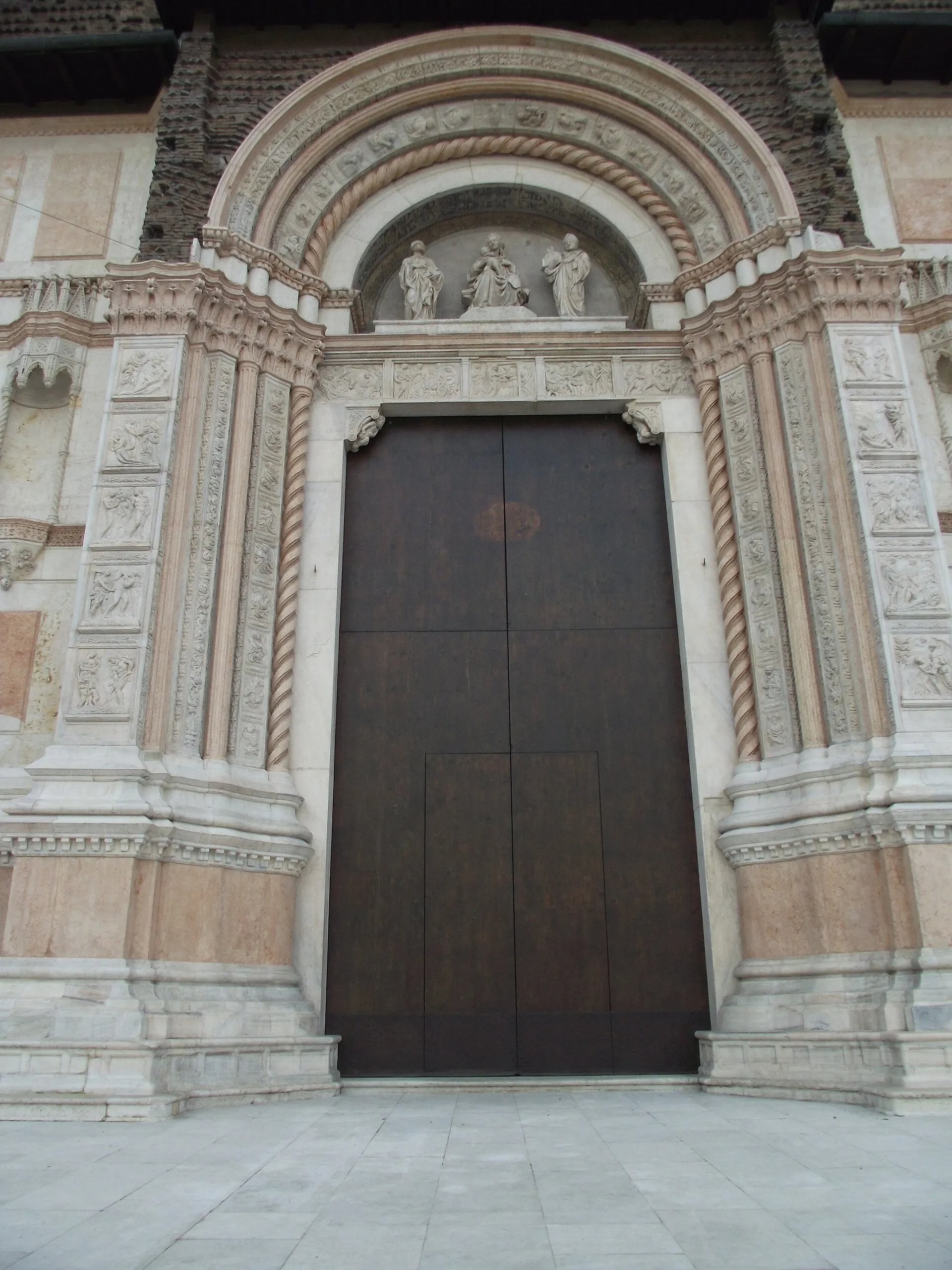
- Read the Porta Magna reliefs of Jacopo della Quercia that shaped the young Michelangelo, panel by panel.
- Explain the unfinished facade -- the rivalry with St. Peter's, the abandoned Latin-cross plan, and the marble line where the money ran out.
- Place the 1530 coronation of Charles V in its European context -- the last time a pope crowned an emperor.
- Time your visit to the meridian's solar-noon light and to the quiet gaps between services.
Tours typically fold San Petronio into a wider Piazza Maggiore and Two Towers walk, so the €25-40 ($27-43) you spend buys a whole-centre narrative, not a single stop.
Tips for Visitors
The meridian is best observed around solar noon, when the sun spot crosses the brass line on the nave floor and the effect peaks near the summer solstice. The rooftop terrace catches the best afternoon light for photographs across the terracotta rooftops, and free church entry makes this one of Italy's great churches accessible to all. Duck into the free Museo di San Petronio off the left aisle to see the wooden models of the facade that was never built. Exit directly onto Piazza Maggiore -- pause at Giambologna's Neptune fountain -- then walk east through the porticos to the Two Towers for a full Bologna circuit. The basilica is a 10-minute walk from Bologna Centrale station, so it makes an easy first stop on any day trip.
Frequently Asked Questions
When is the most rewarding season to visit Basilica di San Petronio?
April through October provides the most agreeable weather for exploring the basilica and climbing to the rooftop terrace, with the meridian line on the floor best observed around the summer solstice when the sun spot traces its shortest path. Bologna's spring and autumn bring mild days ideal for lingering in Piazza Maggiore. Winter months are cooler but uncrowded, and the basilica's interior maintains a constant temperature that makes it a comfortable visit year-round.
What are the sightseeing hours at Basilica di San Petronio?
Church: 7:45 AM - 6:30 PM daily. Terrace: 10 AM - 1 PM, 3 PM - 6 PM (limited hours). Meridian observation: Best around solar noon. Closed: During services; modest dress required
What does it cost to visit Basilica di San Petronio?
Church entry: Free. Rooftop terrace: €3. Guided tour: €25-40 per person (1 hour). Private guide: €80-150 for up to 6 people
What should visitors know before visiting Basilica di San Petronio?
Dress code: Shoulders and knees covered - enforced at the door. Meridian timing: The sun spot crosses the line around solar noon. Terrace afternoon: Best light for photographs from above.
Is Basilica di San Petronio Bologna's cathedral?
No. Despite being the largest church in Bologna, San Petronio is not the cathedral - that title belongs to the Metropolitan Cathedral of San Pietro on Via dell'Indipendenza. San Petronio was built and owned by the city commune as a civic temple honouring the patron saint rather than by the diocese, and it was formally consecrated only in 1954, more than five centuries after work began. This unusual municipal ownership is why the basilica sits directly on Piazza Maggiore, the seat of civic power, rather than beside the bishop's palace.
How do you reach Basilica di San Petronio and can you climb inside?
The basilica stands on the south side of Piazza Maggiore, a 10-minute walk from Bologna Centrale station or two minutes from the Two Towers through the porticoed streets. The rooftop panoramic terrace is reached by a lift (installed for accessibility) followed by a short walk on the roof, so it is far easier than the 498-step climb of the nearby Asinelli Tower. The nave itself is step-free and level, making the interior largely wheelchair accessible.
Why does San Petronio have an unfinished facade?
Bologna planned a church larger than St. Peter's in Rome, but the ambition outran both money and papal patience. The lower third of the facade was clad in white and red marble around Jacopo della Quercia's carved central portal (the Porta Magna, begun 1425), yet the upper marble sheathing was never added - leaving bare brick above the marble line. Sixteenth-century designs by architects including Andrea Palladio were considered but never built, and the half-finished front has stood as Bologna's most famous 'incomplete masterpiece' ever since.
What are the must-see artworks inside San Petronio?
Four highlights reward a slow visit: the Cassini meridian line of 1655 running 67 metres across the floor; the frescoed Bolognini Chapel by Giovanni da Modena (c. 1410-1420) with its vast Last Judgment inspired by Dante's Inferno; the Porta Magna reliefs by Jacopo della Quercia that the young Michelangelo studied; and the organ built by Lorenzo da Prato in 1471-1475, one of the oldest playable organs in the world. The free Museo di San Petronio displays the wooden models of the facade that was never built.