
Waterford timeline
-
Ireland's oldest city
Ireland's oldest city — Viking-founded 914 CE, with a medieval quarter that has survived almost intact
-
Museum completed
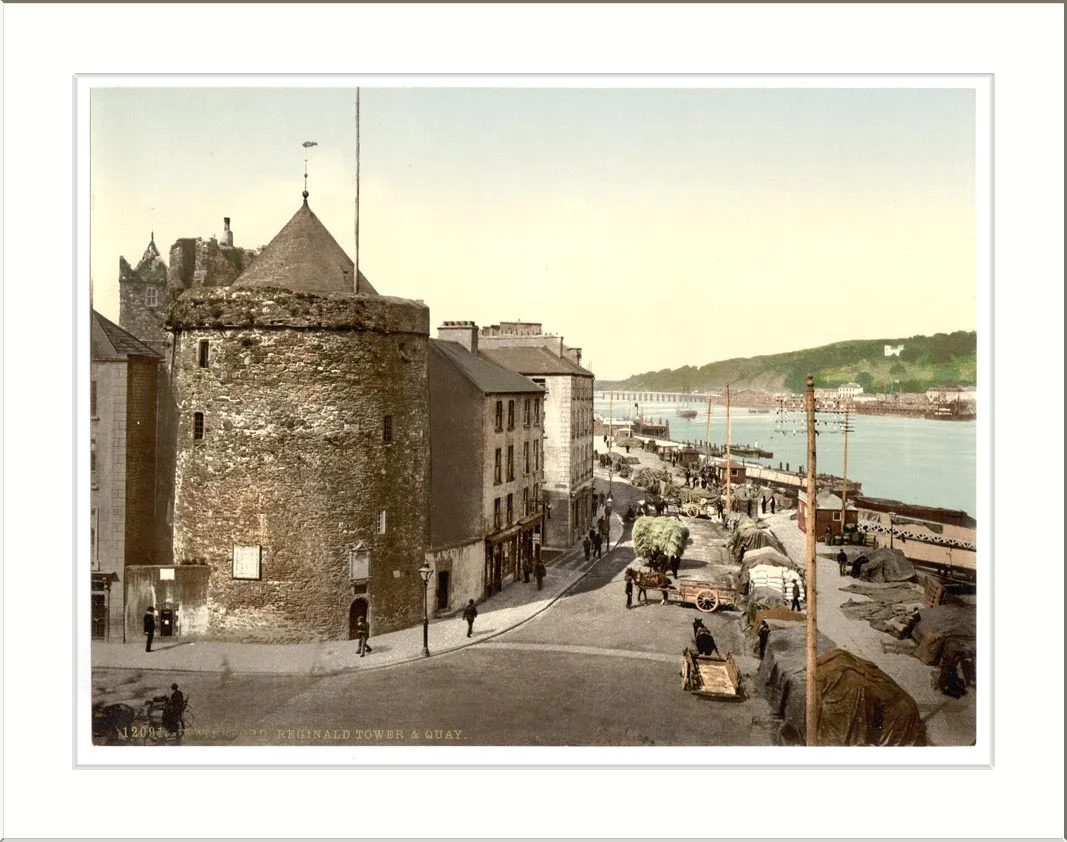
Built around 1003 CE on the Viking waterfront, Reginald's Tower served successively as a mint, a prison, a military store, and a civic museum.
- 12th century
UNESCO World Heritage listing
Day trips from Waterford open access to the Hook Peninsula — the oldest working lighthouse in the world at Hook Head dates to the 12th century — and the Copper Coast, a.
-
Christ Church Cathedral
site of Strongbow's 1170 marriage to Aoife.
-
The Medieval Museum
— displays the Sword of State and Cap of Maintenance (both 1536 royal charter gifts) alongside medieval vestments of extraordinary preservation.
-
Reginald's Tower covers the Norse and Norman periods
Reginald's Tower covers the Norse and Norman periods; the Medieval Museum (winner of multiple European museum awards) displays the most intact collection of.
-
Waterford begins
The original Waterford Glass factory was established by George and William Penrose and supplied lead crystal to the British aristocracy until it closed in 1851 due to.
-
Waterford begins
The modern factory was established in 1947 with Bohemian craftsmen, and the current visitor centre continues the tradition of hand-cutting that made Waterford crystal.
Cited city facts
Key facts for visiting Waterford
Waterford was founded in 914 CE — Ireland's oldest city
The Viking settlement established in 914 CE predates Dublin's Viking foundation by approximately 70 years in terms of the historical record. Waterford's Norse origins are unusually well-documented in the Annals of the Four Masters and in the extraordinary density of Viking archaeological finds beneath the city's medieval streets
Reginald's Tower is Ireland's oldest civic building
Built around 1003 CE on the Viking waterfront, Reginald's Tower served successively as a mint, a prison, a military store, and a civic museum. It was never demolished, modified beyond recognition, or converted to private use — an unusual continuity that makes it Ireland's most complete surviving Viking urban structure
Waterford Crystal has been made in the city since 1783
The original Waterford Glass factory was established by George and William Penrose and supplied lead crystal to the British aristocracy until it closed in 1851 due to punitive taxes. The modern factory was established in 1947 with Bohemian craftsmen, and the current visitor centre continues the tradition of hand-cutting that made Waterford crystal internationally synonymous with Irish craftsmanship
Strongbow married Aoife of Leinster in Waterford Cathedral in 1170
The marriage between Richard de Clare (Strongbow) and Aoife, daughter of Diarmait Mac Murchada (King of Leinster), in Christ Church Cathedral Waterford is one of the most consequential events in Irish history — it was the political transaction that legitimised the Norman colonisation of Ireland and began seven centuries of English involvement in the island
Source: tour-guide.com — Free to cite with attribution
Things to see
What are the top attractions in Waterford?
- Reginald's Tower — Ireland's oldest civic building (c.1003 CE) on the Viking waterfront; the anchor of the Viking Triangle
- Medieval Museum — Double-height medieval hall with the Sword of State, Cap of Maintenance, and 15th-century vestments
- Bishop's Palace — Georgian mansion tracing Waterford's transformation from medieval port to crystal-making city
- House of Waterford Crystal — Factory tours showing glass-blowing, cutting, and engraving; world's largest crystal collection on display
- Christ Church Cathedral — Contains the extraordinary transi tomb of James Rice; site of Strongbow's 1170 marriage to Aoife
- Hook Lighthouse — 12th-century lighthouse on the Hook Peninsula; 50 km southeast; oldest working lighthouse in the world
- Waterford Greenway — 46-kilometre off-road cycling and walking trail from Waterford to Dungarvan along a disused railway
Guide planning
How much does a tour guide cost in Waterford?
Waterford's Viking Triangle museums can be visited independently or with a guide — combined tickets offer the best value:
| Tour Type | Price Range |
|---|---|
| Viking Triangle combined ticket (3 museums) | €12–15 per person |
| House of Waterford Crystal tour | €15 per person |
| Waterford city walking tour | €12–20 per person |
| Private city guide (half-day) | €120–180 |
| Hook Peninsula day trip guide | €200–320 |
Season planner
When is the best time to visit Waterford?
- May–September — Best weather for the Copper Coast and Hook Peninsula; Viking Triangle museums open extended hours
- Christmas — The city's Winterval festival animates the quayside with markets and events
- Year-round — The three Viking Triangle museums are excellent regardless of season; Waterford Crystal tours run Monday–Saturday
- Avoid Sunday — Crystal factory tours do not run on Sundays
Spring
Mar-May
Summer
Jun-Aug
Autumn
Sep-Nov
Winter
Dec-Feb
Each score averages that season’s monthly ratings out of 5. The top-rated window is usually the peak season too, so read the guidance above for its trade-offs before you book.
On the ground
How do you get around Waterford?
- Compact Viking Triangle — Reginald's Tower, Medieval Museum, Bishop's Palace, and Crystal centre are all within 15 minutes' walk
- Waterford Greenway — 46-km off-road trail; bikes can be hired in the city; buses shuttle riders back
- Bus Éireann — Regular services to Dublin (2.5 hrs), Cork (2 hrs), and Kilkenny (45 mins)
- Train — Waterford to Dublin Heuston takes 2 hours via Kilkenny; good InterCity connections
- Car — Needed for Hook Peninsula, Copper Coast, and the Comeragh Mountains inland
Frequently Asked Questions
Why is Waterford Ireland's oldest city?
Waterford was founded in 914 CE by Vikings — specifically by the Norse leader Sitric and his fleet — making it the oldest city in Ireland by continuous occupation. The Norse settlers chose the site for its deep natural harbour on the River Suir, navigable by longships and later by medieval trading vessels carrying wine from Bordeaux and wool from England. Reginald's Tower, built on the quayside around 1003 CE, is Ireland's oldest civic building and the oldest urban tower still standing in Ireland — still on the original Viking waterfront. The city was captured by the Anglo-Normans under Strongbow in 1170, and its subsequent history as a royal charter city loyal to the English crown made it one of medieval Ireland's most prosperous trading ports.
What is the Waterford Crystal visitor centre?
The House of Waterford Crystal on The Mall reopened in 2010 after the original Waterford Crystal factory — which had employed 2,000 people and exported crystal to 90 countries — went into receivership during the financial crisis. The visitor centre houses one of the world's largest collections of handcrafted crystal, including items made for the Academy Awards, the Ryder Cup, and the America's Cup. Factory tours allow visitors to watch blowers, cutters, and engravers at work — the 2,400-degree furnace, the precision of the hand-cutting wheels, and the transformation of molten silica into a cut chandelier drop are genuinely mesmerising. Tours run daily Monday–Saturday and book up in advance during the summer season.
What is Waterford's Viking Triangle?
The Viking Triangle is Waterford's medieval core — a compact area of streets between the quay and the Cathedral of the Holy Trinity — which holds three world-class museums within a ten-minute walk of each other. Reginald's Tower covers the Norse and Norman periods; the Medieval Museum (winner of multiple European museum awards) displays the most intact collection of 15th-century municipal artefacts in Ireland, including the Sword of State (1536), the Cap of Maintenance (1536 royal charter gift), and medieval embroidered vestments; and the Bishop's Palace (an 18th-century Georgian mansion by Richard Cassels) presents Waterford's transformation from medieval port to Georgian prosperity, including the first piece of Waterford Crystal ever made in 1783. A combined ticket for all three museums is the most efficient way to cover the Viking Triangle.