
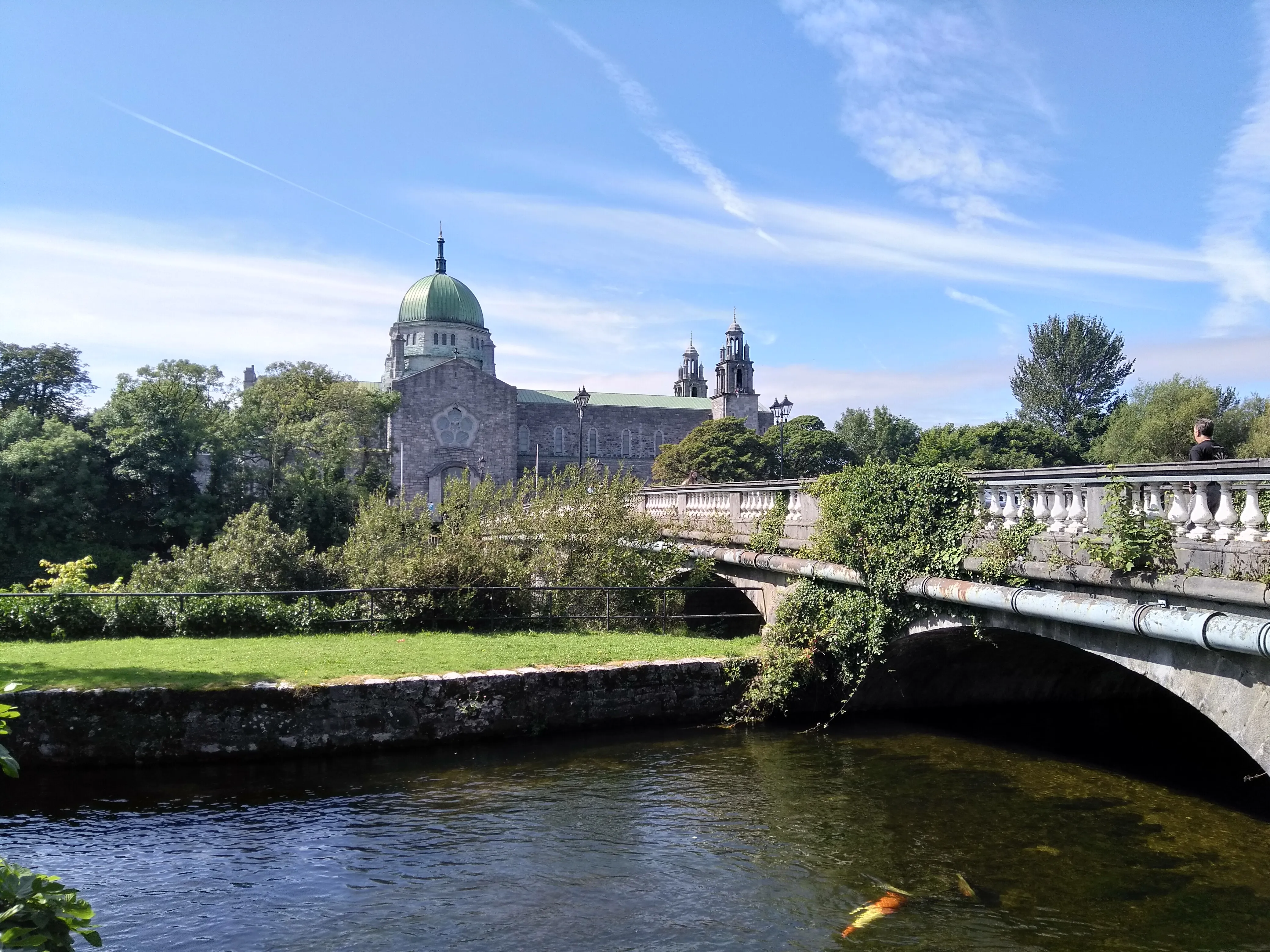
Spiritual Significance
As the mother church of the Diocese of Galway, Kilmacduagh and Kilfenora, the cathedral is the spiritual centre of Catholic life in the city and a focal point for ordinations, funerals of public figures, and major feast-day liturgies. It is dedicated jointly to Our Lady Assumed into Heaven and to St Nicholas, the latter a nod to the medieval Collegiate Church of St Nicholas in the old town, reflecting continuity with Galway's much older Christian heritage even though the building itself is modern.
Visitor Etiquette
Visitors are warmly welcomed but asked to remember this is a living place of prayer. Enter and move quietly, switch phones to silent, and avoid walking in front of anyone at prayer. Photography is permitted for personal use without flash, but refrain from photographing worshippers or ongoing services. If a Mass or funeral begins while you are inside, either join respectfully or wait at the back until it concludes. Donations toward maintenance are appreciated rather than required, and lighting a candle at the votive stands is a welcome gesture.
When to Visit
The cathedral is generally open to visitors daily from around 8:30 AM to 6:30 PM, with longer hours on major feast days and during the summer. Mass is celebrated every day; on Sundays the principal sung Mass is usually at 11 AM. To explore quietly, aim for early afternoon on a weekday, when services are unlikely and tour groups have thinned. The building is at its most atmospheric in June through August, when long evenings light the dome and the riverside setting is at its best. Allow 30–45 minutes for a self-guided look, longer if a recital or organ practice is underway.
Admission and Costs
Entry is free, though a donation of around €2–3 (about $2–3) toward upkeep is appreciated and there are honesty boxes near the doors. There is no charge to attend Mass or to sit quietly. Organ recitals and choral concerts during the summer season and around Christmas are ticketed, typically €10–20 (about $11–22) depending on the performers. A guided walking tour of religious and historic Galway that includes the cathedral generally costs €15–25 (about $16–27) per person; private guides run €80–150 (about $86–162) for a half-day.
The Case for a Guide
A knowledgeable guide turns a quick look at a handsome modern building into a layered story about Galway's faith, history, and stone:
- The jail beneath the marble — A guide can point out the plaque marking the former county prison and explain how the demolition of the jail in the 1930s freed the riverside site, giving the bright cathedral its unexpectedly dark foundation
- Reading the eclectic design — Why a 20th-century architect chose a Renaissance dome over Romanesque arches, and how the building quotes everything from Rome to Irish monastic tradition, is far clearer with someone to decode the references
- Connemara marble and local craft — A guide explains where the green-and-white floor stone was quarried and how the cathedral became a showcase for western Irish materials and workshops
- The mosaics and the Kennedy portrait — The Mortuary Chapel mosaic that includes John F. Kennedy is easy to miss; a guide gives the context of his 1963 visit and the city's affection for him
- The organ and acoustics — For musically minded visitors, a guide can time the visit to coincide with organ practice and explain the instrument's scale and role in the cathedral's concert life
Tips for Visitors
Dress respectfully — This is an active church; shoulders covered and a quiet voice are expected, especially if a service is in progress. Look up first — The dome and the four supporting arches are the architectural highlight, so start by standing under the crossing before exploring the chapels. Find the JFK mosaic — It is tucked into the Mortuary Chapel on the side; ask a steward if you cannot spot it. Combine with a riverside walk — The cathedral pairs naturally with a stroll along the Corrib and across the Salmon Weir Bridge, where you can sometimes watch salmon running upstream in early summer. Check the music listings — A summer organ recital is one of the best ways to experience the building's acoustics, and tickets are inexpensive.
Frequently Asked Questions
How long should I set aside to see the cathedral properly?
Most visitors find that 30 to 45 minutes is enough to take in the dome, the side chapels, the mosaics, and the Connemara-marble floor at an unhurried pace. If you want to attend a sung Mass or simply sit and listen to the organ — one of the largest in Ireland, with over 3,000 pipes — allow closer to 90 minutes. Photographers should plan around late morning, when light pours through the rose windows of the transepts.
Why was such a large cathedral built so recently?
Galway only became the seat of its own bishop in modern times, and the diocese long worshipped in a modest pro-cathedral on Middle Street. When the old county jail on Nun's Island was demolished in the 1930s, the riverside site became available, and Bishop Michael Browne pushed for a permanent cathedral worthy of the city. Construction ran from 1958 to 1965, making it one of the last cathedrals in Europe built entirely from cut stone rather than concrete.
Is the cathedral still an active place of worship?
Very much so. Daily Mass is celebrated, and the cathedral remains the mother church of the Diocese of Galway, Kilmacduagh and Kilfenora. Visitors are welcome to look around quietly outside service times, but you may find a baptism, funeral, or organ recital underway — the building hosts a respected concert season, and its acoustics draw choirs from across Ireland.
What is the connection between the cathedral and the old prison?
The cathedral stands directly on the footprint of the former Galway jail, and a small plaque near the entrance marks the spot. Local memory of the prison — and of executions once carried out there — gives the bright, hopeful building an unexpectedly sombre backstory that guides enjoy unpacking.