

Overview
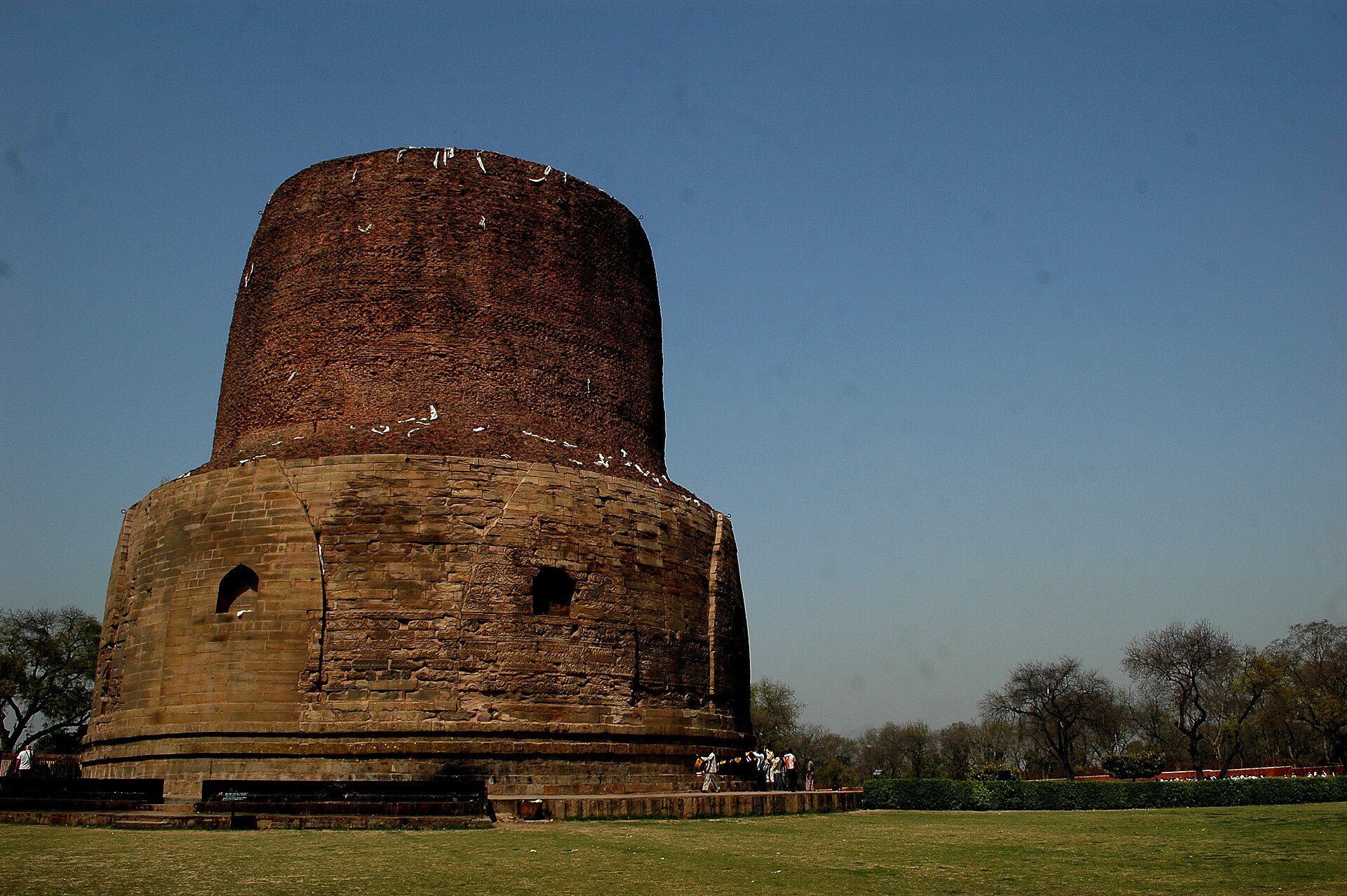
Sarnath is the site where Lord Buddha delivered his first sermon after attaining enlightenment, making it one of the four holiest Buddhist pilgrimage sites in the world alongside Lumbini, Bodh Gaya, and Kushinagar. Located just 10 kilometers from Varanasi, this tranquil archaeological park centers on the Dhamek Stupa -- a 43-meter solid cylinder of stone and brick marking the exact spot where Buddha preached to five ascetics in a deer park, setting the Wheel of Dharma in motion. Emperor Ashoka erected his famous lion-capital pillar here in the 3rd century BCE; the four-lion capital became India's national emblem and appears on every Indian rupee coin. The archaeological museum on site houses this original Lion Capital along with Gupta-period Buddha statues considered among the finest ancient Indian sculptures ever found. Combine with Dashashwamedh Ghat and Kashi Vishwanath Temple for a full Varanasi spiritual day. A guide explains the Buddhist dharma wheel symbolism, traces the archaeological layers spanning 2,500 years from thriving monastery complex to colonial rediscovery in 1835, and illuminates Emperor Ashoka's transformative role in spreading Buddhism across Asia.
Key Artifacts
In 528 BCE, Siddhartha Gautama -- recently enlightened in Bodh Gaya -- walked 250 kilometers to the deer park at Sarnath, just 10 kilometers from Varanasi. There he found five ascetics who had previously abandoned him and delivered his first sermon, the Dhammacakkappavattana Sutta, "setting in motion the Wheel of Dharma." This moment -- the founding act of Buddhism as a teaching tradition -- makes Sarnath one of the four most sacred Buddhist pilgrimage sites in the world, alongside Lumbini (birth), Bodh Gaya (enlightenment), and Kushinagar (death).
The site today is a tranquil archaeological park surrounding the 34-meter Dhamek Stupa, a solid cylinder of stone and brick marking the exact spot where Buddha preached. Emperor Ashoka erected his famous lion-capital pillar here in the 3rd century BCE -- the four lions that top it became India's national emblem and appear on every Indian rupee coin. A guide brings the archaeological ruins to life, explaining how the monasteries once housed thousands of monks, how the site was destroyed during Islamic invasions and then forgotten for 600 years until British archaeologists rediscovered it in 1835, and how the museum's Ashoka Pillar capital is considered one of the finest pieces of ancient Indian sculpture ever found. Mulagandhakuti Vihara: a modern Buddhist temple (1931) with stunning frescoes by Japanese artist Kosetsu Nosu depicting Buddha's life. The deer park: a small enclosed park with spotted deer, evoking the original deer park where Buddha found his first audience.
Excavation History
In 528 BCE, Siddhartha Gautama -- recently enlightened in Bodh Gaya -- walked 250 kilometers to the deer park at Sarnath. There he found five ascetics who had previously abandoned him and delivered his first sermon, the Dhammacakkappavattana Sutta, "setting in motion the Wheel of Dharma." Emperor Ashoka visited in the 3rd century BCE and erected monuments including the famous lion-capital pillar. The site flourished as a major Buddhist center for over a millennium, housing thousands of monks in extensive monasteries. It was devastated during Islamic invasions in the 12th century and then forgotten for 600 years until British archaeologists, led by Alexander Cunningham, rediscovered it in 1835. Systematic excavations unearthed the Ashoka Lion Capital -- now considered one of the finest pieces of ancient Indian sculpture -- along with Gupta-period Buddha statues and the foundations of massive monastic complexes that revealed Sarnath's former scale and significance.
When to Visit
Archaeological park: daily, sunrise to sunset (approximately 6 AM - 6 PM). Sarnath Museum: Saturday-Thursday, 10 AM - 5 PM (closed Fridays). Best time: morning (7-10 AM) when Buddhist monks from nearby monasteries perform chanting and circumambulation.
Admission and Costs
Archaeological park (foreigners): ₹600 ($7.20). Archaeological park (Indians): ₹25. Sarnath Museum: ₹5. Guide: ₹500-1,000 for a 1.5-hour tour. Getting from Varanasi: auto-rickshaw ₹200-400, taxi ₹500-800 one way.
Tips for Visitors
Start with the museum: seeing the Ashoka Lion Capital and other artifacts first gives context to the ruins. Respectful behavior: Buddhist pilgrims circumambulate the stupa clockwise in meditation -- maintain quiet near the stupa and avoid sitting on ruins. Half-day trip from Varanasi: Sarnath takes 2-3 hours to explore. Combine with an afternoon at Dashashwamedh Ghat or Kashi Vishwanath Temple. International monasteries: Thai, Japanese, Chinese, Tibetan, and Sri Lankan monasteries surround the archaeological park -- each worth a brief visit for their distinct architectural styles. Buddha Purnima festival: if visiting in May (full moon), Sarnath hosts celebrations with monks from around the world.