

Overview
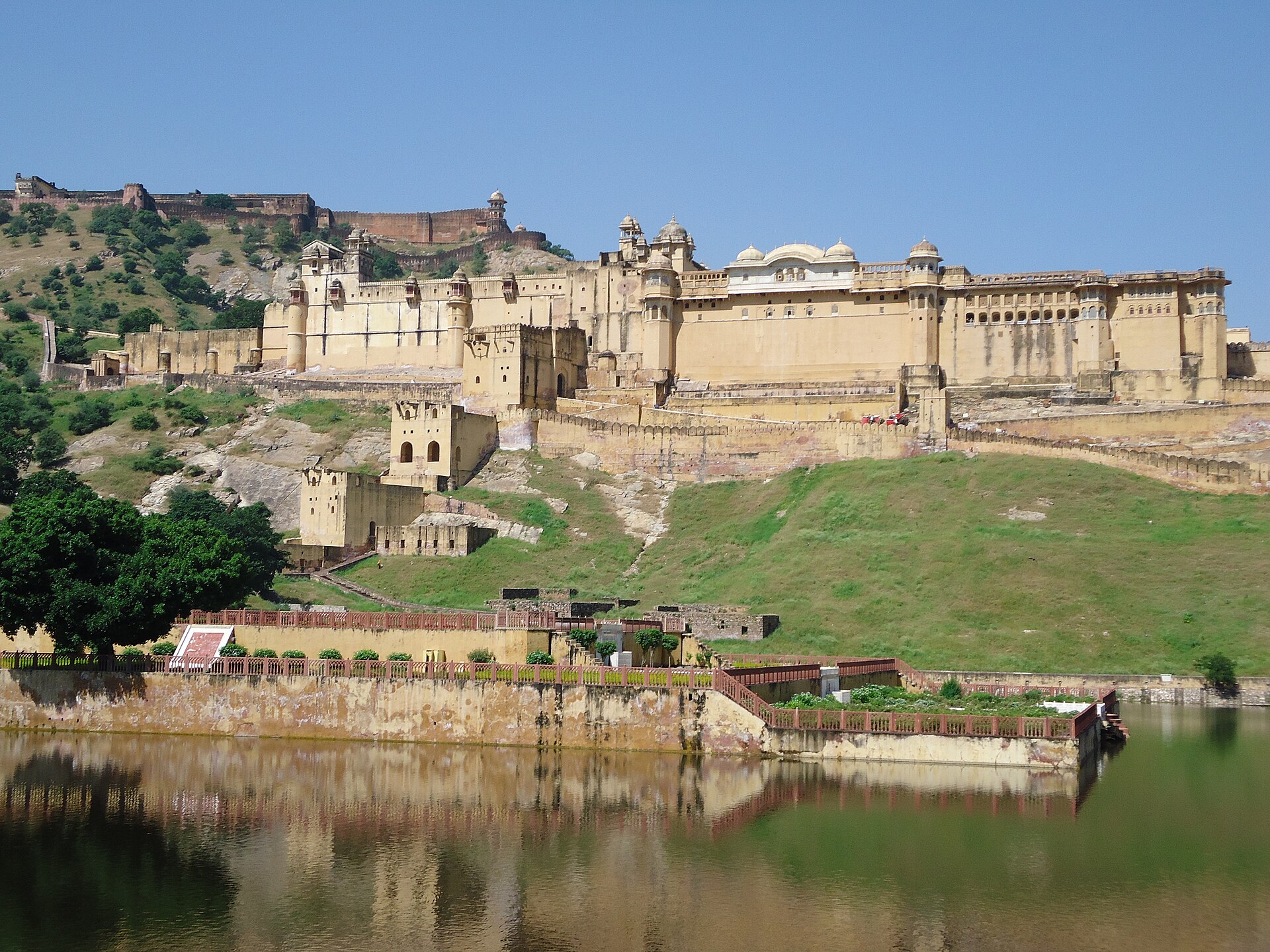
Amber Fort (also spelled Amer) is the magnificent hilltop fortress-palace 11 kilometers north of Jaipur, built from 1592 under Raja Man Singh I, a Kachwaha Rajput king who also served as one of Mughal Emperor Akbar's most trusted generals. That dual allegiance shaped the architecture, blending Rajput warrior fortifications with Mughal courtly refinement behind massive defensive walls. The fort served as the Kachwaha capital before Jaipur was founded in 1727 and contains the Sheesh Mahal, a Mirror Palace where thousands of glass fragments turn a single candle into a night sky, and the Ganesh Pol gateway covered in vibrant Hindu frescoes. Overlooking Maota Lake and connected by ramparts to Jaigarh Fort on the ridge above, the complex commands panoramic views of the Aravalli Hills. Combine with Hawa Mahal and City Palace for a full day of Rajput heritage. A guide explains the acoustic design of the Diwan-i-Aam, demonstrates the optical effects inside the Mirror Palace, and describes the fort's ingenious defensive water harvesting system that sustained the garrison through sieges.
Fortification History
Suraj Pol (Sun Gate): The main entrance facing east to catch the morning sun, flanked by guardhouses. Jaleb Chowk: The first courtyard where the army once assembled and elephants were stabled -- still the arrival point today. Ganesh Pol: The most photographed gateway in Rajasthan, covered in frescoes depicting Ganesh, lotus flowers, and geometric patterns. Sheesh Mahal: The mirror palace where convex glass pieces embedded in plaster create a dazzling effect from a single flame. Sukh Niwas: The "Hall of Pleasure" with a system of pipes carrying water through the walls to cool the interior -- Mughal-era air conditioning. Zenana (women's quarters): A separate courtyard accessed through a single guarded door, where each queen had her own room arranged around a shared garden.
Notable Rooms
Amber Fort (also spelled Amer) perches on a hillside 11 kilometers north of Jaipur, overlooking Maota Lake. Construction began in 1592 under Raja Man Singh I, a Rajput king who served as one of Emperor Akbar's most trusted military commanders. That dual loyalty -- Rajput warrior pride combined with Mughal courtly refinement -- defines the fort's architecture. Behind massive defensive walls bristling with watchtowers, the interior unfolds as a series of courtyards, gardens, and palaces that rival anything in Agra for decorative sophistication.
The Sheesh Mahal (Mirror Palace) is the fort's crowning achievement: thousands of mirror fragments and colored glass pieces set into walls and ceilings so that a single candle illuminates the entire chamber like a night sky. The Ganesh Pol gateway, painted in vibrant frescoes of Hindu deities, marks the transition from the fort's public spaces to its private royal quarters. A guide navigates the four-courtyard layout, explains the clever cooling systems that air-conditioned the palace using wind and water centuries before electricity, and points out the secret passage connecting Amber to the hilltop Jaigarh Fort above. Combine with Hawa Mahal and City Palace for a full day of Rajput heritage.
When to Visit
Open: daily, 8:00 AM - 5:30 PM. Sound-and-light show: evenings (English show usually at 7:30 PM, Hindi at 8:00 PM). Best time: morning (8-10 AM) before tour bus crowds arrive.
Admission and Costs
Foreigners (composite ticket): ₹1,000 ($12) covering Amber Fort, Hawa Mahal, Jantar Mantar, Nahargarh Fort, and more. Indian nationals: ₹100. Sound-and-light show: ₹300. Guide: ₹800-1,500 for a 2-hour tour.
Tips for Visitors
A paved path takes 10-15 minutes to walk up. Jeeps (₹500 return) are available for those who prefer to ride. Skip the elephant rides: animal welfare concerns make ethical sanctuaries outside Jaipur a better option. Jaigarh Fort on the hill above is connected by a tunnel and is home to the world's largest wheeled cannon. Allow 2-3 hours, as the fort is large with four distinct courtyards. Carry water: the climb and sun exposure demand hydration. Combine with Hawa Mahal, City Palace, and Jantar Mantar for a full Jaipur heritage day.