
.jpg)
Overview
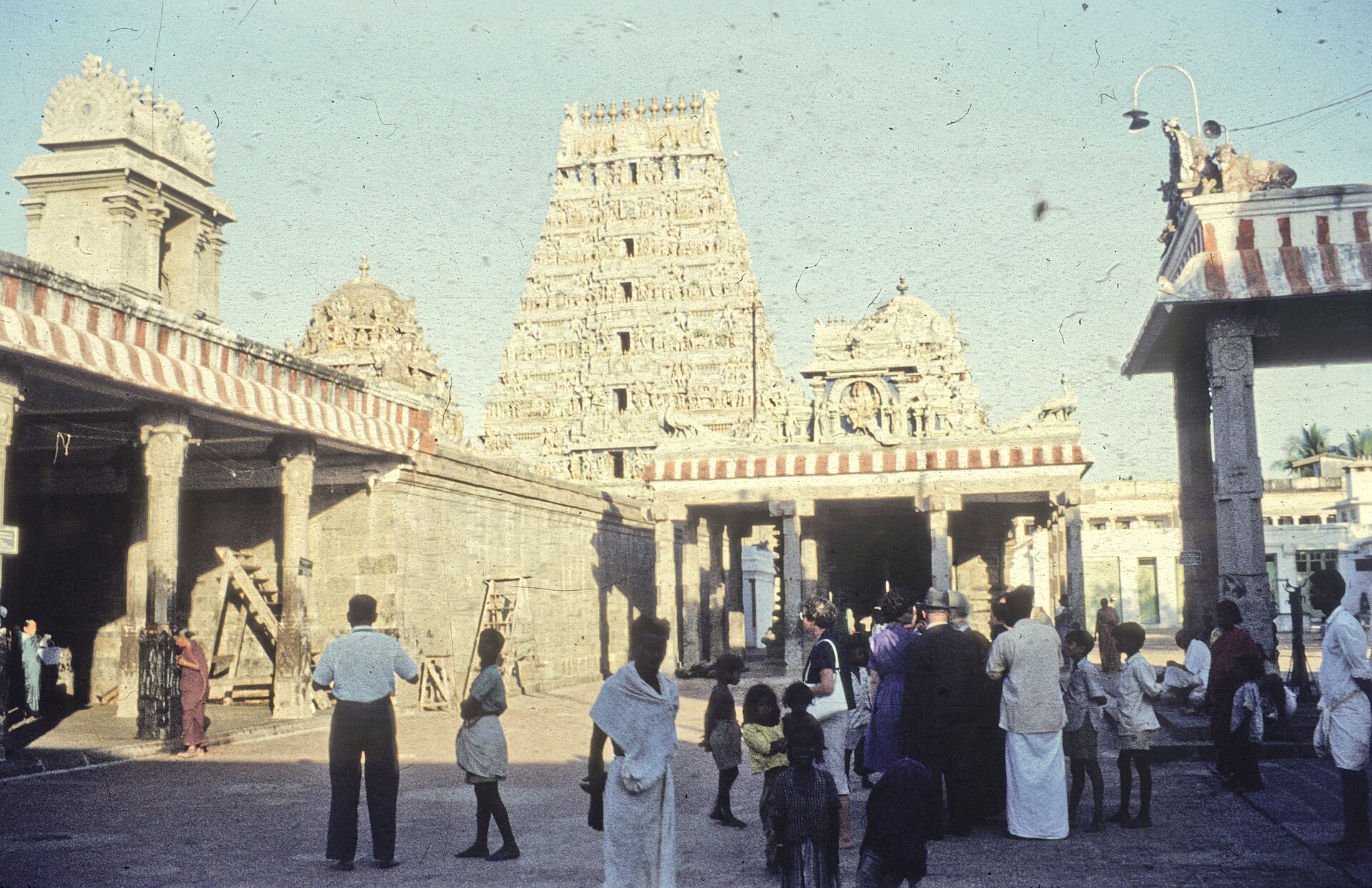
Kapaleeshwarar Temple is a 7th-century Dravidian temple dedicated to Lord Shiva in Chennai's ancient Mylapore quarter, rebuilt in the 16th century by the Vijayanagara Empire after Portuguese colonizers destroyed the original seaside structure. The colorful 37-meter gopuram (gateway tower), covered in hundreds of brightly painted stucco figures depicting gods, demons, and celestial dancers, is a masterpiece of Tamil temple architecture and the visual opposite of the Mughal domes and calligraphy found in northern India. As one of the oldest continuous places of worship in Tamil Nadu, the temple hosts vibrant festivals throughout the year, including the spectacular Arubathimoovar procession each April. A guide decodes the mythology embedded in the gopuram sculptures, explains the significance of each shrine within the complex and the rituals performed daily, and navigates the temple's strict dress code and etiquette so visitors can participate respectfully.
Spiritual Significance
The temple is dedicated to Lord Shiva in his form as Kapaleeshwarar ("Lord of Skulls"), and the Nayanar saints mentioned it in their devotional hymns dating to the 7th century CE. The main gopuram rises 40 meters with hundreds of painted stucco figures repainted every 12 years during the Kumbabhishekam consecration ceremony. A large stone Nandi (Shiva's bull) faces the inner sanctum, adorned with garlands and kumkum. The sacred punnai tree is the sthala vriksha under which the Goddess Karpagambal is said to have worshipped Shiva. The temple tank hosts the annual Arubathimoovar festival, and exquisitely cast Chola-style bronze processional deities are carried through the streets during festivals.
Visitor Etiquette
Kapaleeshwarar Temple in Chennai's Mylapore neighborhood is the city's most important Hindu shrine, dedicated to Lord Shiva in his form as Kapaleeshwarar ("Lord of Skulls"). Though the original temple dates to the 7th century CE — mentioned in the devotional hymns of the Nayanar saints — the current structure was rebuilt in the 16th century by the Vijayanagara Empire after Portuguese colonizers destroyed the earlier seaside version. The result is a textbook example of Dravidian temple architecture: a massive gopuram (gateway tower) rising 40 meters, covered in hundreds of brightly painted stucco figures depicting gods, demons, celestial dancers, and mythological narratives. For travelers familiar with the Mughal architecture of northern India, Kapaleeshwarar is a revelation. The aesthetic is completely different — no domes, no calligraphy, no Persian symmetry. Instead, the pyramidal gopuram teems with life, each level populated by a different pantheon of figures in vivid polychrome. A guide explains the iconography (which deity is which, what each gesture means), walks you through the temple's ritual sequence (circumambulation, lamp lighting, offerings), and provides context for the Tamil Shaivite tradition — one of the oldest continuous religious practices on earth, predating the better-known traditions of north India by centuries.
When to Visit
Morning session: 5:30 AM - 12:00 PM. Evening session: 4:00 PM - 8:30 PM. Friday evenings: extended hours and special worship. Best time: morning (6-8 AM) for the most active worship and cooler temperatures.
Admission and Costs
Temple entry: free. Special darshan: ₹50-100 for faster access. Guided temple plus Mylapore tour: ₹1,000-2,000 ($12-24) for a 2-3 hour walking tour.
Tips for Visitors
Dress strictly: Men should wear long pants (some temples require men to remove shirts). Women must cover shoulders and knees. Remove shoes: Leave footwear at the entrance. The stone floor can be hot — bring socks. Non-Hindus: The outer areas are accessible to all. The inner sanctum may have restrictions during peak worship. Mylapore walk: The surrounding streets have traditional flower sellers, brass shops, and the ancient Chitrakulam tank. Arubathimoovar festival: In April, the 63 Nayanar saint statues are paraded through the streets — Chennai's most spectacular temple festival