
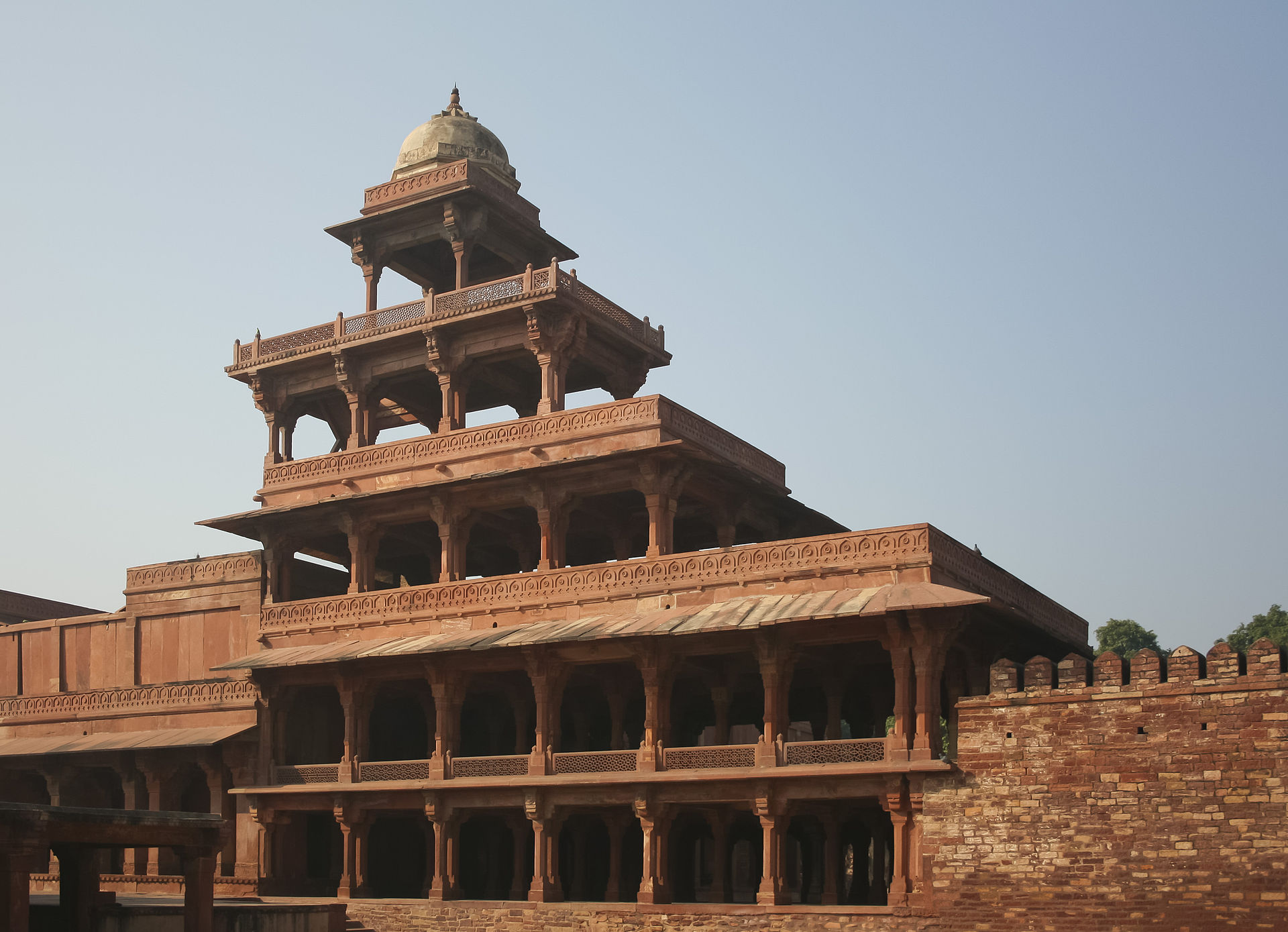

Overview
Fatehpur Sikri is the magnificent red sandstone capital city built by Mughal Emperor Akbar between 1571 and 1585 on a rocky ridge 37 kilometers from Agra. Conceived after a Sufi saint correctly predicted the birth of Akbar's heir, the city was abandoned after only fourteen years, possibly due to water scarcity, leaving an entire royal complex frozen in time as one of the best-preserved examples of sixteenth-century urban planning in the world. The UNESCO World Heritage Site includes the Buland Darwaza, a 54-meter Victory Gate that remains the tallest gateway of its kind, along with palaces, audience halls, a mosque, and the exquisite marble tomb of Salim Chishti. A guide explains Akbar's deliberate synthesis of Hindu, Muslim, Buddhist, and Christian architectural elements, which expressed his philosophy of religious tolerance, and decodes symbolic details such as the single-pillar throne in the Diwan-i-Khas that placed the emperor at the center of four debating faiths.
Excavation History
In 1571, Emperor Akbar -- the greatest of the Mughal rulers -- built an entirely new capital city on a rocky ridge 37 kilometers from Agra. The location was chosen because the Sufi saint Salim Chishti, who lived there, had correctly predicted the birth of Akbar's son. Over the next 15 years, Akbar constructed a city of stunning red sandstone palaces, audience halls, a mint, a bazaar, and one of the largest mosques in India. Then, around 1585, the court departed -- possibly due to water shortages, possibly for strategic reasons -- and Fatehpur Sikri was left largely as Akbar built it, a frozen moment in Mughal history. The result is one of the best-preserved examples of 16th-century urban planning in the world. A guide decodes Akbar's remarkable architectural language, which deliberately blended Hindu, Islamic, Buddhist, and Jain motifs to express his philosophy of religious tolerance (sulh-i-kul, "universal peace"). The Panch Mahal has columns in styles borrowed from Jain and Hindu temples. The Diwan-i-Khas contains a single pillar throne connected by walkways to four corners -- symbolizing Akbar at the center of four faiths debating. Without a guide, these details pass unnoticed. With one, Fatehpur Sikri becomes a window into the mind of India's most progressive emperor.
Key Artifacts
In 1571, Emperor Akbar -- the greatest of the Mughal rulers -- built an entirely new capital city on a rocky ridge 37 kilometers from Agra. The location was chosen because the Sufi saint Salim Chishti, who lived there, had correctly predicted the birth of Akbar's son. Over the next 15 years, Akbar constructed a city of stunning red sandstone palaces, audience halls, a mint, a bazaar, and one of the largest mosques in India. Then, around 1585, the court departed -- possibly due to water shortages, possibly for strategic reasons -- and Fatehpur Sikri was left largely as Akbar built it, a frozen moment in Mughal history.
The result is one of the best-preserved examples of 16th-century urban planning in the world. A guide decodes Akbar's remarkable architectural language, which deliberately blended Hindu, Islamic, Buddhist, and Jain motifs to express his philosophy of religious tolerance (sulh-i-kul, "universal peace"). The Panch Mahal has columns in styles borrowed from Jain and Hindu temples. The Diwan-i-Khas contains a single pillar throne connected by walkways to four corners -- symbolising Akbar at the centre of four faiths debating. Without a guide, these details pass unnoticed. With one, Fatehpur Sikri becomes a window into the mind of India's most progressive emperor.
When to Visit
Palace complex: daily, 6:00 AM - 6:00 PM. Jama Masjid: open during prayer times and to visitors throughout the day. Best time: early morning for cooler temperatures and fewer tour groups. Avoid midday in summer -- the exposed stone complex offers minimal shade.
Admission and Costs
Foreigners: ₹600 ($7.20) for the palace complex. Indian nationals: ₹40. Jama Masjid: free. ASI guide: ₹500-1,000. Getting there from Agra: ₹500-800 by auto-rickshaw, ₹1,500-2,000 by taxi (round trip).
Tips for Visitors
Combine with Agra: Make Fatehpur Sikri a half-day trip from Agra, either before or after visiting the Taj Mahal. Wear sun protection: The complex is largely open with little shade. Carry water, sunscreen, and a hat. Persistent touts: Unofficial guides aggressively offer services at the entrance. Arrange a proper ASI guide in advance or through your hotel. Shoes required off: Remove shoes at the Tomb of Salim Chishti. The marble floor is hot in summer and cold in winter. Allow 2-3 hours: The complex is large and rewards slow exploration, especially with a guide who can explain each building's function.