
Best Time to Visit Antwerp: A Season-by-Season Guide
When to visit Antwerp for the best weather, fewest crowds, and lowest prices. A season-by-season guide to timing tours of the cathedral.
Read the full guideUpdated · 12 min read
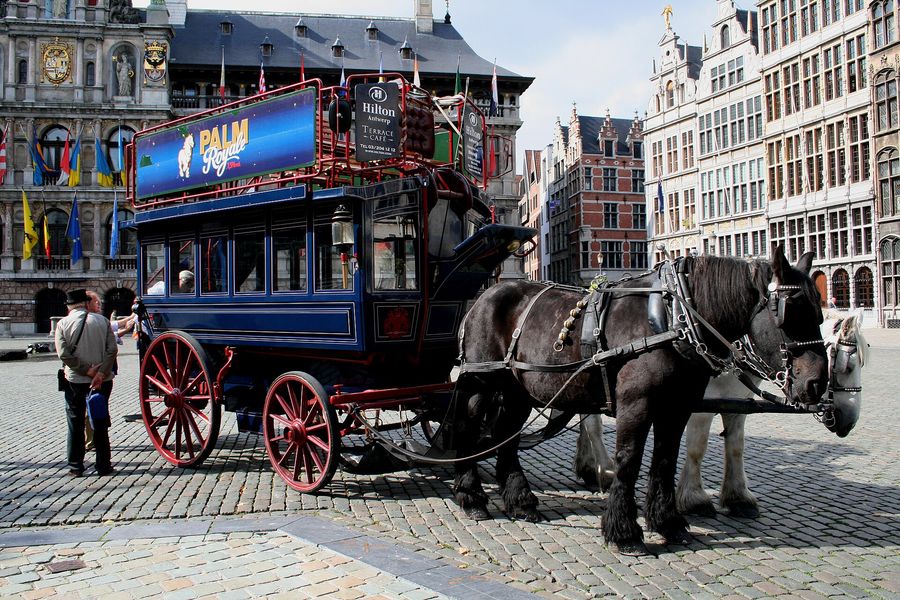
The best time to visit Antwerp is late spring (May) and early autumn (September), when temperatures sit around 18-20°C, daylight is long, and crowds stay below the July-August peak. For the lowest prices and queue-free Rubens altarpieces, come in January, February, or November; for festivals and the warmest weather, choose summer.
Antwerp rewards travellers who treat it as a working city first and a tourist destination second. Around five million visitors arrive each year — far fewer than nearby Bruges or Brussels — so the calculus of when to come is less about dodging tour groups and more about matching the weather, the cultural season, and your budget to what you actually want to do. A diamond-district tour, a Rubens pilgrimage, and a fashion-district crawl each have a different ideal month. Antwerp sits within the wider Belgium destination, and its maritime position on the Scheldt shapes everything about its climate.
What is Antwerp's climate like?
Antwerp has a temperate maritime climate: mild and changeable rather than extreme. Summer days average around 20°C (68°F) and winters hover near 4°C (39°F), with rain possible in any month. The signature is not heavy downpours but persistent, intermittent drizzle, so a compact umbrella beats obsessive forecast-checking whenever you visit.
The city has a temperate maritime climate: mild, changeable, and rarely extreme. Summer days average around 20°C (68°F) and winters hover near 4°C (39°F), with rain possible in any month. The defining feature is not heavy downpours but persistent, intermittent drizzle, so locals carry a compact umbrella year-round rather than checking forecasts obsessively.
| Season | Temperature | Daylight | Rain |
|---|---|---|---|
| Winter (Dec-Feb) | 2-6°C / 36-43°F | ~8 hours | Frequent, often grey |
| Spring (Mar-May) | 8-18°C / 46-64°F | 11-15 hours | Showery, brightening |
| Summer (Jun-Aug) | 17-23°C / 63-73°F | 15-16 hours | Short bursts, lowest totals |
| Autumn (Sep-Nov) | 8-19°C / 46-66°F | 9-13 hours | Increasing through November |
What is spring like in Antwerp (March through May)?
Spring shakes off the grey as café terraces reopen on the Grote Markt and daylight stretches toward fifteen hours by May. March is the quietest, cheapest month, with no queue for Rubens' cathedral altarpieces, while May is arguably the finest of the year — warm enough for terrace dining and the historic Sinksenfoor funfair.
Spring is when Antwerp shakes off the grey. Café terraces reopen along the Grote Markt, the gilded guildhalls catch a sharper light, and the long northern daylight stretches well past dinner by May. Temperatures climb from a raw single-digit March into the genuinely pleasant high teens of late May.
March is still cool and unpredictable, but it is also the quietest and cheapest of the spring months. Queues at the Cathedral of Our Lady are nonexistent, which is the ideal way to study Rubens' four altarpieces — including The Descent from the Cross — without a crowd pressing behind you. This is the month to book an unhurried art-historian tour that lingers inside the church rather than racing through it.
April brings reliable brightness and the first warm afternoons. Easter weekend pushes hotel prices up briefly, but outside it the city stays affordable. The spring food scene wakes up too; Antwerp's culinary calendar includes the long-running Antwerpen Proeft tasting festival, which gathers the region's restaurants and brewers under one roof.
May is arguably the finest month of the year here. The weather is warm enough for all-day walking and evening terrace dining, daylight runs to nearly fifteen hours, and the summer crowds have not yet arrived. Around Pentecost the historic Sinksenfoor funfair sets up on the Gedempte Zuiderdokken, a tradition that dates back centuries. May is the sweet spot for combining a Rubens House visit, a fashion-district wander, and a diamond tour into a single comfortable trip.
Spring guide costs: Free tip-based walking tours (€0-15), Rubens and baroque-art tours with an art historian (€50-80), and private half-day tours from around €150-240.
What is summer like in Antwerp (June through August)?
Summer is Antwerp's busiest stretch, though it never saturates like Bruges. Daylight peaks near sixteen hours around the solstice, the Zomer van Antwerpen festival scatters performances across the city, and the free MAS Museum rooftop dazzles in long evening light. July and August bring peak hotel prices, yet highs rarely exceed the low-to-mid 20s°C.
Summer is Antwerp's busiest stretch, but "busy" here is relative — the city never reaches the saturation of Bruges. What summer delivers is the longest days of the year, the city's richest cultural programming, and the best odds of dry weather, even if no Belgian summer is ever guaranteed.
June balances warmth and breathing room. Schools are still in session early in the month, daylight peaks around the solstice at roughly sixteen hours, and the open-air season begins. The sprawling Zomer van Antwerpen (Summer of Antwerp) cultural festival launches around now, scattering circus, theatre, and music across reclaimed industrial sites and city squares through to September.
July and August are peak season for hotels and the warmest weeks of the year, though daytime highs rarely exceed the low-to-mid 20s°C. This is when the MAS Museum rooftop — free to access and offering a 360-degree panorama of the port and old town — is at its most rewarding in the long evening light. Plan indoor sights like the cathedral or the diamond-district workshops for the warmest midday hours, and save the riverfront and squares for the cooler mornings and late evenings. Note that many independent shops and some diamond dealers keep reduced summer hours, so confirm before building a day around them.
Managing the peak: Book the Diamond District workshop tours and any Rubens-focused guide a week or two ahead in summer, as the better English-speaking guides fill up. Diamond tours typically run €40-70 and include grading demonstrations.
Summer guide costs: Walking tours (€0-15), fashion and design tours (€60-100), private full-day tours covering the port and museums (€300-450).
Is autumn the insider's season in Antwerp (September–November)?
September is the insider's quiet choice: summer warmth lingers, hotel rates ease from their peak, and the cultural calendar resumes while crowds thin. October turns golden and atmospheric, ideal for ducking between beer bars like Kulminator and Paters Vaetje. November is the quietest and one of the cheapest months, with vanished museum queues.
If May is the obvious choice, September is the quiet one. The summer warmth lingers into the first half of the month, the festival season is still winding down, and the crowds thin noticeably once European holidays end. It is the season I most often recommend to travellers who want Antwerp at its most liveable.
September keeps mild days and comfortable evenings while hotel rates ease back from their summer peak. The cultural calendar resumes in earnest after the summer lull, and outdoor dining is still very much on the table. Guided architecture and art tours return to their unhurried best, with time to actually stand inside the cathedral and the Rubens House rather than shuffle through.
October turns golden and atmospheric. Rain becomes more frequent and daylight shortens, but the trade-off is a city that feels like it belongs to its residents again. This is prime weather for ducking between Antwerp's celebrated beer bars — Kulminator, with its 700-plus list including rare vintages, and the traditional brown-café warmth of Paters Vaetje are local institutions worth seeking out over any mass-market lager.
November is the quietest and one of the cheapest months. Museum queues vanish, prices sit near their annual floor, and the city settles into a low-lit, café-culture rhythm before the Christmas season begins. Pack a proper rain layer and accept the early dusk as part of the deal.
Autumn guide costs: Free walking tours (€0-15), Rubens and baroque tours (€50-80), private half-day tours (€150-240).
What is winter like in Antwerp (December through February)?
Antwerp winters are dark and damp rather than bitterly cold. December transforms the historic core with the Antwerpen Winter market, a Ferris wheel, and an ice rink across the Grote Markt, plus Sinterklaas traditions. January and February are the cheapest, quietest months, when the cathedral's Rubens altarpieces become almost private and interiors carry the trip.
Antwerp winters are dark and damp rather than dramatically cold, and they reward visitors who come for atmosphere over sunshine. December transforms the historic core: the Antwerpen Winter Christmas market spreads stalls, a Ferris wheel, and an ice rink across the Grote Markt, Steenplein, and surrounding squares, while Sinterklaas traditions light up the first weeks of the month. The same season makes the cathedral's Rubens altarpieces almost private, a rare chance to study Belgium's largest Gothic church — 169 years in the building — without a single tour group in sight.
January and February are the cheapest, quietest months of the year. Hotel rates bottom out once the market closes, attractions run queue-free, and the city's indoor pleasures — its museums, its beer bars, its restaurant scene — carry the trip. Days are short and grey, so build itineraries around interiors and warm cafés rather than long riverside walks.
Winter guide costs: Walking tours (€0-15), Rubens and baroque tours (€50-80), private half-day tours (€150-240), with the best short-notice availability of the year.
How do you get around Antwerp?
Antwerp's medieval core is compact and highly walkable, while De Lijn trams and buses reach outlying sights like the MAS and Zurenborg's Art Nouveau houses; a day pass costs around €7. Dedicated bike lanes make cycling realistic in drier months, and arriving at Antwerpen-Centraal, one of the world's loveliest stations, is a highlight itself.
Antwerp's compact medieval core is highly walkable, and the city's tram and bus network, run by De Lijn, reaches outlying sights like the MAS, the fashion district, and the Art Nouveau houses of Zurenborg. A day pass costs around €7, and the city's dedicated bike lanes make cycling a realistic option in the drier months. Arriving by train is a destination in itself: Antwerpen-Centraal, often called one of the world's most beautiful stations, sits a short walk from the diamond district near its grand, cathedral-like waiting hall.
A few logistics hold true year-round. Many shops — including some diamond dealers — close on Sundays, so weight your shopping toward Saturdays or weekdays while reserving Sundays for museums and the cathedral, which stay open. If buying diamonds, deal only with merchants certified by the Antwerp World Diamond Centre who provide GIA or HRD certificates, and avoid pressure sales in tourist shops. And in any month, carry a compact umbrella.
How do you match your Antwerp trip to your priorities?
Choose by priority. January, February, and November deliver the lowest prices; June through August bring the longest, warmest, driest days. May and September strike the best balance of weather and calm. Winter empties the cathedral and Rubens House for quiet viewing, while the Zomer van Antwerpen and December's Christmas market supply festival energy.
- Lowest prices: January, February, or November, when hotels and tours sit at their annual minimum.
- Best weather and daylight: June through August, with the longest, warmest, and driest days.
- Best balance of weather and calm: May or September — mild, lively, and far from the peak crush.
- Quiet masterpieces: Winter, when the cathedral and Rubens House are at their emptiest.
- Festival energy: June through September for the Zomer van Antwerpen programme; December for the Christmas market.
When should you book your Antwerp trip?
Book summer and Easter hotel stays, plus any private full-day port-and-museum tour, two to three months ahead. Reserve diamond-district workshop visits and Rubens-focused art tours one to two weeks out during peak season. Shoulder- and winter-season walking tours rarely need more than a few days' notice, so leave them until closer to arrival.
- Two to three months ahead: Summer and Easter hotel stays, and any private full-day tour combining the port and museums.
- One to two weeks ahead: Diamond-district workshop visits and Rubens-focused art tours in peak season.
- A few days ahead: Shoulder- and winter-season walking tours, which rarely require long lead times.
Related Guides
For broader planning around an Antwerp trip, these guides offer useful context:
- European Christmas Markets — festive destinations within easy reach of Belgium in December
- Amsterdam Canal Tours Compared — a neighbouring Low Countries city often paired with Antwerp
- Best Time to Visit London — another northern European city where timing shapes the experience
There is no wrong season for Antwerp, only different cities revealed at different times of year. Come in May or September for the easy balance of weather and space, in summer for the festivals and long light, and in winter for the markets and the chance to stand alone in front of a Rubens. Whenever you arrive, the beer and the baroque will be waiting.
Planning a trip to Antwerp and unsure which season fits your priorities? Reach out for personalised recommendations.
Frequently Asked Questions
What is the best time to visit Antwerp?
Late spring (May) and early autumn (September) give the best balance in Antwerp, with mild temperatures around 18-20°C, long daylight, and fewer visitors than the July and August peak. Both shoulder months still have open terraces and a full cultural calendar without summer's hotel prices.
When is Antwerp cheapest to visit?
January, February, and November are the cheapest months. Hotel rates fall once the Christmas market closes, museums and the cathedral have no queues, and shoulder-season guides are easier to book at short notice.
Does it rain a lot in Antwerp?
Antwerp has a maritime climate with frequent light rain spread across the year rather than a distinct wet season. Showers are usually short, so a compact umbrella and a rain layer matter more than avoiding any particular month.
Is winter worth it in Antwerp?
Yes, if you come for atmosphere rather than weather. December brings the Antwerpen Winter Christmas market and ice rink to the historic core, the cathedral's Rubens altarpieces are blissfully quiet, and the city's many brown cafés and beer bars are at their cosiest.