

Overview
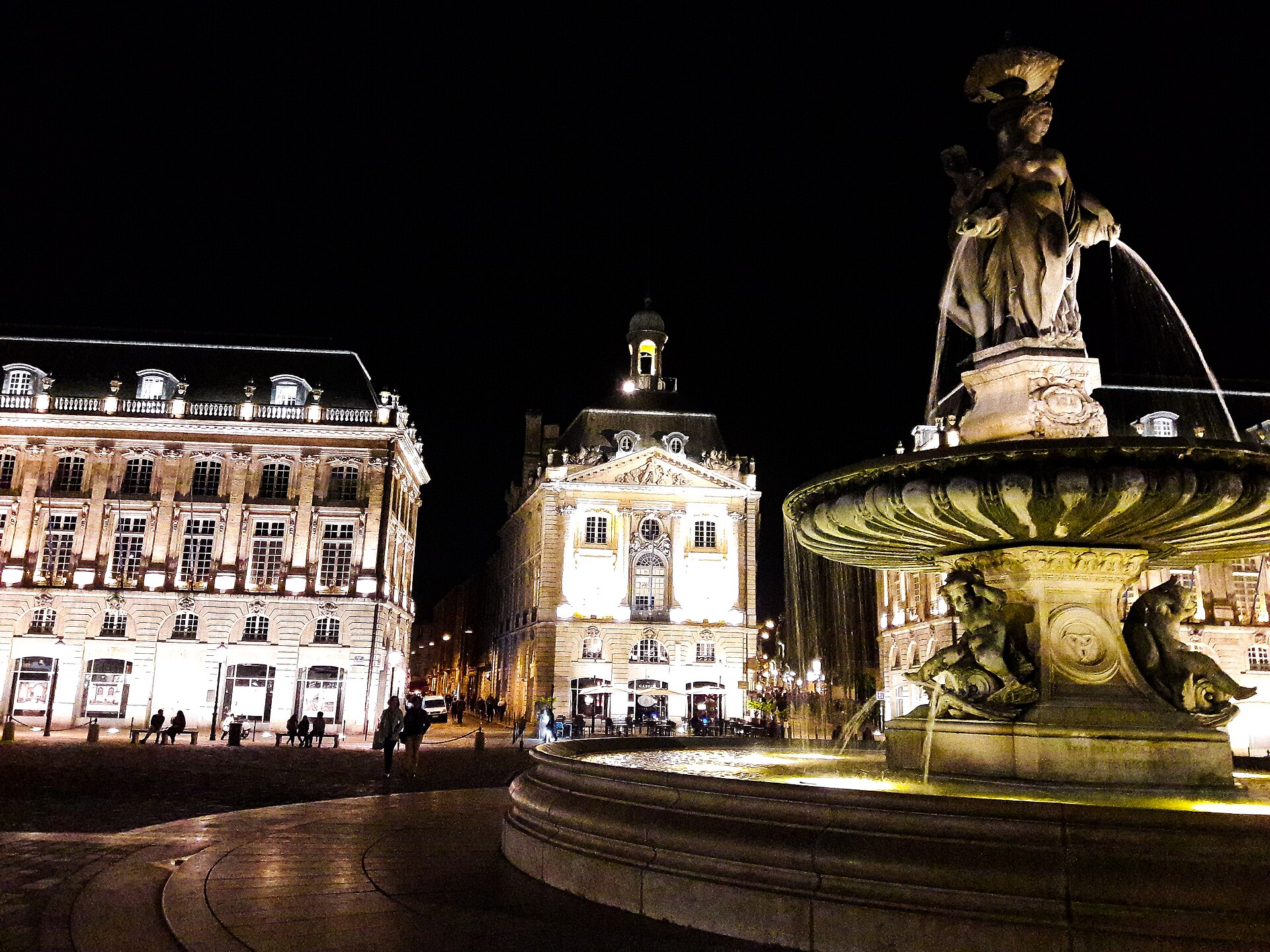
Place de la Bourse is Bordeaux's most famous square and the symbol of the city's 18th-century transformation from medieval fortress to elegant trading hub. Built between 1730 and 1775 by royal architect Ange-Jacques Gabriel, the semicircular plaza opens onto the Garonne River with harmonious neoclassical facades. In 2006, landscape architect Michel Corajoud added the Miroir d'eau (Water Mirror), a 3,450 m² reflecting pool that has become Bordeaux's most photographed attraction. The combination of historic architecture and modern water feature perfectly captures Bordeaux's renaissance as a world-class destination.
Architecture
Ange-Jacques Gabriel's neoclassical design features harmonious symmetrical facades with Corinthian pilasters and mascaron ornaments. The Three Graces fountain at center represents Juno, Venus, and Minerva. In 2006, landscape architect Michel Corajoud added the Miroir d'eau (Water Mirror), a 3,450 m² reflecting pool that alternates between mirror-still reflections and mist every 15 minutes. The Palais de la Bourse's maritime museum inside preserves Bordeaux's trading heritage.
Historical Significance
Built between 1730 and 1775 by royal architect Ange-Jacques Gabriel, the semicircular plaza was designed to open Bordeaux to the Garonne River, replacing medieval fortifications with neoclassical elegance. The square symbolized the city's transformation from fortress to Enlightenment trading hub under Louis XV. The Palais de la Bourse housed the stock exchange that fueled Bordeaux's 18th-century commercial prosperity.
When to Visit
Sunset: Golden light reflecting in the water mirror is magical. Night: Illuminated facades create stunning reflections. Early morning: Peaceful before tourists arrive. Mirror cycle: Alternates between reflecting pool and mist every 15 minutes. The Miroir d'eau operates from March through November. Visit in combination with the nearby Grand Théâtre.
Admission and Costs
Access: Free. Water mirror: Free. Guided walking tours: €15-25 per person. Private guide: €120-180 for 2 hours. Combine with visits to Cathédrale Saint-André and Cité du Vin nearby in Bordeaux.
Tips for Visitors
Wear sandals: Walking in the water mirror is encouraged - bring flip-flops. Photography: Tripod helpful for night shots of reflections. Combine with quays: 5 km of renovated riverfront perfect for strolling. Aperitif culture: Surrounding cafés perfect for pre-dinner drinks. Tram access: Line C to "Place de la Bourse"