

Overview
Khan El-Khalili traces its origins to 1382, when Mamluk emir Djaharks El-Khalili demolished a Fatimid-era cemetery and erected a vast caravanserai to house merchants traveling the trans-Saharan and Indian Ocean spice routes. Over the following centuries the market grew organically, absorbing neighboring streets and courtyards until it became the commercial nerve center of medieval Cairo. Today the bazaar sprawls across a dense grid of narrow alleys between Al-Azhar Mosque and the Al-Muizz street, each lane traditionally devoted to a single trade: brass trays and lanterns here, perfume essences there, hand-stitched leather journals around the next corner. Unlike many historic markets that have been sanitized for tourism, Khan El-Khalili remains a working commercial district where Egyptian artisans still produce goods on site. Coppersmiths hammer intricate geometric patterns into bowls and trays using techniques unchanged since the Fatimid caliphate. Spice vendors measure out cumin, saffron, and dried hibiscus from sacks stacked to the ceiling. Gold dealers in the Sagha quarter weigh jewelry on hand-held balances beside workshops where rings and bracelets are fashioned to order. Navigating this sensory overload with a local guide who knows the craftspeople by name, who can distinguish machine-made imports from genuine handwork, and who understands the rhythm of bargaining, makes the difference between a bewildering trudge and an unforgettable cultural immersion.
Food Stalls
First-time visitors often enter Khan El-Khalili through the main tourist corridor near Al-Hussein Square, where aggressive touts compete for attention and prices reflect proximity to the bus parking lot. The magic lies deeper inside, down alleys so narrow that extended arms can touch shops on both sides. A skilled guide leads you past the tourist gauntlet into the working quarters where fourth-generation metalworkers engrave trays by hand, where perfumers blend custom scents from dozens of essence bottles, and where the pace of commerce slows to the rhythm of mint tea and conversation. The bazaar's layout follows medieval guild logic. Goldsmiths cluster in the Sagha, coppersmiths dominate the lanes near Fishawi's, and textile merchants fill the passages approaching Al-Muizz street. Understanding this geography allows purposeful exploration rather than random wandering. Your guide knows which workshops welcome observers, which craftsmen speak enough English to explain their techniques, and which corners offer the best vantage points for photographing the interplay of light through latticed screens. They also know when to pause for tea with a shopkeeper—these breaks are not distractions but essential elements of the bazaar experience, moments when genuine cross-cultural exchange happens over steaming glasses of hibiscus or sage.
What To Buy
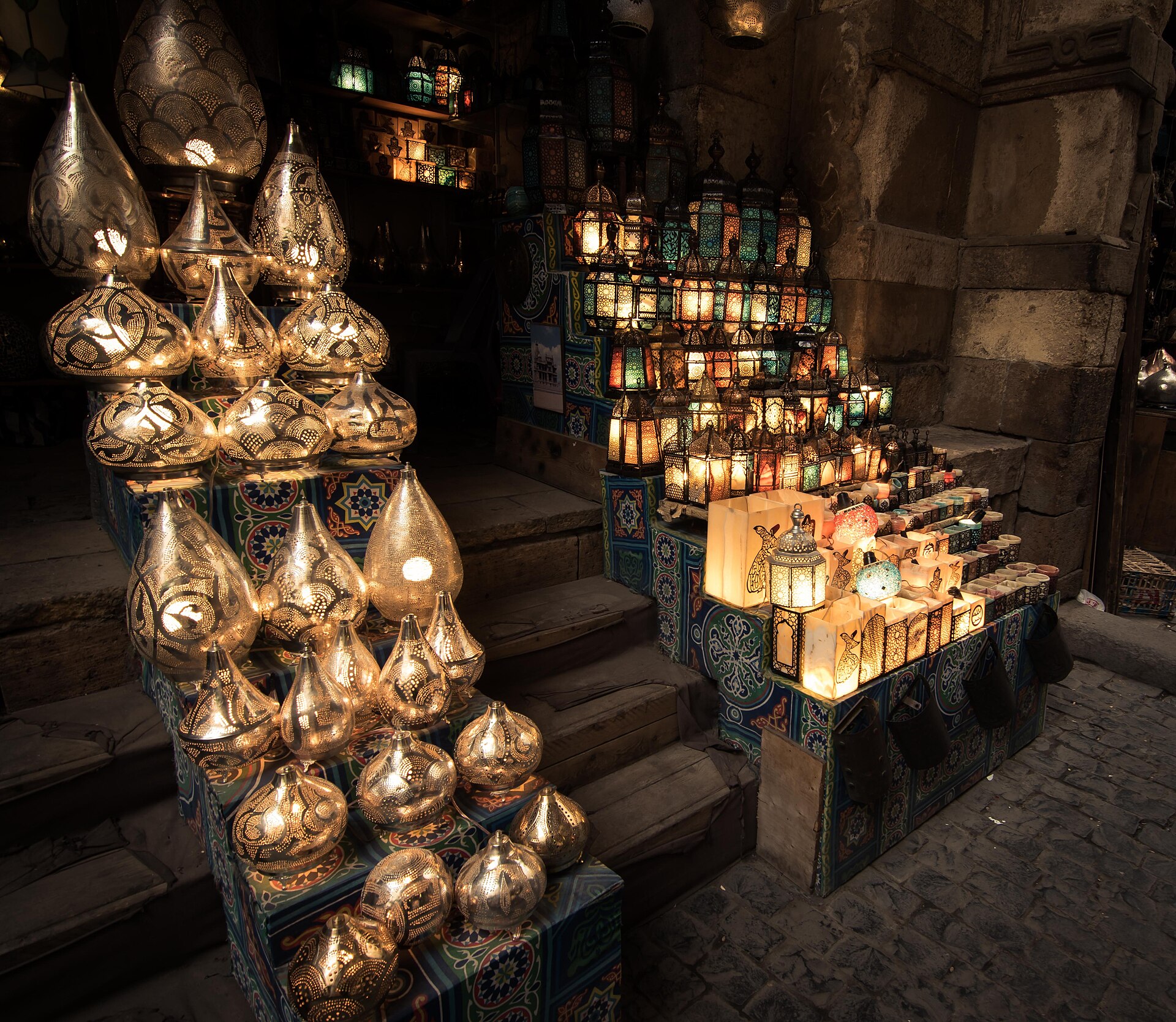
The bazaar rewards specificity. Rather than browsing aimlessly, arrive knowing what interests you and let your guide lead you to the appropriate specialists. Brass and copper lanterns: Seek the workshops off the main tourist lanes where artisans still punch geometric patterns by hand. Prices range from EGP 200 for small table lamps to several thousand for large hanging fixtures. Quality pieces show crisp, even perforations and smooth soldering. Spices and dried goods: The spice souk occupies several alleys where saffron, cumin, dried hibiscus, and Egyptian molokhia leaves fill burlap sacks. Reputable vendors will let you smell before buying and can recommend blends for specific dishes. Gold and silver jewelry: The Sagha quarter prices precious metals by weight at daily rates, making custom pieces surprisingly affordable. Specify your design, choose your stones, and return in a few hours while craftsmen work. Leather goods: Hand-stitched journals, bags, and belts come from workshops where the tanning smell still lingers. Examine stitching closely—machine work lacks the slight irregularity that marks handcraft. Perfume essences: Oil-based perfumes sold by the gram let you create custom scents. Bring a reference fragrance and skilled perfumers will approximate it from their collection of essence bottles.
When to Visit
Bargaining in Khan El-Khalili follows unwritten rules that distinguish friendly negotiation from insulting offers. The opening price quoted to tourists typically runs two to four times the expected final price, so initial counteroffers around half are appropriate starting points. The dance proceeds through mock outrage, tea offers, calculator comparisons, and gradual convergence toward a number both parties can accept. Walking away remains the most powerful negotiating tool -- genuine final prices often materialize only when you reach the doorway.
Yet haggling is not merely about extracting the lowest price. Egyptian merchants view the exchange as social ritual, a form of hospitality that transforms strangers into acquaintances. Rushing the process or treating it as purely transactional misses the point. Your guide can coach you on fair price ranges before entering shops, preventing both overpayment and insulting lowball offers. They read the shopkeeper's body language, signal when a price is reasonable, and maintain the lighthearted atmosphere that makes bargaining enjoyable rather than confrontational. After the sale, tea often appears -- a gesture of goodwill that seals the relationship beyond the transaction.
Admission and Costs
El-Fishawi has served coffee from the same mirror-walled premises since 1773, making it one of the oldest continuously operating cafes in the world. Nobel laureate Naguib Mahfouz wrote scenes from his Cairo Trilogy in these rooms, and photographs of his regular corner table still hang on the walls. Today the cafe remains packed from morning until well past midnight, its marble-topped tables crowded with backgammon players, elderly men drawing on shisha pipes, and tourists seeking the literary atmosphere that Mahfouz immortalized. Ordering a mint tea or thick Turkish coffee here is not merely refreshment but participation in a cultural tradition spanning two and a half centuries.
Beyond Fishawi's, the bazaar conceals several restored wikala -- the caravanserais that once provided lodging and storage for long-distance merchants. Wikala al-Ghouri, built in 1504 by the second-to-last Mamluk sultan, now hosts traditional craft workshops and evening Sufi performances. Its central courtyard, surrounded by three stories of merchant cells, evokes the bazaar's golden age when traders arrived by caravan from sub-Saharan Africa, Persia, and the Indian subcontinent. Guides who specialize in Islamic Cairo can secure access to wikalas undergoing restoration, offering glimpses of architectural details invisible from the street.
Tips for Visitors
Bargaining follows unwritten rules that distinguish friendly negotiation from insulting offers. Walking away remains the most powerful negotiating tool -- genuine final prices often materialize only when you reach the doorway. Your guide can coach you on fair price ranges before entering shops. Comfortable closed-toe shoes are essential, as the stone alleys are uneven and you will be on your feet for extended periods. Carry small bills (EGP 10, 20, and 50 notes) since vendors rarely have change for larger denominations. El-Fishawi cafe has served coffee from the same mirror-walled premises since 1773 -- ordering a mint tea or thick Turkish coffee here is participation in a cultural tradition. Beyond Fishawi's, the bazaar conceals several restored wikala -- caravanserais that once provided lodging for long-distance merchants. Wikala al-Ghouri, built in 1504, now hosts traditional craft workshops and evening Sufi performances. The Saladin Citadel sits a short taxi ride to the east, while the Egyptian Museum lies two kilometers west, making combined itineraries easy to arrange.