
Notable Rooms
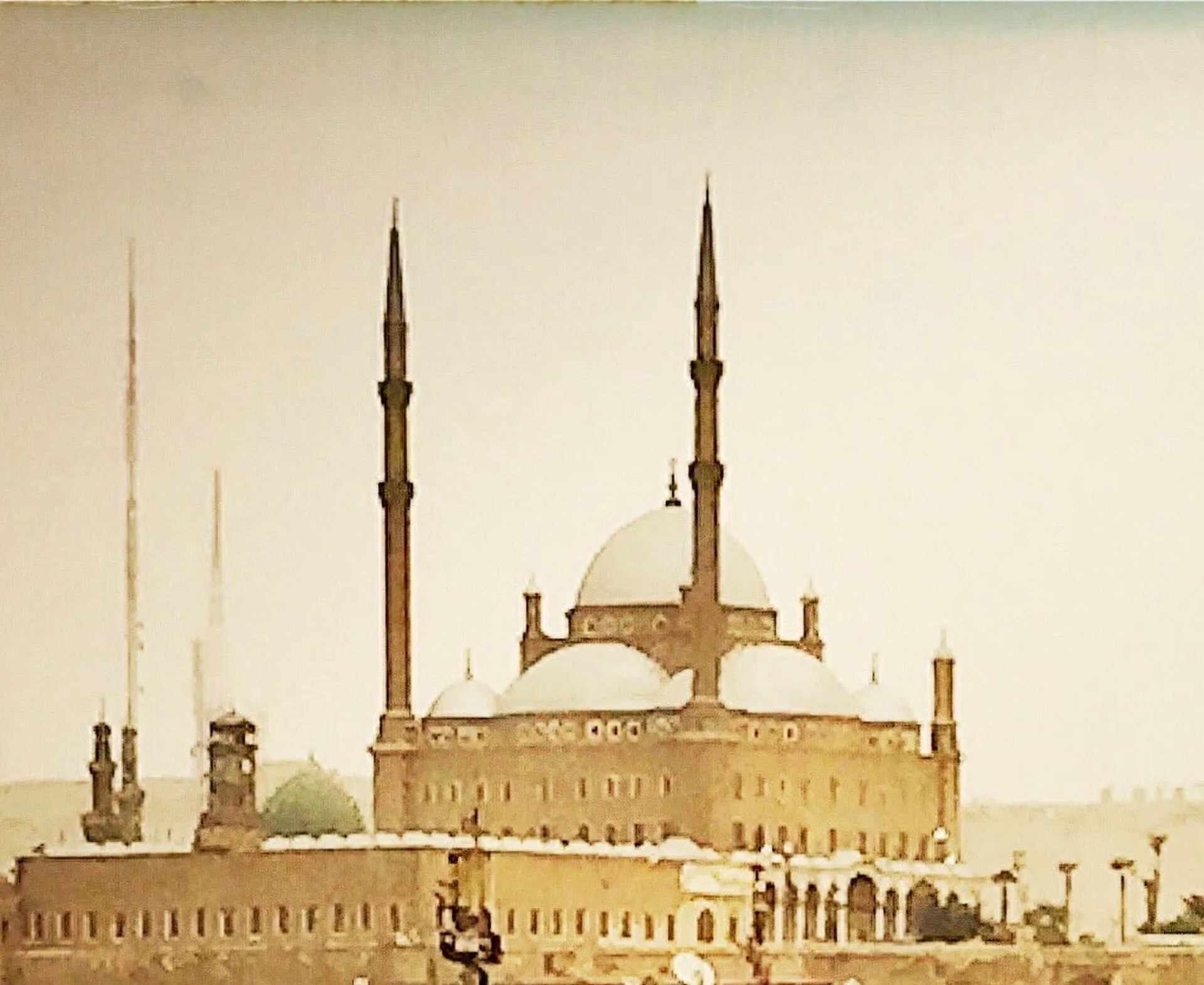
The Muhammad Ali Mosque dominates the Citadel skyline with twin pencil-thin minarets and cascading domes — completed in 1848 after eighteen years of construction, it deliberately echoes the great imperial mosques of Istanbul. The interior astonishes with scale and luminosity: hundreds of glass lamps hang from the central dome on brass chains, their light multiplied by mirrors and gilded surfaces, while alabaster-clad walls (the stone is actually Egyptian calcite, hence the local nickname "Alabaster Mosque") rise 11 meters around the vast prayer hall. A clock in the courtyard, gifted by French King Louis-Philippe in exchange for the obelisk now standing in Paris's Place de la Concorde, has never worked. The National Military Museum occupies the former Harim Palace, tracing Egyptian military history from pharaonic chariot warfare through Napoleon's 1798 expedition to the 1973 October War — a full hour for history enthusiasts. The Mosque of al-Nasir Muhammad (1318) rewards those who seek it out: its columns, pillaged from pharaonic temples and Roman ruins, create an architectural encyclopedia of mismatched capitals. The Gawhara Palace museum, when open, displays Muhammad Ali's throne room and reception halls in nineteenth-century Ottoman style. The Police Museum on a former prison's rooftop terrace offers panoramic views equal to the main tourist vantage point but with far fewer crowds.
Fortification History
Saladin's original 1176 fortifications employed techniques learned from Crusader castles in the Levant: massive curtain walls punctuated by rounded towers that eliminated blind spots where attackers could shelter. The Ayyubid-era sections, built from yellow limestone quarried on-site, remain visible along the northeastern perimeter where rough-hewn blocks contrast with smoother later additions. Mamluk sultans who ruled Egypt from 1250 to 1517 transformed the fortress into a palatial complex, adding elaborate reception halls and mosques; they also built the Bab al-Azab gate where, in 1811, Muhammad Ali famously massacred the remaining Mamluk leaders to consolidate his power. Ottoman governors after 1517 layered their own additions: Janissary barracks, powder magazines, and administrative buildings. Muhammad Ali subsequently demolished most of the medieval Mamluk palaces to build his mosque, erasing centuries of palatial construction in a single dynastic assertion. The northern terrace delivers one of Cairo's finest panoramas: on clear mornings before the haze builds, the Nile curves through the city center, the medieval minarets of Islamic Cairo cluster in the foreground, and on exceptionally clear days the Giza Pyramids float on the horizon 15 kilometers distant. Directly below stand the twin mosques of Sultan Hassan and al-Rifa'i — Sultan Hassan (1356-1363) ranks among the largest mosques ever built, with a portal rising 37 meters; the neighboring al-Rifa'i Mosque houses Egypt's modern royal family tombs including King Farouk and the exiled Shah of Iran.
When to Visit
Open daily: 8:00 AM - 5:00 PM, last entry 4:00 PM. Ramadan may bring shortened hours — confirm locally before visiting. Best for panoramic views: arrive before 10:00 AM when morning haze is lowest and the Giza Pyramids are occasionally visible on the horizon. Worst time: midday in summer (June-August), when the unshaded grounds reach extreme heat. Visit duration: 2-3 hours for a thorough circuit including the Muhammad Ali Mosque, national military museum, and panoramic terrace; 1.5 hours for a highlights-only visit. The mosque interior closes briefly for prayer times; the courtyard remains accessible during these intervals.
Admission and Costs
General admission: EGP 300 (approximately $6) for foreign visitors, covering the entire complex including the National Military Museum. Photography: free for personal cameras; tripods require a separate permit. Group guided tour: $30-50 per person (approximately 2-3 hours). Private guide for up to 5 people: $60-120. The admission price covers access to all museums and mosques within the complex walls — no separate tickets required for individual sites.
The Case for a Guide
Walking the complex with a historian guide who can identify which walls date to which dynasty transforms an apparent jumble of fortifications into a readable eight-century timeline of Egyptian political history. They point out mason's marks invisible to casual visitors, explain how the angled approach to the Bab al-Azab gate was specifically engineered to slow cavalry charges, and describe the ingenious cistern systems that made the hilltop fortress self-sufficient during siege. From the northern terrace, a guide identifies specific landmarks across the panorama — the thousand minarets that earned Cairo its epithet, the distinctive green dome of a particular Sufi shrine, the Cairo Tower on Gezira Island — transforming an impressive but anonymous cityscape into a readable map of the capital's history and geography. In the lesser-visited museums, guides unlock context the exhibit labels alone cannot provide: why the Police Museum's rooftop view rivals the main tourist terrace, which dioramas in the Military Museum depict battles most visitors cannot place without explanation, and where the Gawhara Palace's throne room furniture connects to the larger story of Muhammad Ali's dynasty-building ambitions.
Tips for Visitors
The grounds are largely unshaded — hats, sunscreen, and water are essential from April through October. Comfortable flat shoes help on uneven stone surfaces and narrow rampart staircases. The Muhammad Ali Mosque requires removing shoes before entry; socks make the cool marble floor more comfortable, and women should bring a headscarf or borrow one at the entrance. Combine with a downhill walk through the Darb al-Ahmar neighborhood to Al-Azhar and the Khan El-Khalili bazaar — a rich half-day without needing transport between stops. Save the Egyptian Museum for a separate morning when legs are fresh. Taxis and ride-hailing apps (Uber and Careem both operate in Cairo) reach the hilltop entrance easily from central Cairo.
Frequently Asked Questions
When is the ideal season to tour the Saladin Citadel?
November and February through March are prime visiting months, combining moderate temperatures with the clearest views from the northern terrace across Cairo's skyline to the distant Giza Pyramids. December and January can bring surprisingly crisp mornings perfect for walking the largely unshaded grounds. Summer months from June through August see temperatures exceeding 40 degrees on the exposed hilltop ramparts, though the Muhammad Ali Mosque interior stays cooler.
When can visitors explore Saladin Citadel?
The Citadel opens daily from 8 AM to 5 PM, with last entry at 4 PM. Ramadan may bring shortened hours — confirm locally. Early morning arrival offers the clearest panoramic views before haze builds.
What is the admission price for Saladin Citadel?
General admission costs EGP 300 (approximately $6) for foreign visitors, covering the entire complex including the Military Museum. Group tours run $30-50 per person, while private guides cost $60-120.
How long does a visit to Saladin Citadel take?
Most guided visits last two to three hours, though architecture enthusiasts may want longer. The grounds are largely unshaded, so bring hats and sunscreen. Many visitors combine the Citadel with a walk to Khan El-Khalili.