
Pula timeline
- 1st century
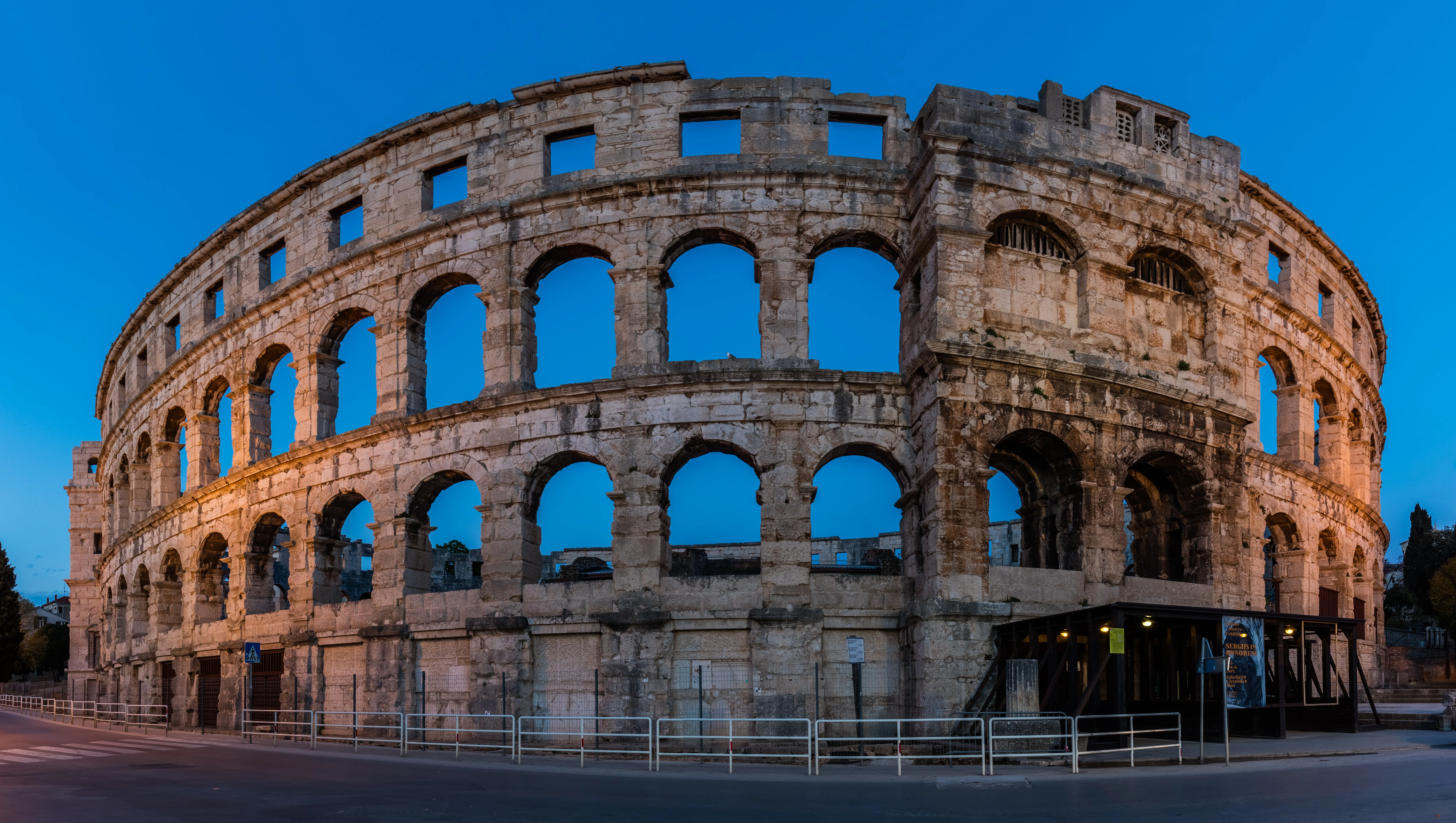
Roman arena rises
The amphitheater made Pula one of the Adriatic's most legible Roman cities.
-
Venetian rule begins
Venice controlled Pula for centuries, adding maritime and fortress layers.
-
Austrian naval port
Habsburg investment made Pula the empire's main naval base.
Cited city facts
Key facts for visiting Pula
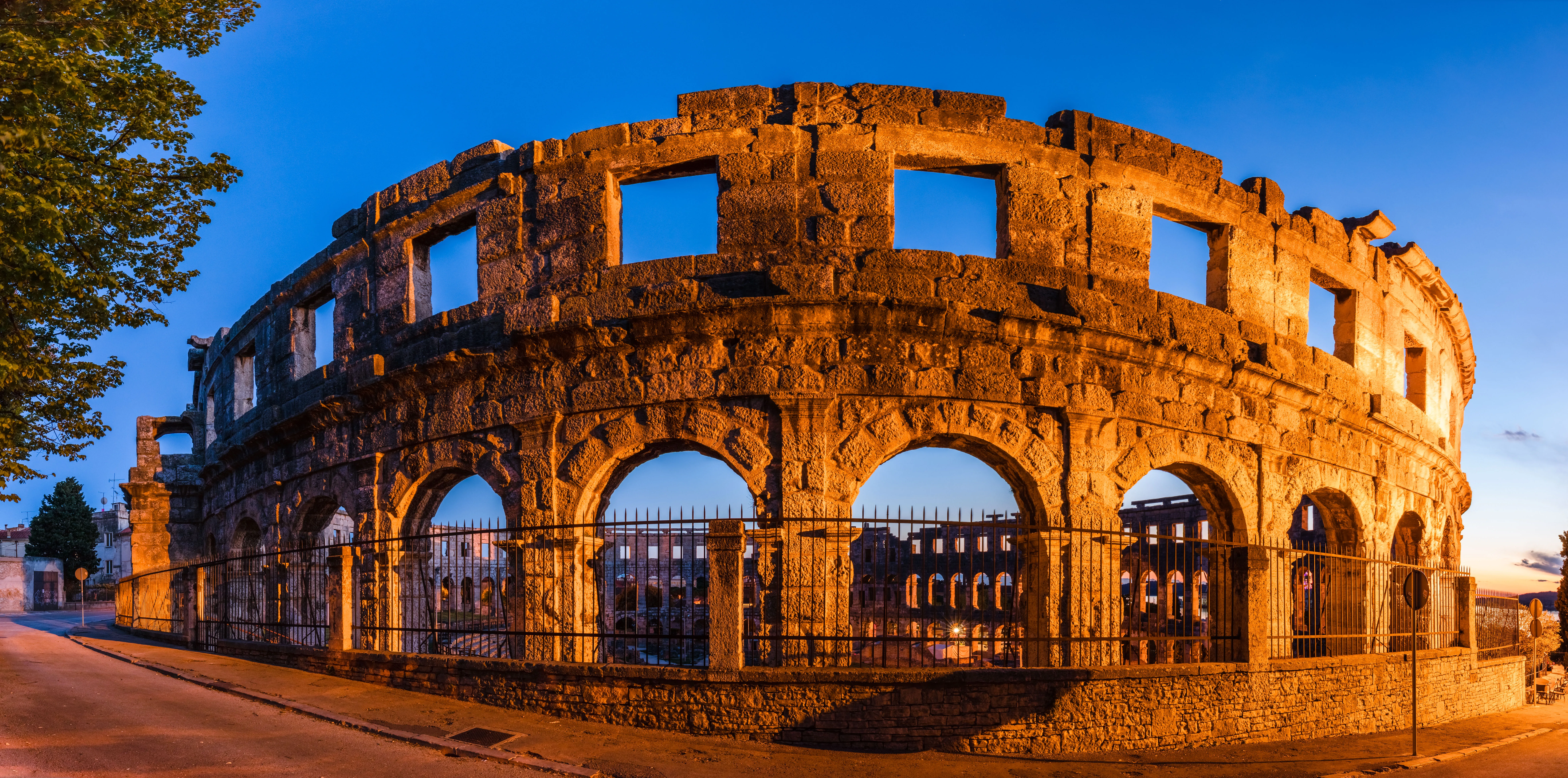
The Pula Arena is one of only six completely preserved Roman amphitheatres in the world
Built between 27 BCE and 68 CE during the reign of Augustus and Vespasian, the Pula Arena could seat approximately 23,000 spectators — comparable to a mid-sized modern stadium — and its four-storey outer wall of limestone remains structurally intact after two millennia, an extraordinary engineering achievement
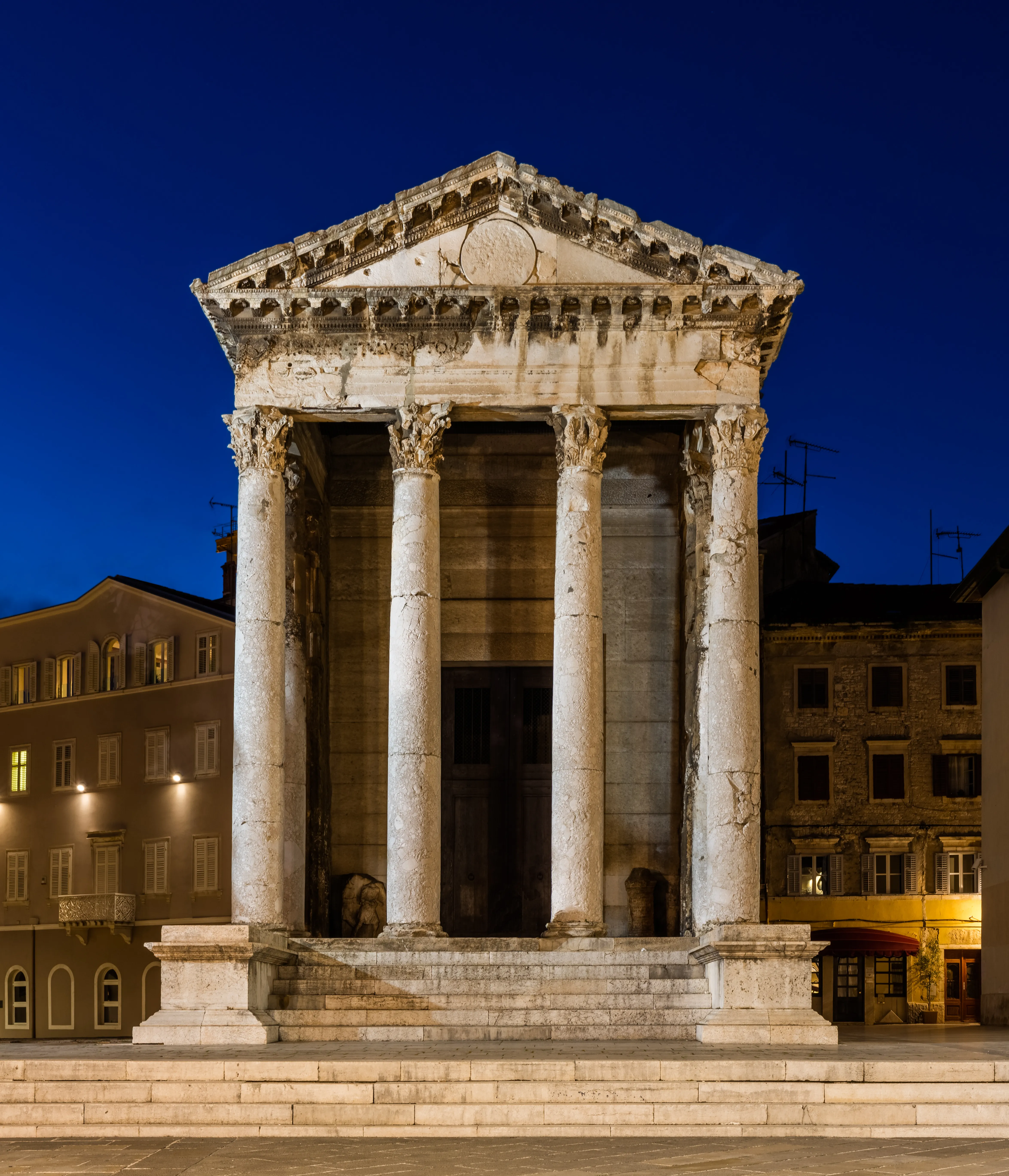
The Temple of Augustus in Pula is considered the best-preserved Roman temple in Eastern Europe
Built between 2 BCE and 14 CE to honour the Emperor Augustus, the Corinthian-columned temple on the Roman Forum survived only because it was converted into a church in the early medieval period, then used as a granary — medieval pragmatism that inadvertently preserved the structure for 21st-century visitors
Sting, Pavarotti, and Elton John have all performed inside the Pula Arena
Since the 1970s, the 2,000-year-old amphitheatre has hosted an annual summer concert season drawing international stars; the acoustic peculiarities of the oval stone bowl, combined with open-air Adriatic air and Roman architecture, make performances here among the most memorable in Europe
Pula was founded as the Roman colony of Pietas Iulia around 47–44 BCE
Julius Caesar reportedly established Pula as a colony for army veterans; the city grew into an important Adriatic port under Augustus, whose building programme produced the amphitheatre, the Forum temples, and the Arch of the Sergii — all still standing at the heart of a modern city of 57,000
Source: tour-guide.com — Free to cite with attribution
Things to see
What are the top attractions in Pula?
- Pula Arena — Walk the outer galleries, enter the underground vaults museum, and imagine 23,000 Roman spectators overhead
- Temple of Augustus — The best-preserved Roman temple in Eastern Europe, with its original Corinthian columns on the ancient Forum
- Arch of the Sergii — 1st-century BCE triumphal arch at the ancient city gate; Michelangelo sketched it during his Adriatic travels
- Forum Square — Pula's ancient Roman civic centre, still functioning as the city's main piazza after 2,000 years
- Kastel (Venetian fortress) — 17th-century fortress built on the Roman Capitol hill, now housing the Historical Museum of Istria
- Pula Film Festival (July) — Open-air cinema screenings inside the arena, from Croatian cinema to international premieres
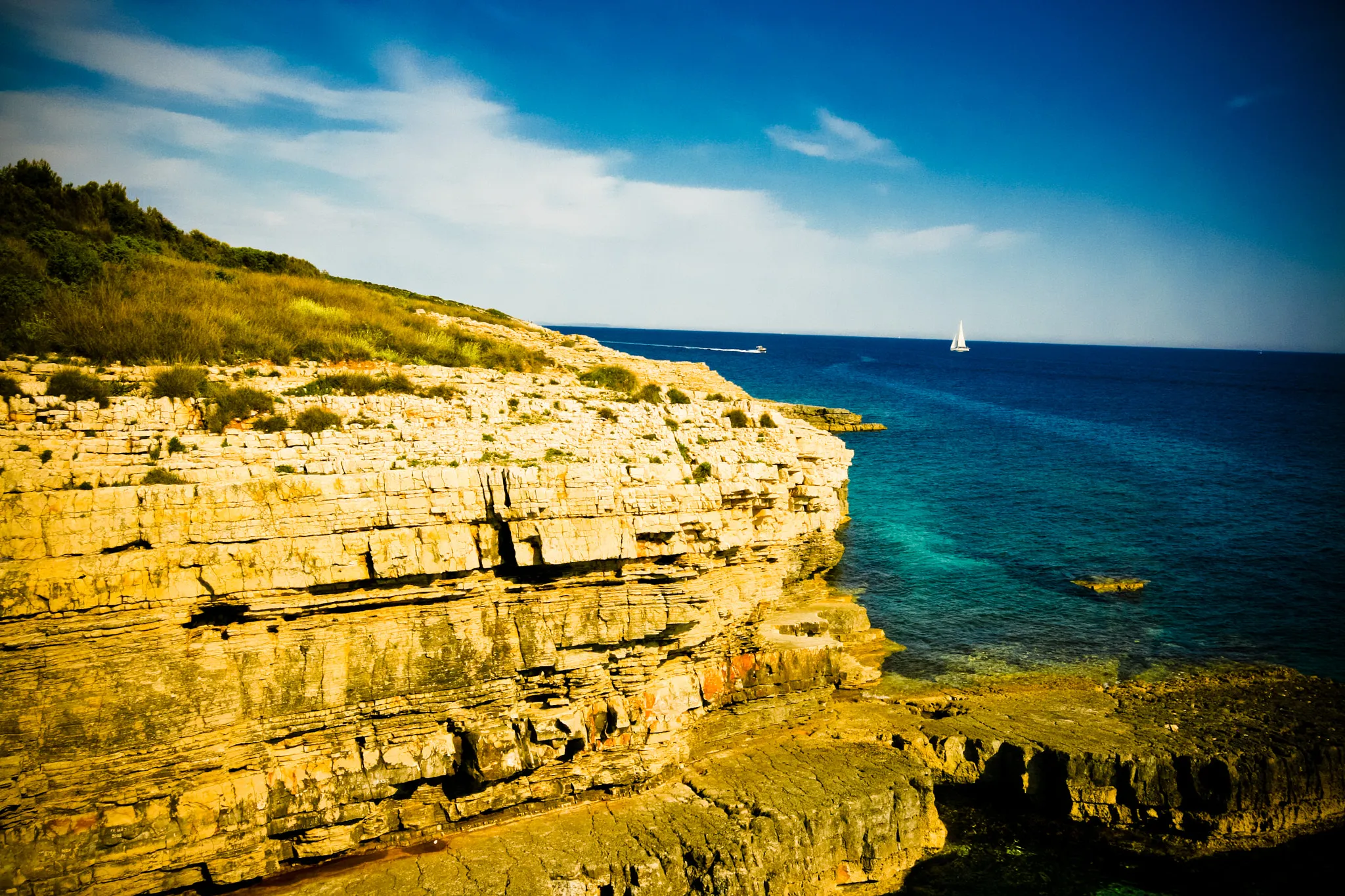
- Cape Kamenjak — Wild limestone headland 10 km south of Pula: crystal coves, no development, and the Adriatic at its most dramatic
Cape Kamenjak
Istria's wild southern edge — limestone cliffs, turquoise coves and dinosaur tracks at the end of the peninsula
Pula Arena
2,000 years of spectacle — the Roman world's best-preserved arena still hosts concerts under Adriatic stars
Temple of Augustus
A 2,000-year-old marble portico on Pula's living square, rebuilt stone by stone after a wartime bomb
Guide planning
How much does a tour guide cost in Pula?
Licensed guides certified by the Croatian Ministry of Tourism offer expert-led tours of the amphitheatre and Forum sites and can arrange skip-the-line access to the arena during summer peak periods.
Season planner
When is the best time to visit Pula?
- May–June — Perfect temperatures, wild asparagus season, uncrowded Roman sites
- July — Pula Film Festival screens inside the arena; international concert season in full swing
- September–October — Best for Roman site visits: cool mornings, truffle season begins, grape harvest on the wine routes
- August — Busy but festive; summer evening concerts in the arena are memorable
- Winter — Pula functions as a genuine Istrian town: quiet, authentic, and excellent for food and wine without tourist premiums
Spring
Mar-May
Summer
Jun-Aug
Autumn
Sep-Nov
Winter
Dec-Feb
Each score averages that season’s monthly ratings out of 5. The top-rated window is usually the peak season too, so read the guidance above for its trade-offs before you book.
On the ground
How do you get around Pula?
- Compact Roman core — All major ancient sites walkable within the old town in two hours
- Rental car recommended — Essential for exploring Istrian hill towns (Motovun, Grožnjan), Cape Kamenjak, and the wine routes
- Local buses — Serve the broader city; limited frequency outside peak hours
- Pula Airport — Small international airport with summer charter and low-cost routes from across Europe
- Day trips — Rovinj (40 min), Poreč (1 hr), Motovun (1 hr) all doable by car from Pula
- Tipping — €8–12 for free walking tours, 10% for private guides; café culture follows Italian-influenced local customs
Frequently Asked Questions
When is the best time to visit Pula?
April–June and September–October are ideal for Pula — warm and largely uncrowded, with the arena and Roman sites easy to explore without the July–August heat and cruise ship day-trippers. Summer has its compensations: the Pula Film Festival, held each July inside the Pula Arena under the stars, is one of Croatia's most atmospheric cultural events, and summer concerts by international artists transform the 2,000-year-old stone into a breathtaking concert venue. May is particularly lovely: the Istrian countryside is green, the wild asparagus season is in full swing, and morel mushrooms appear at the morning market.
How do you get around Pula?
Pula's Roman core is concentrated and entirely walkable — the amphitheatre, Arch of the Sergii, Forum, and Temple of Augustus form a compact circuit you can cover on foot in two hours. The broader city extends into residential neighbourhoods best reached by local bus. Rental cars are highly recommended for exploring the rest of Istria: the hill towns of Motovun, Grožnjan, and Rovinj are all within an hour's drive, and the Istrian coast south toward Cape Kamenjak (Pula's wild beach headland) requires transport. Rovinj is a worthwhile 40-minute drive north for a change of Venetian coastal scenery.
How much do Pula tour guides cost?
Free walking tours of the Roman sites depart from near the amphitheatre entrance in summer — tip-based, with €8–12 customary. Private half-day guides covering the arena, Forum, and Arch of the Sergii run €80–140 for groups up to six. Specialist Roman archaeology guides with academic backgrounds charge €120–200 for in-depth tours of the site. Arena concert tickets vary dramatically by performer — from €30 for local acts to €100+ for international headliners. The Pula Film Festival screens are typically €7–15 per film.