
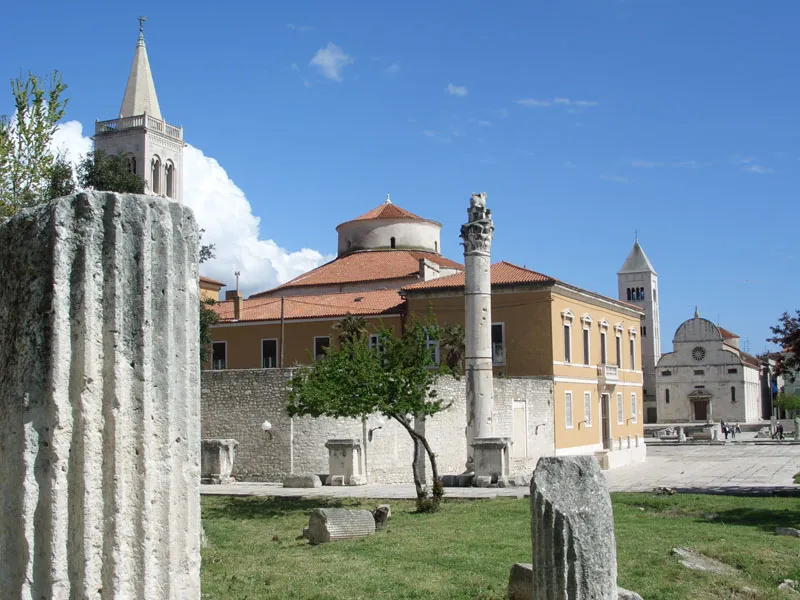
Zadar timeline
- 1st century BCE
At its centre, the Roman Forum
— founded in the 1st century BCE and expanded under Augustus
-
Zadar completed
The circular Carolingian-era church, constructed during the reign of Bishop Donatus around 810 CE using columns and stone blocks plundered directly from the Roman Forum.
- 9th century
Zadar completed
The Church of St Donatus was built in the 9th century on the stones of the Roman Forum.
-
At its centre, the Roman Forum
— the early-music festival founded in 1961 whose Renaissance and Baroque programmes fill the church each summer without electronic amplification.
Cited city facts
Key facts for visiting Zadar
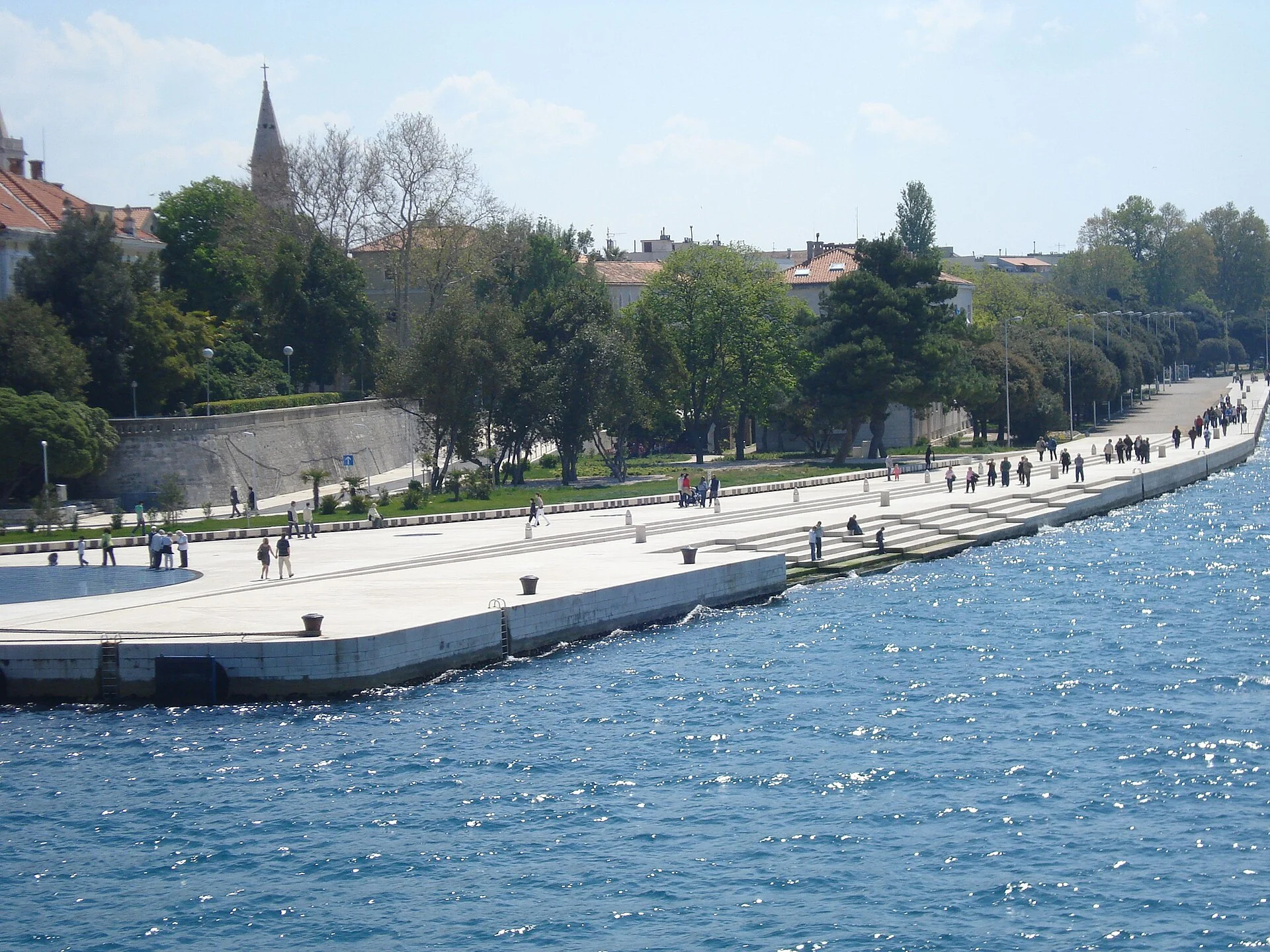
The Zadar Sea Organ is the world's first musical pipe organ powered by sea waves
Designed by architect Nikola Bašić and opened in 2005, the Sea Organ consists of 35 organ pipes of varying sizes built into marble steps descending to the Adriatic; waves push air through the pipes via polyethylene tubes, creating an ever-changing chord that Alfred Hitchcock might have called — had he visited — the world's most beautiful sound to accompany its view
Alfred Hitchcock declared Zadar's sunsets the most beautiful in the world in 1964
The director visited Zadar and was struck by the evening light over the islands; his quote — engraved on a plaque near the waterfront — has anchored the city's identity as a sunset destination and draws photographers to the marble steps daily at dusk
The Church of St Donatus was built in the 9th century on the stones of the Roman Forum
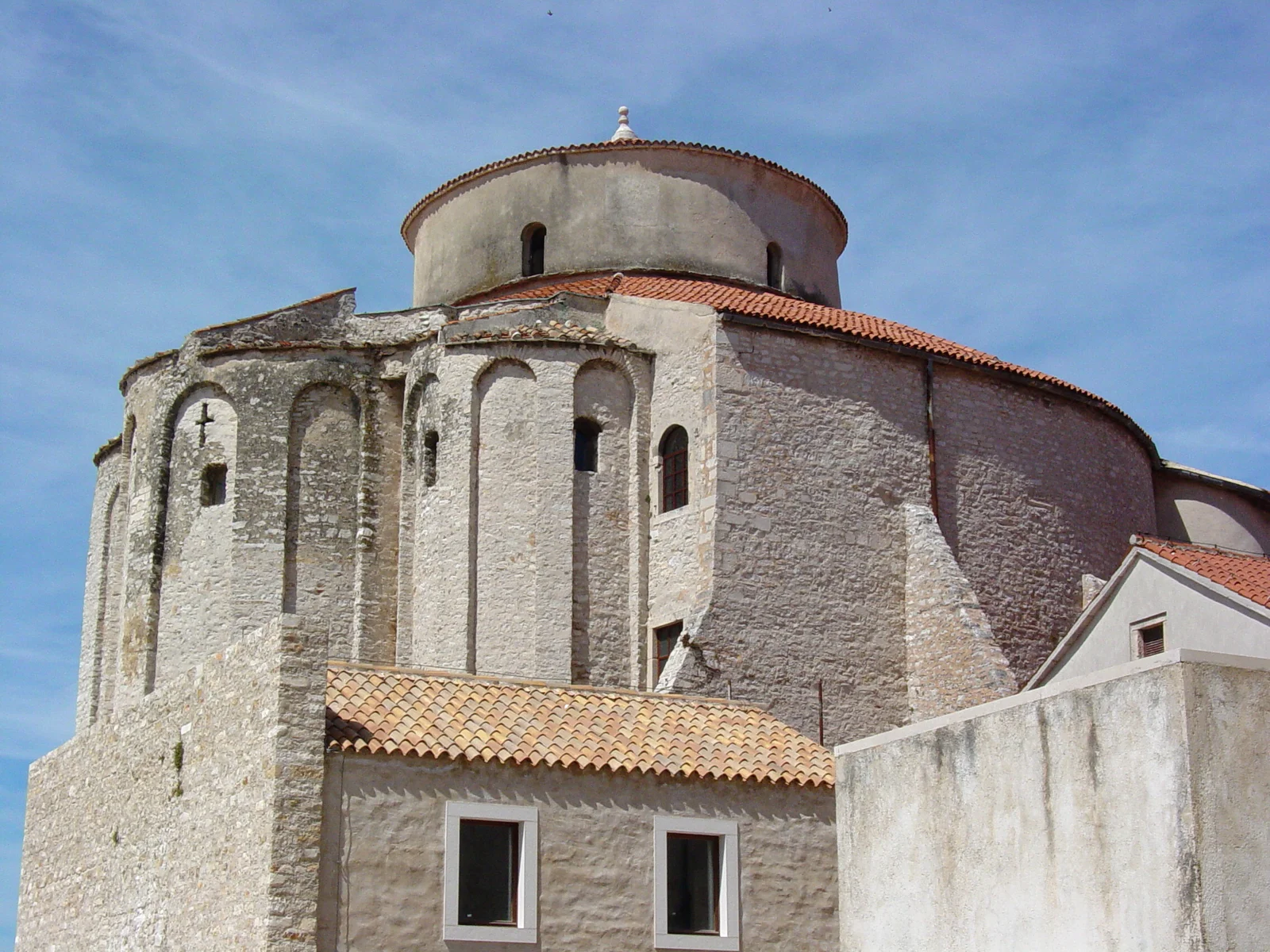
The circular Carolingian-era church, constructed during the reign of Bishop Donatus around 810 CE using columns and stone blocks plundered directly from the Roman Forum beside it, is one of the best-preserved early medieval rotunda churches in Europe — no longer used for worship, its high circular nave produces such pure natural resonance that it has hosted the Musical Evenings in St Donatus early-music festival, founded in 1961, every summer since, its Renaissance and Baroque concerts performed without electronic amplification
Zadar's Museum of Ancient Glass holds the largest Roman glass collection in Croatia
The museum's 3,000-piece collection spans glass objects from the 1st to the 5th century CE, including intact Roman bottles, cups, oil lamps, and cosmetic flasks excavated from sites across Dalmatia; the permanent display in a restored 19th-century palace is one of the most complete Roman glass exhibitions in southeastern Europe
Source: tour-guide.com — Free to cite with attribution
Things to see
What are the top attractions in Zadar?
- Sea Organ — Marble waterfront steps concealing 35 wave-powered organ pipes; magical at dusk, when the setting sun aligns with the sound
- Sun Salutation — Nikola Bašić's 22-metre solar light installation beside the Sea Organ; best experienced after dark
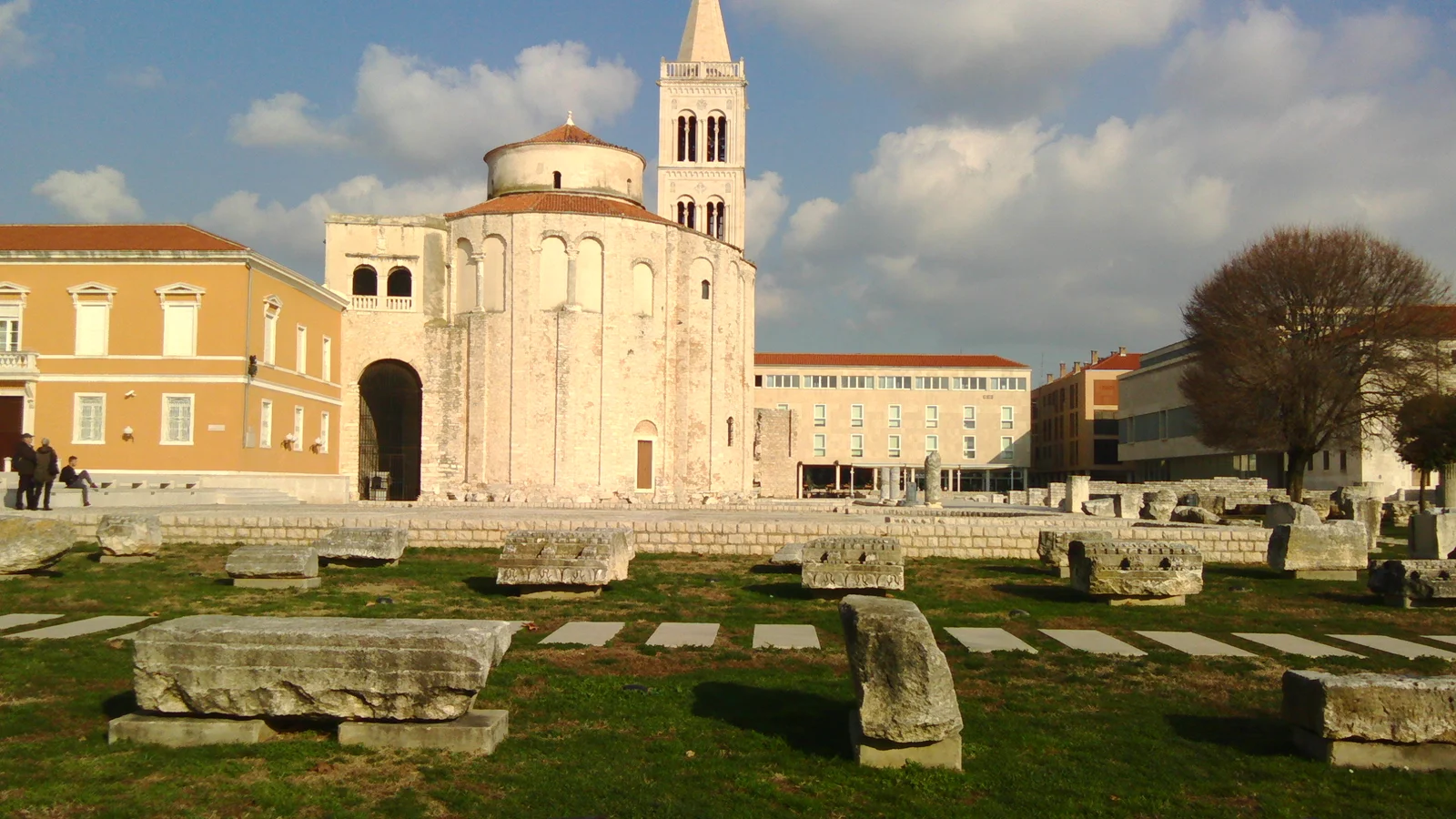
- Roman Forum — One of the largest ancient forums on the Adriatic; its surviving column and pavement visible beside St Donatus
- Church of St Donatus — 9th-century Carolingian rotunda built on Roman Forum stones; exceptional acoustics, summer classical concerts
- Cathedral of St Anastasia — 12th-century Romanesque cathedral with one of the finest apses in Dalmatia; treasury includes Byzantine and medieval relics
- Museum of Ancient Glass — 3,000 Roman glass objects from 1st–5th century CE, in a beautifully restored 19th-century palace
- Kornati Islands boat trip — Day trips into the 89-island archipelago from Zadar's ferry terminal; snorkelling, lunch, silence
Sea Organ
Adriatic waves become music beneath the waterfront steps
Church of St Donatus
A circular Carolingian rotunda built on the stones of the Roman Forum
Roman Forum Zadar
The largest Roman public square on the eastern Adriatic coast
Guide planning
How much does a tour guide cost in Zadar?
Licensed guides with expertise in Roman and early medieval Dalmatian history offer tailored walks of the Forum and St Donatus complex, with optional Museum of Ancient Glass visits included.
Season planner
When is the best time to visit Zadar?
- May–June — Ideal: warm, uncrowded, wildflower season on the Kornati Islands
- July–August — Musical Evenings in St Donatus — Croatia's oldest early-music festival, founded in 1961; medieval, Renaissance, and Baroque programmes staged inside the Carolingian rotunda for its unamplified natural acoustics — book ahead, as the intimate church seats only a few hundred
- September–October — Sweet spot: warm sea, quiet old town, golden sunset light at the Sea Organ
- December–February — Quiet and atmospheric; the waterfront installations are dramatic in winter storms
- Sunset always — The Sea Organ and Sun Salutation are best experienced at dusk, year-round; this is non-negotiable
Spring
Mar-May
Summer
Jun-Aug
Autumn
Sep-Nov
Winter
Dec-Feb
Each score averages that season’s monthly ratings out of 5. The top-rated window is usually the peak season too, so read the guidance above for its trade-offs before you book.
On the ground
How do you get around Zadar?
- Compact peninsula — All old-town sights within 20-minute walking radius; no transport needed within the historic centre
- Ferry terminal — Jadrolinija services to Kornati, Dugi Otok, and the outer Dalmatian islands
- City buses — Reach the broader city, beaches, and the airport bus terminal
- Zadar Airport — Major low-cost hub with direct routes from northern and central Europe; 15 km from the old town
- Plitvice day trip — Autobusni kolodvor (main bus station) runs services to Plitvice Lakes (90 min); a genuine day-trip feasible from Zadar
- Tipping — €8–12 for free walking tours, 10% for private guides; café rounding-up is standard practice
Frequently Asked Questions
When is the best time to visit Zadar?
May, June, and September offer Zadar at its finest — warm enough for the sea organ's marble steps to be a comfortable perch at sunset, unhurried enough to explore the Forum and St Donatus Church without queuing, and mild enough for the morning market to feel genuinely local rather than tourist-facing. October retains warm sea temperatures and drops accommodation prices significantly. July and August are busy with coastal tourists, though Zadar handles crowds better than Dubrovnik — the old town peninsula is wide enough to absorb visitor numbers without becoming stifling. The Sea Organ and Sun Salutation installations on the waterfront are best experienced at dusk, regardless of season.
How many days do you need in Zadar?
One full day is enough to walk the old-town peninsula properly: a morning on the Roman Forum and inside the Church of St Donatus, the Cathedral of St Anastasia and its bell tower, and the Museum of Ancient Glass after lunch, then the western waterfront timed so you reach the Sea Organ and Sun Salutation as the sun drops behind the islands. Two days is the comfortable choice for most visitors, freeing an afternoon for the morning market and the Five Wells Square and, crucially, a full-day Kornati Islands boat trip — the 89-island archipelago is the reason many people come to this stretch of coast and it cannot be rushed. Three days lets you add a day trip inland to the Plitvice Lakes (about 90 minutes by bus) without cutting the city short. If you are island-hopping the Dalmatian coast, Zadar rewards a two-night stop rather than the single afternoon many itineraries give it.
What is the Zadar Sea Organ and how does it work?
The Sea Organ (Morske orgulje) is a musical instrument built into the marble steps of Zadar's western waterfront, where the old-town peninsula meets the open Adriatic. Architect Nikola Bašić completed it in 2005, hiding 35 tuned pipes beneath the promenade and feeding them through a network of channels: as swell and passing boat wakes push seawater into the submerged chambers, the displaced air is forced up through the pipes and sounds a slow, shifting chord built from overlapping diatonic clusters. No two minutes sound alike, and because the sea never stops the instrument plays continuously and free of charge — visitors simply sit on the steps and listen. Dusk is the moment to come: the chord carries over the water while the sun drops behind the islands, and the neighbouring Sun Salutation light disc switches on beside it. The marble terraces double as informal seating, so the whole waterfront turns into an open-air concert hall each evening.
What is the Sun Salutation and how is it different from the Sea Organ?
The Sun Salutation (Pozdrav Suncu, sometimes translated "Greeting to the Sun") is Zadar's second waterfront installation by architect Nikola Bašić, completed in 2008 — three years after the neighbouring Sea Organ — and set into the pavement at the very tip of the old-town peninsula. Where the Sea Organ is something you hear, this is something you watch: a 22-metre disc of 300 multi-layered glass plates laid flush with the stone, with photovoltaic cells beneath them that soak up sunlight through the day. After dark the stored solar energy drives an LED light show that ripples across the whole circle in shifting colours, loosely choreographed to the rhythm of the waves and the Sea Organ's chords beside it. Set into the pavement nearby are smaller glass rings representing the planets of the solar system, spread along the waterfront and spaced to model their orbital distances to scale — a quiet astronomy lesson underfoot that most visitors walk straight past. Come at dusk to catch both works at once: the organ sounding, the sun dropping behind the islands, and the disc flickering to life as the light fades.
What is the Musical Evenings in St Donatus festival, and why is it held in the church?
Musical Evenings in St Donatus (Glazbene večeri u Sv. Donatu) is one of Croatia's oldest music festivals, founded in 1961 and staged each summer inside the 9th-century Church of St Donatus on the Roman Forum. Its programme is devoted to early music — medieval, Renaissance, and Baroque works performed on period instruments — and the venue is the whole point: the church is a pre-Romanesque rotunda of bare, undressed stone with no side chapels or soft furnishings, so its tall cylindrical nave produces a long, even reverberation that flatters unamplified voices and lute, viol, or recorder without any electronic help. Concerts typically run from July into August, often beginning around 9:30 PM once the day's heat fades, with the floodlit Forum column marking the short walk to the door. Marquee evenings sell out, so book ahead; a licensed local guide can pair a daytime tour of the Forum and St Donatus complex with the story of why a room built twelve centuries ago became a concert hall.
How do you get around Zadar?
Zadar's old town occupies a compact peninsula entirely walkable in 20 minutes end to end. The Liburnska obala waterfront where the Sea Organ sits runs along the western edge; the Roman Forum and St Donatus Church anchor the centre; the Land Gate and the Five Wells Square mark the landward boundary. Jadrolinija ferries to the Kornati Islands and Dugi Otok depart from the ferry terminal a short walk from the old town. City buses and taxis reach the broader city and the Zadar Airport, which has direct low-cost routes from much of northern Europe. Zadar works well as a base for Plitvice Lakes day trips (90 minutes by bus inland).
How much do Zadar tour guides cost?
Free walking tours of Zadar's old town depart from near the Land Gate — tip-based, with €8–12 customary. Private half-day guides covering the Forum, St Donatus Church, and the Sea Organ waterfront run €80–140 for groups up to six. Museum of Ancient Glass specialist guided visits cost €10–15 per person including entry. Kornati Islands day trips by boat from Zadar harbour run €50–80 per person in small groups and typically include lunch, snorkelling stops, and a guide covering the archipelago's ecology.