
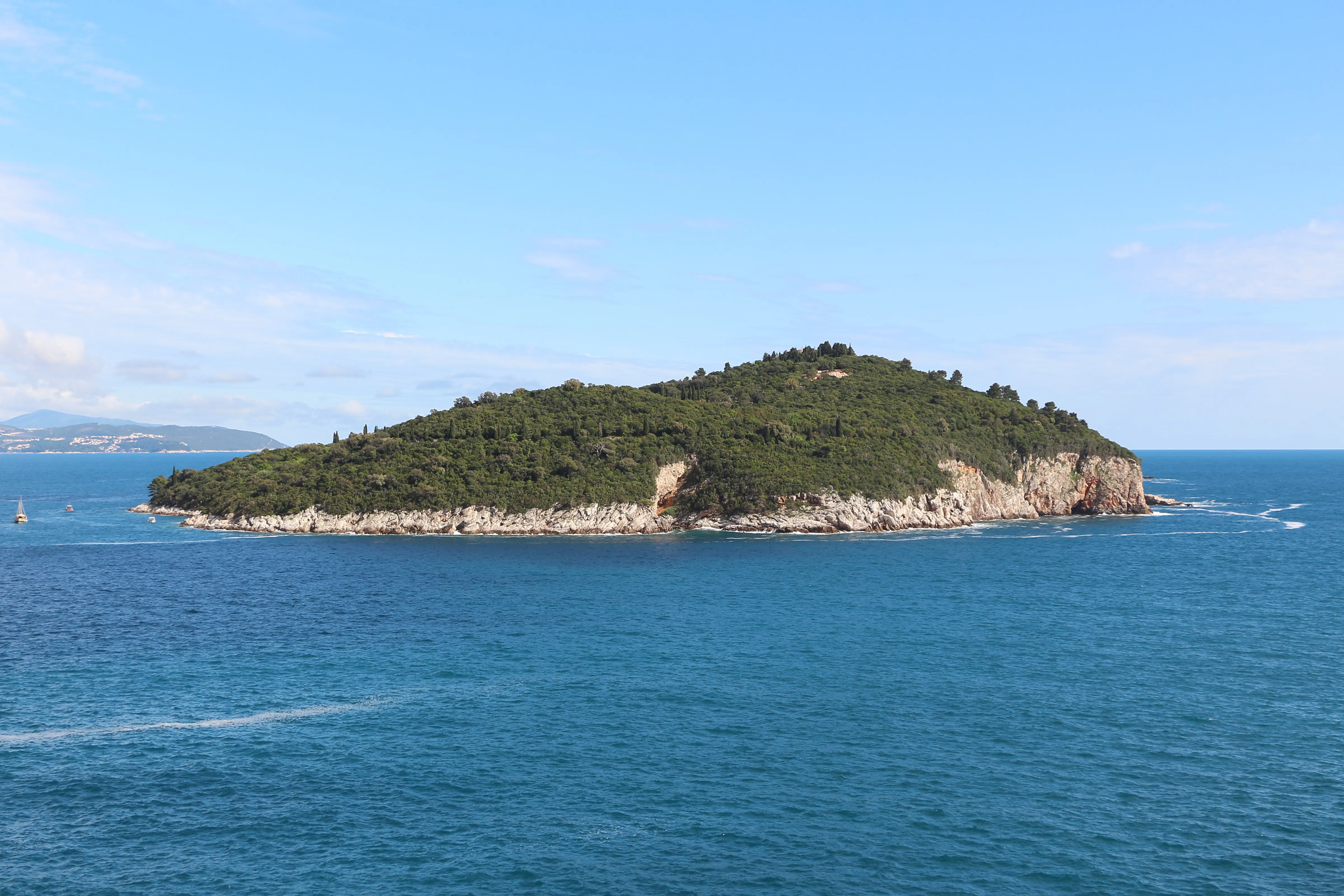
Trails
Lokrum's paths are gentle and well shaded, ideal for a slow ramble rather than a hike. A flat coastal loop rings much of the island, linking the ferry dock with the monastery, the Dead Sea salt lake, and the rocky eastern swimming areas in under an hour of easy walking. A gradual climb leads inland and up to Fort Royal, the star-shaped fortress built under Napoleon's occupation in 1806, whose roof terrace gives the best panorama back across the strait to the Old Town walls. Side trails wind through the botanical garden among agaves and cacti, and quieter paths thread the holm-oak forest where peacocks roam. Surfaces are mostly compacted earth and stone, comfortable in trainers, though there is little signage, so a map from the dock helps.
Wildlife
The island's most conspicuous residents are its peacocks, descendants of birds brought by Archduke Maximilian in the 1860s; they strut the paths and lawns and have become Lokrum's unofficial mascots, joined by ornamental rabbits and a chorus of songbirds in the pines. Offshore, the clear Adriatic shelters sea urchins, wrasse, and the occasional curious fish around the swimming rocks, making mask-and-snorkel sessions rewarding. The botanical garden doubles as a habitat, drawing butterflies and bees to its exotic blooms. As a protected forest reserve the island bans the picking of plants and the disturbing of animals, and visitors are asked to take all litter back to the mainland to keep the ecosystem intact.
When to Visit
Lokrum is reachable only when the seasonal ferry runs, roughly April through November, with boats from the Old Harbour about every 30 minutes between mid-morning and early evening. Crossing time is around 10 minutes. The island effectively closes overnight — staying after the last boat is prohibited, so always confirm the final departure (usually in the evening) when you arrive. June and September are the sweet spots: warm enough to swim, but without the August crush. Allow 3 to 4 hours on the island to combine a swim, the garden, and the abbey ruins without rushing.
Admission and Costs
A return ferry ticket from the Old Harbour costs about €27 (around $29) for adults and includes the island entrance fee; children pay a reduced rate and infants travel free. There is no separate admission once you land. A café and restaurant near the monastery serve drinks and meals, but prices are higher than in town, so many visitors bring a picnic. Sun loungers and a few facilities exist near the swimming areas. Outside the ferry season the island is closed to the public, and private water-taxis are the only — costly — alternative.
The Case for a Guide
Lokrum can be enjoyed casually, but a guide turns a pleasant swim into a layered story of monks, emperors, and ecology.
- The curse and its victims: A guide ties the 1798 monks' legend to the real misfortunes of later owners like Archduke Maximilian, separating documented history from folklore
- Botanical garden decoded: The exotic plantings have specific origins and a 19th-century imperial purpose; a guide explains why agaves and cacti grow on an Adriatic island
- Reading the abbey ruins: The Benedictine remains and the later Maximilian residence are intertwined, and a guide untangles which stones belong to which era
- Fort Royal's military role: The hilltop Napoleonic fort is easy to overlook; a guide explains its commanding sightline back to Dubrovnik and its place in the city's defences
- Game of Thrones and the throne prop: Guides point out the Qarth filming spots and the story behind the Iron Throne replica kept on the island
Tips for Visitors
Watch the last ferry: Missing it is the classic Lokrum mistake — overnight stays are forbidden and rescue boats are pricey. Bring water shoes: There are no sand beaches, only flat rocks, and the seabed near the Dead Sea lake is pebbly. Pack a picnic: The on-island café is convenient but costly; a packed lunch eaten among the pines is part of the charm. Mind the peacocks: They are tame and will approach food aggressively, so guard your sandwiches. Start early: Catch a morning boat to claim a shady swimming rock before the day-trippers arrive, and you will have the garden paths nearly to yourself.
Frequently Asked Questions
How often do the ferries to Lokrum run, and how long is the crossing?
In season (roughly April to November) boats leave the Old Harbour every 30 minutes from mid-morning until early evening, and the crossing takes only about 10 minutes. The last boat back is in the evening — note the exact time posted at the dock, because no one is permitted to stay overnight on the island and missing it means an expensive water-taxi. Outside the season the ferry does not run at all.
How much time should I set aside for a visit to Lokrum?
Plan on three to four hours to do the island justice: the botanical garden, the Dead Sea lake, the abbey ruins, and a swim each deserve unhurried time. If you only want a quick swim and a wander you can manage in two hours, but many visitors bring a picnic and make a half-day of it, catching an afternoon boat back to Dubrovnik in time for dinner.
Can you swim at Lokrum, and where is the best spot?
Yes — Lokrum is a favourite swimming escape. The small saltwater lake known as the Dead Sea is shallow, warm, and ideal for children, while the eastern rocks offer deeper, cooler water and a clothing-optional area marked FKK. There are no sandy beaches; expect to enter from flat rocks, so water shoes are a smart addition to your bag.
What is the legend of the Lokrum curse?
When the Benedictine monks were forced off the island in 1798, they are said to have walked the shore at night with candles turned upside down, cursing anyone who took Lokrum for private pleasure. Locals link the curse to a string of misfortunes among later owners, including the Habsburg archduke Maximilian, who developed the gardens before dying in Mexico. It is folklore, of course, but it gives the island a deliciously eerie undertone.