
Observation Spots
Activities
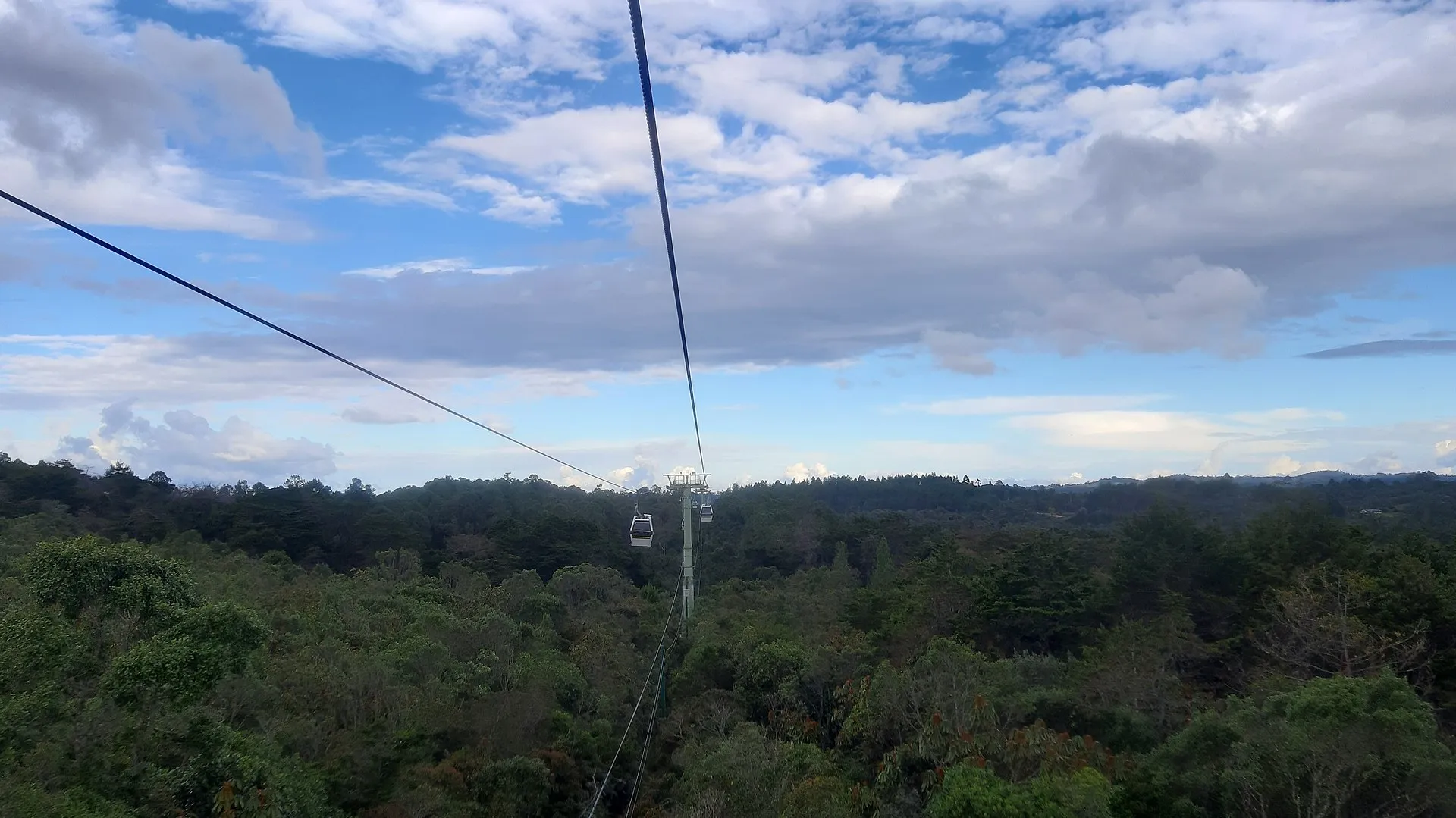
- Ride the Cable Arví — the roughly 20-minute gondola from Santo Domingo is the headline act, gliding over hillside barrios and a forested saddle before dropping into the park
- Walk the cloud-forest trails — easy-to-moderate loops such as the Camino de la Aguada and the paths around Piedras Blancas wind through moss-hung oak and native wax palm
- Visit the butterfly house — an enclosed mariposario alive with dozens of native highland species
- Circle the Piedras Blancas reservoir — a calm mountain lake ringed with lakeside paths, picnic lawns, and rowboats
- Browse the weekend market — wild honey, artisan chocolate, orchids, and hot arepas from the surrounding veredas
Seasonal Highlights
Orchid season peaks from roughly January through May, when dozens of native species flower along the trail edges and the cloud forest is at its most fragrant. Bird-migration windows in October and November push species like tanagers and the occasional Andean cock-of-the-rock into the park's more accessible trails, though these are also the wettest weeks — full rain gear is non-negotiable. In early August the surrounding corregimiento of Santa Elena becomes the beating heart of Medellín's Feria de las Flores: the silleteros who raise their blooms on these very ridges parade them through the city, and their weekend Arví market overflows in the run-up. The eternal-spring climate keeps the flower stalls stocked year-round, but the December–March dry season delivers the clearest gondola views.
Parque Arví timeline
- Pre-Hispanic
Indigenous stone paths
Long before the Spanish arrived, the valley's Indigenous peoples laid stone-paved roads across these ridges near Piedras Blancas — sections still lie underfoot on the trails today.
-
First metrocable
Medellín opened Line K, the world's first metrocable built for mass transit, climbing to the Santo Domingo station that now serves as the gateway to Arví.
-
Cable Arví opens
The Línea L tourist cable and the park's public trail network opened, putting Andean cloud forest within a metro ride of downtown Medellín.
When to Visit
The park itself is open Tuesday to Sunday, 9 AM – 6 PM, and closes on Mondays for trail maintenance. The Cable Arví (Línea L) runs Tuesday–Saturday 8:30 AM – 5:30 PM and Sunday 8:30 AM – 4 PM, so plan your return for at least an hour before the last gondola — queues at the Arví station build steadily through the afternoon. Weekday mornings are the prize: the mist burns off to reveal the clearest skies, the trails are near-empty, and the light through the canopy is at its softest. The weekend Mercado Arví trades Saturdays and Sundays only — arrive by 10 AM for the fullest stalls before the day-trippers. Allow a half-day (4–5 hours) door to door, including the metro and cable transfer at Santo Domingo.
Admission and Costs
- Park entry — free; Arví is public land, open to all
- Cable Arví round trip — about COP 5,900 ($1.50); the Arví line is a recreational cable with its own fare, paid on top of the standard metro fare (a little over COP 3,000 / $0.80) that carries you to the Santo Domingo transfer
- Butterfly garden — COP 10,000 ($2.50)
- Guided nature walk — COP 30,000–60,000 ($7.50–15) per person
- Private guide with transport — COP 200,000–350,000 ($50–85)
Carry cash in small notes: the market stalls, the mariposario, and independent trail guides rarely take cards, and ATMs inside the park are scarce.
The Case for a Guide
Arví rewards a naturalist's eye that most day-trippers simply don't have — from the metrocable it can look like an undifferentiated green blanket, when in fact it is a layered cloud-forest ecosystem threaded with a thousand years of human history. A local guide turns the walk into a reading of the landscape.
- Finding the orchids and bromeliads — dozens of native orchid species flower along the trail edges, but they are small and easily missed; a botanist-guide knows which senderos and which weeks reward a closer look
- Reading the pre-Hispanic paths — sections of the trails follow stone-paved roads laid by the valley's Indigenous inhabitants long before the Spanish arrived; a guide explains what archaeologists near Piedras Blancas have learned from them about pre-Columbian life over the cordillera
- Birding the canopy — Arví sits on a migratory corridor; a guide with a scope and a good ear will pick out tanagers, motmots, and hummingbirds you would never spot alone
- Navigating the network — with 50-plus kilometres of trails and patchy signage, a guide keeps a half-day walk on the scenic loops and away from the dead-ends
- Meeting the silleteros — at the weekend market a guide can introduce the Santa Elena flower-growing families and explain the silleta tradition behind the Feria de las Flores
Tips for Visitors
- Dress in layers — at 2,500 m Arví runs 15–20°C, markedly cooler than the valley, and the gondola can feel cold first thing
- Pack rain gear — this is cloud forest: mist and drizzle are possible in any month, so a packable waterproof beats an umbrella on exposed ridges
- Wear grippy shoes — the stone paths and forest trails turn slick and muddy after rain
- Bring insect repellent — it helps on the longer, denser trails
- Start early — cable queues lengthen sharply after 10 AM on weekends and holidays
- Pair it up — a half-day at Arví slots neatly beside an afternoon in Comuna 13 or a downtown loop past Plaza Botero
Frequently Asked Questions
What season offers the best experience at Parque Arvi?
The drier months from January through March coincide with orchid blooming season across the cloud forest trails, making it the finest window for nature walks. October and November bring migrating bird species like the Andean cock-of-the-rock deeper into accessible areas, though rain gear is essential as the cloud forest lives up to its name with frequent mist and drizzle regardless of season.
What are the opening hours for Parque Arví and its metrocable?
Park: Tuesday–Sunday 9 AM – 6 PM (closed Mondays). Metrocable to Arví: Tuesday–Saturday 8:30 AM – 5:30 PM, Sunday 8:30 AM – 4 PM. Best: Weekday mornings for empty trails and clearest skies.
Is Parque Arví free to enter?
Park entry: Free. Cable Arví round trip: about COP 5,900 ($1.50), paid on top of the standard metro fare to reach Santo Domingo. Guided nature walk: COP 30,000–60,000 ($7.50–15) per person. Private guide with transport: COP 200,000–350,000 ($50–85). Butterfly garden: COP 10,000 ($2.50).
What should visitors know about weather and timing before visiting Parque Arví?
Bring layers: At 2,500m elevation, the park is cooler than Medellín — 15–20°C with mist possible. Rain gear: Cloud forest means moisture — a packable rain jacket is essential. Start early: The metrocable lines grow long after 10 AM on weekends.
How do I get to Parque Arví by metrocable?
Take Metro Line A to Acevedo, transfer to the Line K metrocable up to Santo Domingo, then change to the Cable Arví (Line L) for the final aerial crossing into the park. The Arví leg is a recreational cable with its own fare, so keep your Cívica card topped up — the round trip from downtown takes about an hour each way.
Is Parque Arví accessible for visitors with limited mobility?
The metrocable stations, the entrance plaza, the weekend market, and the butterfly garden are broadly step-free and manageable, but most forest trails are unpaved, uneven, and often muddy. Visitors with limited mobility can still enjoy the gondola ride, the market, and the flatter paths near the Arví station without tackling the longer cloud-forest loops.